
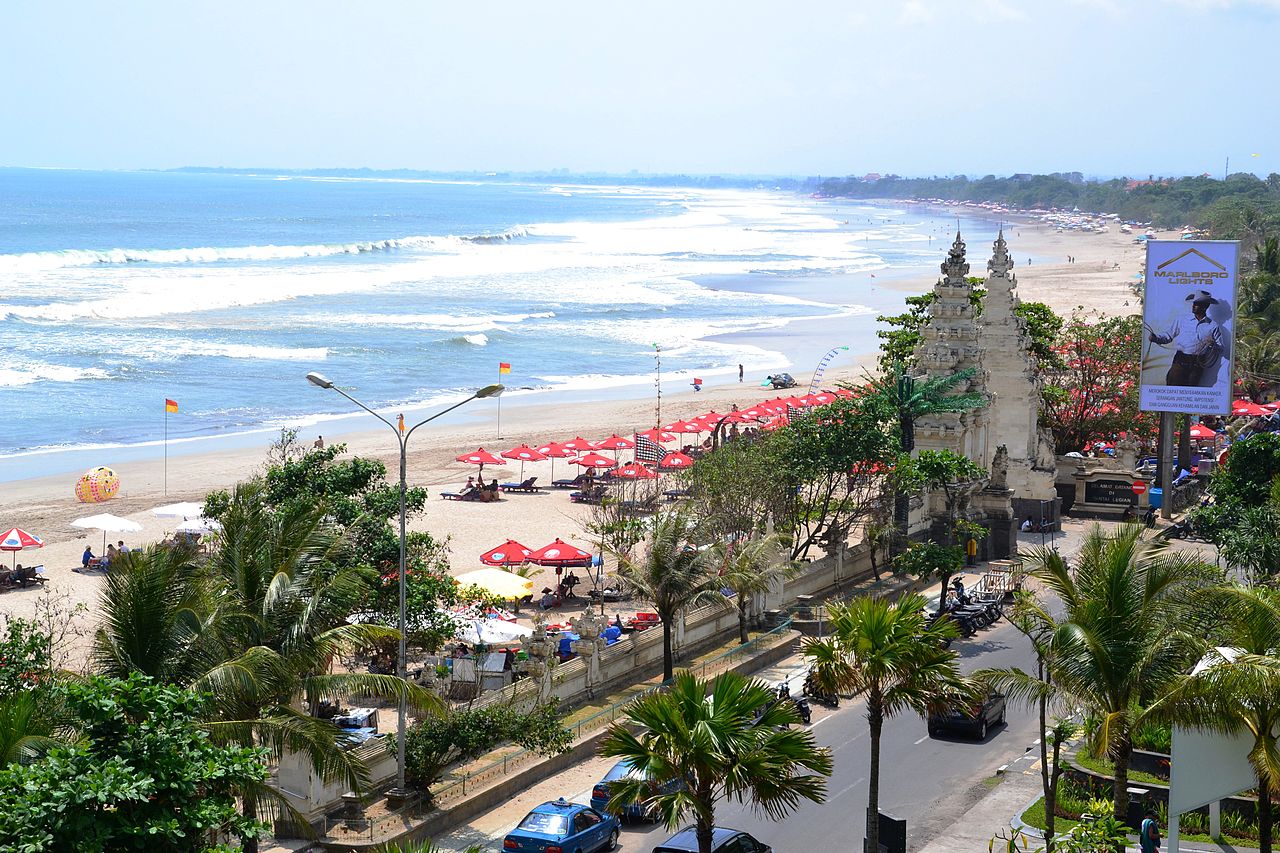
Bali is an Indonesian island, 5,780 km² with population of 4.4 million — one of Indonesia's 17,500+ islands but the country's most famous tourist destination. The island sits just 8° south of the equator in the Lesser Sunda Islands chain, between Java to the west and Lombok to the east. Bali has been culturally distinct within Indonesia for centuries — while Indonesia is the world's most-populous Muslim country (with 87% of Indonesians being Muslim), Bali is overwhelmingly Hindu (87% of Balinese practice Balinese Hinduism, the famous "Agama Hindu Dharma" — a distinctive blend of Hindu and indigenous Balinese spiritual traditions). The famous Balinese culture combines extensive Hindu temple traditions, daily offerings ("canang sari" — small woven palm-leaf trays with flowers, rice, and incense), the famous gamelan music, traditional dance (the famous Legong, Kecak, Barong dances), and rice-terrace agriculture (the famous "subak" UNESCO-protected irrigation system dating to the 9th century). Bali became Indonesia's premier tourism destination from the 1970s onward and has experienced explosive tourism growth — 5.5 million international tourists in 2019 (compared to 30,000 in 1969).
Major destinations include Ubud (the famous cultural heart of Bali — with the famous Ubud Monkey Forest, the famous Tegallalang Rice Terraces — UNESCO-listed subak system, the famous Sacred Monkey Forest Sanctuary, extensive yoga and wellness retreats, the famous Tegenungan Waterfall, and the famous Royal Palace), the famous South Bali resorts (Seminyak — famous for upscale dining and the famous "Bali sunset bar" culture at Potato Head and Ku De Ta; Canggu — the famous "digital nomad" capital with surfing and trendy cafes; Kuta — the original tourist area with extensive nightlife; Nusa Dua — the famous luxury resort enclave; Jimbaran — famous for seafood grills on the beach), Uluwatu (the famous southwestern peninsula with the famous Uluwatu Temple perched on a 70 m cliff — the famous evening Kecak dance performance, and extensive surf breaks at Padang Padang, Bingin, and Uluwatu reef), Tanah Lot Temple (the famous "ocean temple" on a rock formation off Bali's western coast — the famous sunset photography destination), the famous Mount Batur (the famous active volcano at 1,717 m — popular for sunrise hikes), Mount Agung (Bali's highest peak at 3,031 m — sacred to Balinese Hindus, last erupted 2017-2019), the famous "Gates of Heaven" at Lempuyang Temple, the famous Nusa Penida and Nusa Lembongan islands (offshore islands accessible by 30-45 minute boat from Sanur), the famous Munduk and Munduk Falls in north Bali, the famous Lovina (with dolphin watching in north Bali), and the famous Bali Cultural Park.
The island has two seasons: dry (April through October) and wet (November through March). The temperature varies almost not at all — daytime is 27-32 °C every month. What changes is humidity, rainfall, and crucially crowd density.
Quick verdict
Best overall: May, June, and September. Dry season weather with manageable crowds.
Best for budget travelers: February-March (end of wet season) and late October. 30-50% lower prices.
Best for surfing the west coast (Uluwatu, Padang Padang): May through October.
Best for surfing the east coast (Keramas, Nusa Dua): November through March.
Avoid if you can: Mid-July through August (peak European holiday crush); Christmas through New Year (peak Australian + Russian + Chinese tourism).
Dry season (April to October): peak season for good reason
This is what Bali's tourism is built around. Humidity drops noticeably from wet season — still tropical, but breathable. Rain occurs but is brief and isolated. Skies clear up; sunsets become spectacular at Tanah Lot and Uluwatu. Ocean visibility improves for diving.
April is shoulder. The wet season has just ended. Landscapes are still lush from rains. Crowds are still moderate. Prices are climbing toward peak but haven't arrived.
May and June are the country's best months for most travelers. Bali is at its most beautiful — rice paddies in their growing cycle, lush green hills, dry days, manageable crowds. Surfers find the west coast swells building. Prices are below the peak summer rates.
July and August are peak season. European families arrive in waves. Australian winter-vacation travelers fill Seminyak and Canggu. Russian and other Eastern European tourists come in significant numbers. Hotel prices spike 30-60%. Restaurants need reservations. Famous beaches like Padang Padang see significant crowds. Ubud's traffic becomes genuinely difficult.
September is excellent shoulder. International school holidays end and Australian crowds drop sharply. Weather remains dry. Prices ease from August peaks. October stays excellent through most of the month. Late October brings increasing humidity as the wet season approaches.
Wet season (November to March): the misunderstood half
The biggest myth about Bali's wet season is that it rains all day every day. It doesn't. Tropical wet season typically means heavy afternoon thunderstorms (1-3 hours) followed by clearing skies. Mornings are often sunny and dry. Evenings are mostly clear.
November and December are the start of the wet season. Rains are still intermittent rather than constant. Crowds drop noticeably from October. By mid-December the Christmas-New Year tourism surge begins. Prices spike for the December 22 to January 5 window.
January and February are the wettest months. Daily afternoon storms are virtually guaranteed. Humidity is high. The famous waterfalls (Sekumpul, Tegenungan, Tukad Cepung) are at their most spectacular thanks to high water flow. The countryside is at its lushest.
February is also the cheapest month of the year. Tourist crowds are minimal. Hotel rates drop 40-60% from peak. Top-end resorts that are impossible to book in summer become available.
March is transitional. The first half remains wet but improving. Late March can be wonderful — rains tapering, landscapes still lush, prices still off-season, crowds still minimal. This is the secret sweet spot of Bali travel for many savvy travelers.
Regional notes
South Bali (Seminyak, Canggu, Kuta, Uluwatu): Most touristed. Beach scenes, restaurants, nightlife. Best May-October.
Ubud (cultural and rice paddy center): Cooler thanks to altitude (24-28 °C). Greener and prettier in wet season. Year-round.
East Coast (Sanur, Candidasa, Amed): Calmer atmosphere, better diving conditions.
North Bali (Lovina, Munduk, Singaraja): Less touristed, cooler in the highlands. Best May-October.
Nusa Penida / Nusa Lembongan: Best May-October. Sea can get rough November-April.
Festivals & cultural events
Nyepi (Balinese New Year, March-April, varies): The famous "Day of Silence" — the entire island shuts down for 24 hours including the famous Ngurah Rai International Airport. No flights operate, no driving, no light, no working — Hindu Balinese ritual where evil spirits should pass over the island finding no inhabitants. A unique experience but visitors cannot leave their hotels (some hotels accommodate guests with quiet daytime activities). The famous "Ogoh-Ogoh" parade the night before features extensive demon effigies marched through villages and then burned.
Galungan and Kuningan (every 210 days, varies): The most important Balinese Hindu festival — celebrating victory of dharma over adharma. The famous "penjor" decorated bamboo poles line every street.
Bali Arts Festival (June-July): Major cultural event with extensive traditional dance, music, and craft demonstrations.
Bali Spirit Festival (March-April): Major yoga, dance, and wellness celebration in Ubud.
Saraswati Day (every 210 days): Balinese Hindu celebration of knowledge.
Pagerwesi (every 210 days): Day of strengthening of mind.
Bali International Film Festival (October-November): Major film event.
Ubud Writers and Readers Festival (late October): Major literary event.
Cultural and practical notes
The famous Balinese Hindu culture differs significantly from Indian Hinduism — incorporating extensive indigenous Balinese animist traditions, ancestor worship, and the famous "Tri Hita Karana" philosophy (harmony between humans, nature, and the divine). Bahasa Indonesia is the official language with extensive Balinese spoken locally; English widely spoken in tourism contexts. Indonesian Rupiah (IDR) is the currency. Tipping not customary but appreciated (5-10%). Modest dress required at temples — sarongs and sashes provided at temple entrances. The famous "canang sari" daily offerings cover sidewalks throughout Bali — visitors should avoid stepping on them. The famous "Bali belly" (traveler's diarrhea) is genuinely common — drink bottled water, avoid ice in basic establishments.
Practical wet season tips
Bring a light rain jacket. Plan major outdoor activities for mornings. Build flexibility into beach plans. Be aware that the famous Mount Batur sunrise hike depends on clear weather; in wet season, success rates drop. Diving visibility can be reduced by runoff but is still respectable. The famous waterfalls (Sekumpul, Tibumana, Tegenungan, Tukad Cepung) reach peak flow in wet season.
Verdict by traveler type
First-time visitor: May, June, or September.
Budget traveler: February-March or late October-November.
Photographer: March-April for lush green post-wet-season; September-October for dry-but-still-green.
Surfer (west coast): June-September.
Diver: April-November for best visibility.
Yoga / wellness retreat: Year-round; April or September best balance.
Family with kids: June-September for reliable weather.
Bottom line
Bali rewards travelers who understand that the wet season is mostly mornings of sunshine punctuated by afternoon storms — not the all-day washout its name suggests. The lush green landscapes of February rival summer's dry views. Peak July-August crowds are the real downside of dry-season travel. The sweet spot for most travelers is May, June, or September.