

Introduction
The coast redwood (Sequoia sempervirens) forests of northern California are home to the tallest trees on Earth. Hyperion, the world's tallest known tree, stands at 115.92 meters — taller than the Statue of Liberty and nearly as tall as a 35-story building. These ancient forests are remnants of a tree lineage that once spanned the Northern Hemisphere during the age of dinosaurs.
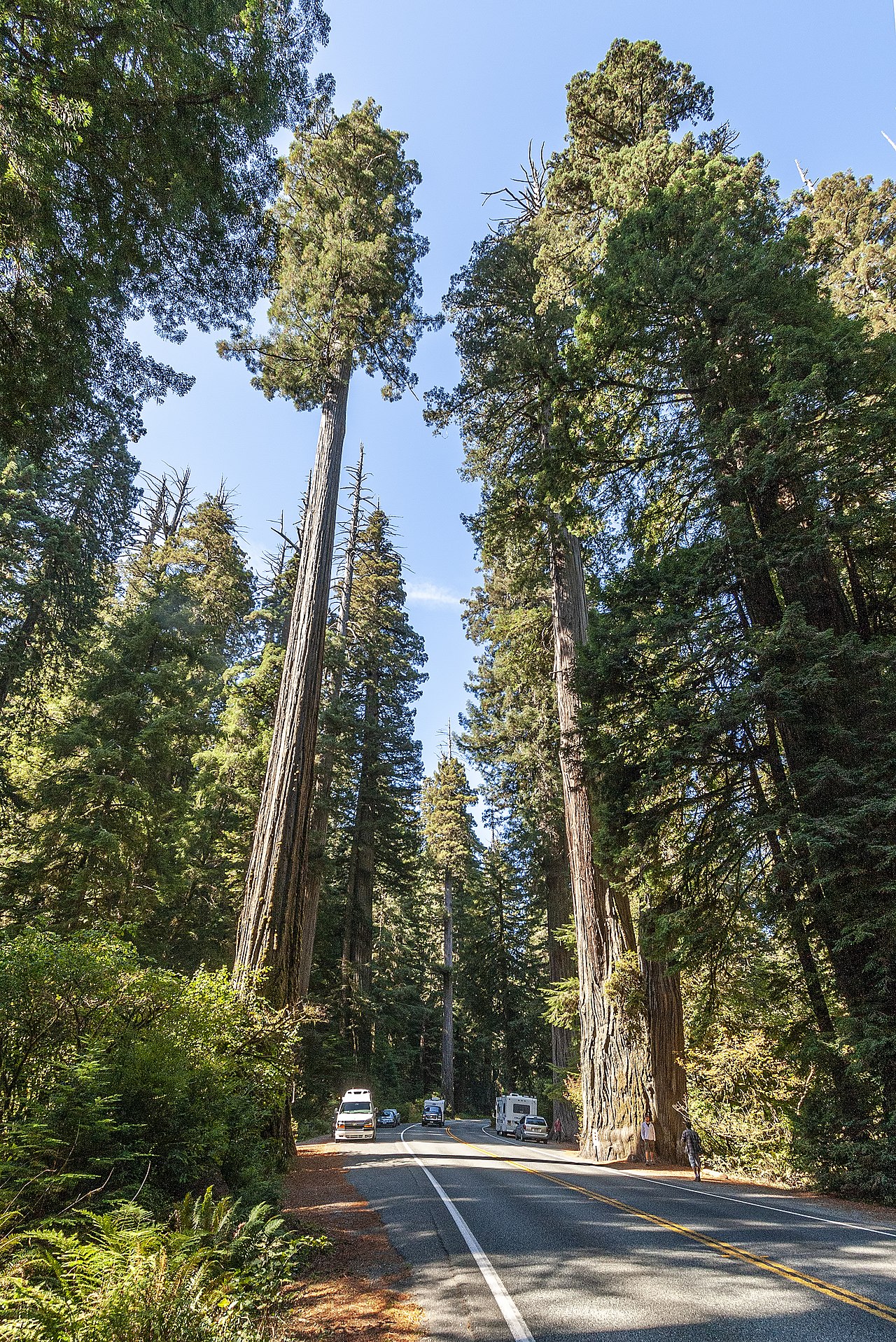
The redwood forest is a cathedral of immense living columns, where shafts of light filter through the canopy 100 meters overhead and the forest floor is carpeted in ferns and sorrel. The coastal fog that rolls in from the Pacific is the lifeblood of these forests, providing up to 40% of the moisture the trees need to reach their staggering heights.
Geography & Extent
- Range: ~720 km strip along the California and Oregon coast
- Width: 8-56 km inland from the coast
- Original Extent: ~8,100 km²
- Remaining Old-Growth: ~5% of original
Coast redwoods grow naturally only in a narrow strip along the Pacific coast from southern Oregon to the Big Sur area of central California. This range is determined by the coastal fog belt — redwoods cannot survive far from the fog that supplements rainfall during the dry summer months. The trees grow from sea level to about 900 meters elevation.
Logging from the 1850s onward reduced the original old-growth redwood forest from roughly 8,100 square kilometers to approximately 5% of its former extent. Most remaining old-growth stands are now protected in Redwood National and State Parks, Humboldt Redwoods State Park, and other reserves along the northern California coast.
Climate & Hydrology
- Annual Rainfall: 1,500-3,000 mm
- Fog Contribution: Up to 40% of moisture
- Temperature: Cool maritime, 8-18°C year-round
- Fire Regime: Low-intensity ground fires historically every 6-25 years
The coast redwood belt has a cool, Mediterranean climate with wet winters and dry summers. Summer drought would be fatal to the trees if not for the coastal fog that rolls in from the cold California Current. Redwoods harvest fog directly through their needles, and fog drip from the canopy can double the effective rainfall reaching the forest floor.
Fire has been a natural part of the redwood ecosystem for millions of years. Coast redwoods have evolved thick, fire-resistant bark up to 30 centimeters thick and the ability to sprout new growth from the base or trunk after fire damage. Indigenous peoples of the region used prescribed fire to manage the forest understory for thousands of years.
Biodiversity
- Hyperion: 115.92 m — tallest known tree on Earth
- Canopy Ecosystem: Entire ecosystems exist in the treetops
- Salamander Species: Wandering salamander lives in the canopy
- Epiphytes: Ferns and huckleberry grow on upper branches
The redwood canopy is so high above the forest floor that it constitutes a separate ecosystem. Scientists who first climbed into old-growth redwood crowns in the 1990s discovered fern mats, huckleberry bushes, and even small trees growing on the thick layer of soil accumulated on upper branches. The wandering salamander completes its entire life cycle in the canopy, never touching the ground.
The forest floor is characterized by deep shade, massive fallen logs, and a lush carpet of sword ferns, redwood sorrel, and mosses. Old-growth redwood forests have some of the highest biomass of any ecosystem on Earth, comparable to or exceeding tropical rainforests. A single large redwood can contain enough wood to build 22 average American homes.
Threats & Conservation
- Logging History: 95% of old-growth redwoods logged since 1850s
- Protection: Redwood National and State Parks established 1968/expanded 1978
- Current Threats: Climate change, reduced fog, fire suppression effects
The logging of coast redwoods was one of the most devastating episodes of forest destruction in North American history. Between the Gold Rush era and the late 20th century, 95% of old-growth redwood forest was clearcut. The Save the Redwoods League, founded in 1918, purchased thousands of acres of old-growth forest to prevent its destruction, and Redwood National Park was established in 1968.
Today, the most significant threat to redwoods may be climate change. Studies suggest that coastal fog in California has decreased by 33% over the past century, potentially threatening the moisture supply that redwoods depend on. Warmer temperatures may also shift the fog belt northward, shrinking the redwood's range.
Cultural Significance
- Indigenous Peoples: Yurok, Tolowa, Chilula
- Timber History: Central to California's 19th-century economy
- Tourism: Millions of visitors annually
The Yurok, Tolowa, and Chilula peoples lived among the coast redwoods for thousands of years, using the trees for canoes, plank houses, and ceremonial purposes. Redwood's straight grain and rot resistance made it ideal for construction, and indigenous peoples developed sophisticated techniques for felling and shaping the massive logs without metal tools.
Today, the redwood forests are major tourist destinations, drawing millions of visitors each year. The experience of standing among trees over 100 meters tall is profoundly moving for most people — many describe it as a spiritual experience. Avenue of the Giants, a scenic drive through Humboldt Redwoods State Park, is one of the most iconic road trips in America.
Key Facts
- Hyperion, the world's tallest tree at 115.92 meters, is a coast redwood.
- Only about 5% of the original old-growth coast redwood forest remains.
- Coastal fog provides up to 40% of the moisture redwoods need to survive.
- Redwood bark can be 30 cm thick, providing excellent fire resistance.
- Entire ecosystems exist in the canopy of old-growth redwoods, including ferns, bushes, and salamanders.
Fun Facts
- A single old-growth coast redwood contains enough wood to build 22 average American homes.
- The wandering salamander lives its entire life in the redwood canopy, never touching the ground.
- Coast redwoods can reproduce by sprouting from their roots, creating rings of clonal trees called "fairy rings."
- Huckleberry bushes growing on redwood branches 80 meters above the ground produce berries that are eaten by birds in the canopy.
Final Thoughts
The coast redwood forest is one of the most awe-inspiring ecosystems on Earth. Walking among trees that were already ancient when the Roman Empire fell inspires a sense of humility and wonder. Though 95% of the original old-growth has been lost, the remaining stands are protected and second-growth forests are recovering. Ensuring that coastal fog persists in a warming climate may be the key to the redwood's future.
