

Introduction to the Yangtze River
The Yangtze River is the longest river in Asia and the third-longest in the world, stretching 6,300 kilometers from the glaciers of the Tibetan Plateau to the East China Sea. Known as the Chang Jiang ("Long River") in Chinese, it has been the cradle of Chinese civilization for thousands of years, with archaeological evidence of rice cultivation along its middle reaches dating back over 8,000 years. The Yangtze divides China into northern and southern regions both geographically and culturally, creating distinct climatic zones that have shaped the country's agricultural traditions, dialects, and cuisine. It is home to the massive Three Gorges Dam, the world's largest hydroelectric power station, and its basin supports roughly one-third of China's total population. The river drains an area of 1.8 million square kilometers, receiving water from over 700 tributaries as it passes through the towering gorges of Sichuan, the fertile lake country of Hubei and Hunan, and the vast alluvial plains of the Yangtze Delta.
Key Facts
- Length: 6,300 km (3,917 mi)
- Countries: China
- Source: Tanggula Mountains, Tibet
- Mouth: East China Sea
- Drainage Basin: 1.8 million km²
Geography and Course
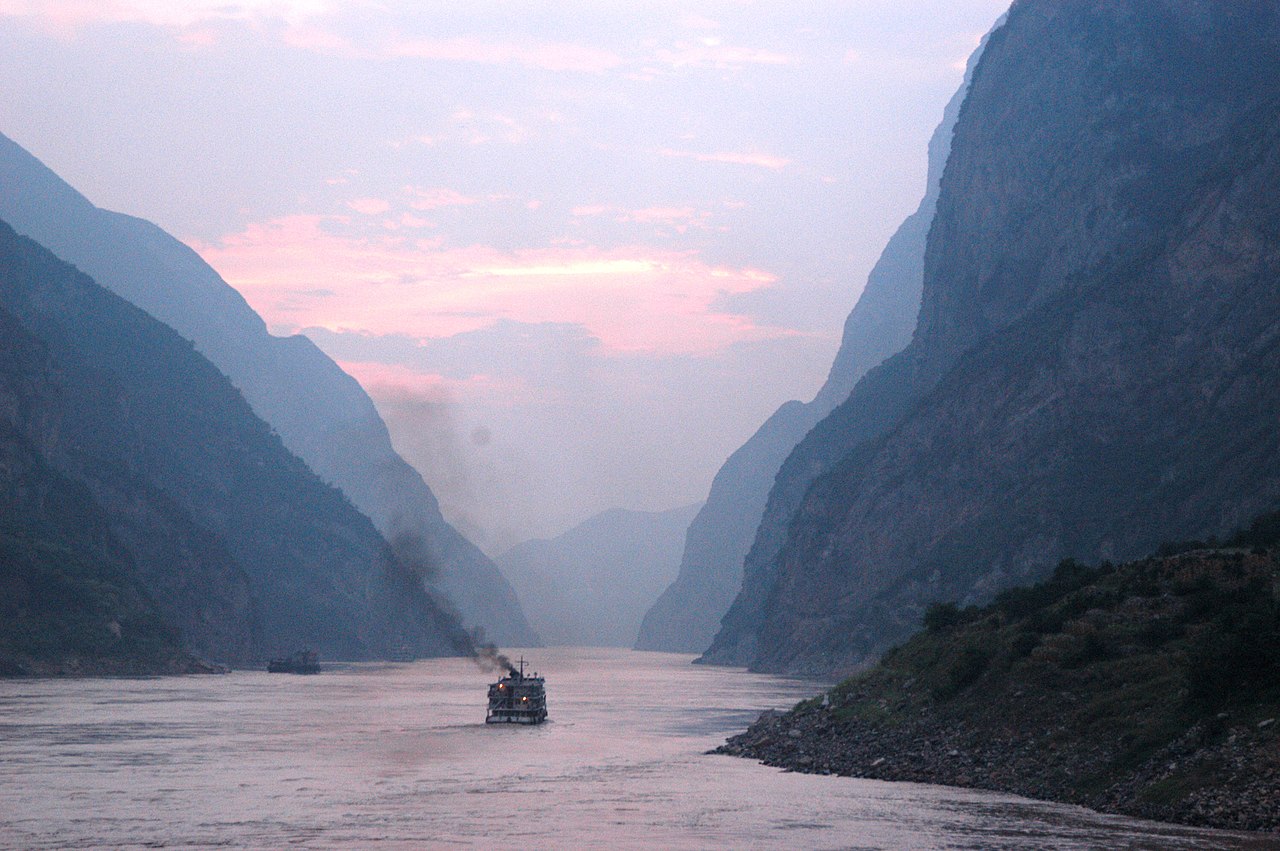
The Yangtze rises on the Qinghai-Tibet Plateau at an elevation of over 5,000 meters and flows generally eastward through eleven provinces before emptying into the East China Sea near Shanghai. In its upper reaches, the river carves through deep canyons including Tiger Leaping Gorge in Yunnan, one of the deepest river gorges in the world at over 3,000 meters from river to summit. The Three Gorges region—Qutang, Wu, and Xiling—features dramatic scenery where the river cuts through limestone mountains, forming narrow passages that once made navigation treacherous before the Three Gorges Dam flooded much of the canyon in 2003. The middle Yangtze is characterized by large freshwater lakes including Dongting Lake and Poyang Lake, which act as natural flood reservoirs during the monsoon season. The river's delta, covering roughly 99,600 square kilometers, is one of the most densely populated and economically developed areas in China, encompassing the megacity of Shanghai and numerous industrial centers.
Ecology and Wildlife
The Yangtze basin is one of the world's most biodiverse regions, home to over 4,300 species of plants and 378 species of fish. The river is habitat to several critically endangered endemic species, including the Yangtze finless porpoise, whose population had declined to roughly 1,000 individuals by 2017, prompting emergency conservation measures including captive breeding programs. The baiji, or Yangtze river dolphin, was declared functionally extinct in 2006 after a comprehensive survey failed to find a single individual, making it the first cetacean driven to extinction by human activity. The Chinese paddlefish, one of the world's largest freshwater fish reaching up to 7 meters in length, was declared extinct in 2020 after not being sighted since 2003. Wetland areas along the middle Yangtze support vast populations of migratory birds, with Poyang Lake hosting over 500,000 wintering waterbirds annually, including 98% of the world's Siberian cranes. China's 2021 ten-year fishing ban on the Yangtze represents the largest freshwater fishing moratorium in history, covering the entire mainstream and major tributaries.
History and Culture
The Yangtze has been central to Chinese history for millennia, with the ancient kingdoms of Ba, Shu, Chu, and Wu all rising along its banks. The river served as a natural military barrier, famously exploited during the Three Kingdoms period (220-280 CE) when the Battle of Red Cliffs was fought on its waters. It has been a major transportation artery since the Han Dynasty, when merchant vessels and grain barges connected the prosperous south to the political capitals of the north. The Taiping Rebellion (1850-1864), one of the deadliest conflicts in human history with an estimated 20-30 million casualties, was fought largely in the Yangtze basin. During the Chinese Civil War, the crossing of the Yangtze by the People's Liberation Army in April 1949 effectively sealed the Communist victory. The completion of the Three Gorges Dam in 2006, which created a reservoir stretching 660 kilometers upstream, displaced over 1.3 million people and submerged hundreds of villages, ancient temples, and archaeological sites.
Economic Importance
The Yangtze is China's most important waterway, carrying about 80% of the country's inland waterway cargo and handling more freight tonnage than any other river in the world. Ocean-going vessels of up to 10,000 tonnes can navigate as far inland as Wuhan, 1,100 kilometers from the sea, while smaller vessels reach Chongqing, 2,400 kilometers upstream. The Three Gorges Dam generates approximately 100 terawatt-hours of electricity annually, equivalent to burning 50 million tonnes of coal, though it has faced sustained environmental criticism for disrupting sediment flows, trapping nutrients, and altering downstream ecosystems. The river basin is home to about 400 million people and produces over 40% of China's GDP, with the Yangtze River Economic Belt designated as a national development strategy. Major cities including Shanghai, Nanjing, Wuhan, and Chongqing lie along its course, forming one of the world's most productive industrial corridors.
Interesting Facts About the Yangtze River
- The Three Gorges Dam can generate 22,500 megawatts of electricity
- The Yangtze River dolphin was one of only four freshwater dolphins
- Over 700 tributaries feed into the Yangtze
- The river's source was not confirmed until 1976
- Shanghai's name means "upon the sea," referring to its location at the Yangtze delta
Conclusion
The Yangtze River has shaped the landscapes, cultures, and economies of the regions through which it flows. As one of the world's great rivers, it continues to be a vital resource for millions of people while facing modern challenges from development and climate change.