
Introduction
Yellowstone National Park, established on March 1, 1872, holds the distinction of being the world's first national park. Spanning 8,983 square kilometers across the states of Wyoming, Montana, and Idaho, it sits atop one of the world's largest active volcanic systems — the Yellowstone Caldera.
The park is renowned for its extraordinary geothermal features, including more than half of the world's active geysers. From the iconic eruptions of Old Faithful to the rainbow-hued Grand Prismatic Spring, Yellowstone offers visitors a glimpse into the powerful geological forces that continue to shape our planet.
Geography & Location
- Area: 8,983 km² (3,468 sq mi)
- States: Wyoming (96%), Montana (3%), Idaho (1%)
- Elevation Range: 1,610 m to 3,462 m (Eagle Peak)
- Established: March 1, 1872
Yellowstone sits on a high plateau surrounded by mountain ranges of the Middle Rocky Mountains. The park encompasses forests, alpine meadows, rivers, lakes, canyons, and geothermal areas. Yellowstone Lake, one of the largest high-altitude lakes in North America, covers 352 square kilometers at an elevation of 2,357 meters.
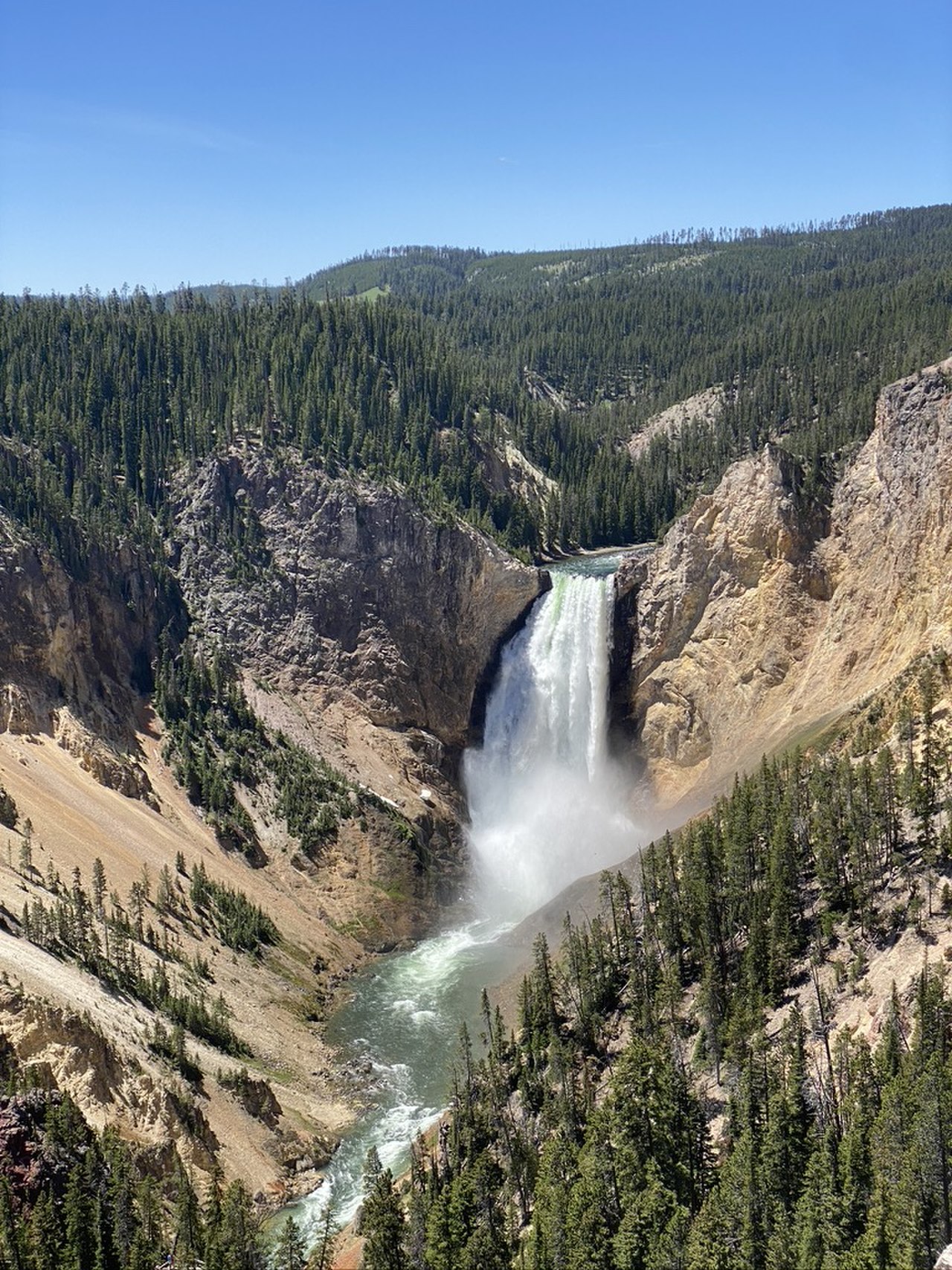
The Grand Canyon of the Yellowstone stretches 32 kilometers long and up to 370 meters deep, carved by the Yellowstone River. The canyon's yellow-tinted walls, colored by iron compounds in the rhyolite rock, gave both the canyon and the park their name.
Wildlife & Ecosystems
- Mammal Species: 67, including grizzly bears, wolves, and bison
- Bird Species: 330
- Fish Species: 16
- Bison Population: ~5,000 (largest free-roaming herd in the US)
Yellowstone is one of the last nearly intact large temperate ecosystems in the Northern Hemisphere. The reintroduction of gray wolves in 1995 became one of the most celebrated conservation success stories, triggering a trophic cascade that restored riparian vegetation, stabilized riverbanks, and increased biodiversity throughout the park.
The park supports the largest concentration of mammals in the lower 48 states. Grizzly bears, black bears, elk, moose, mule deer, pronghorn, bighorn sheep, and mountain lions all roam the landscape. Yellowstone's bison herd, numbering around 5,000, is the only population in the US that has lived continuously in the wild since prehistoric times.
Notable Features
- Old Faithful: Erupts roughly every 90 minutes, shooting 14,000-32,000 liters of boiling water up to 56 meters
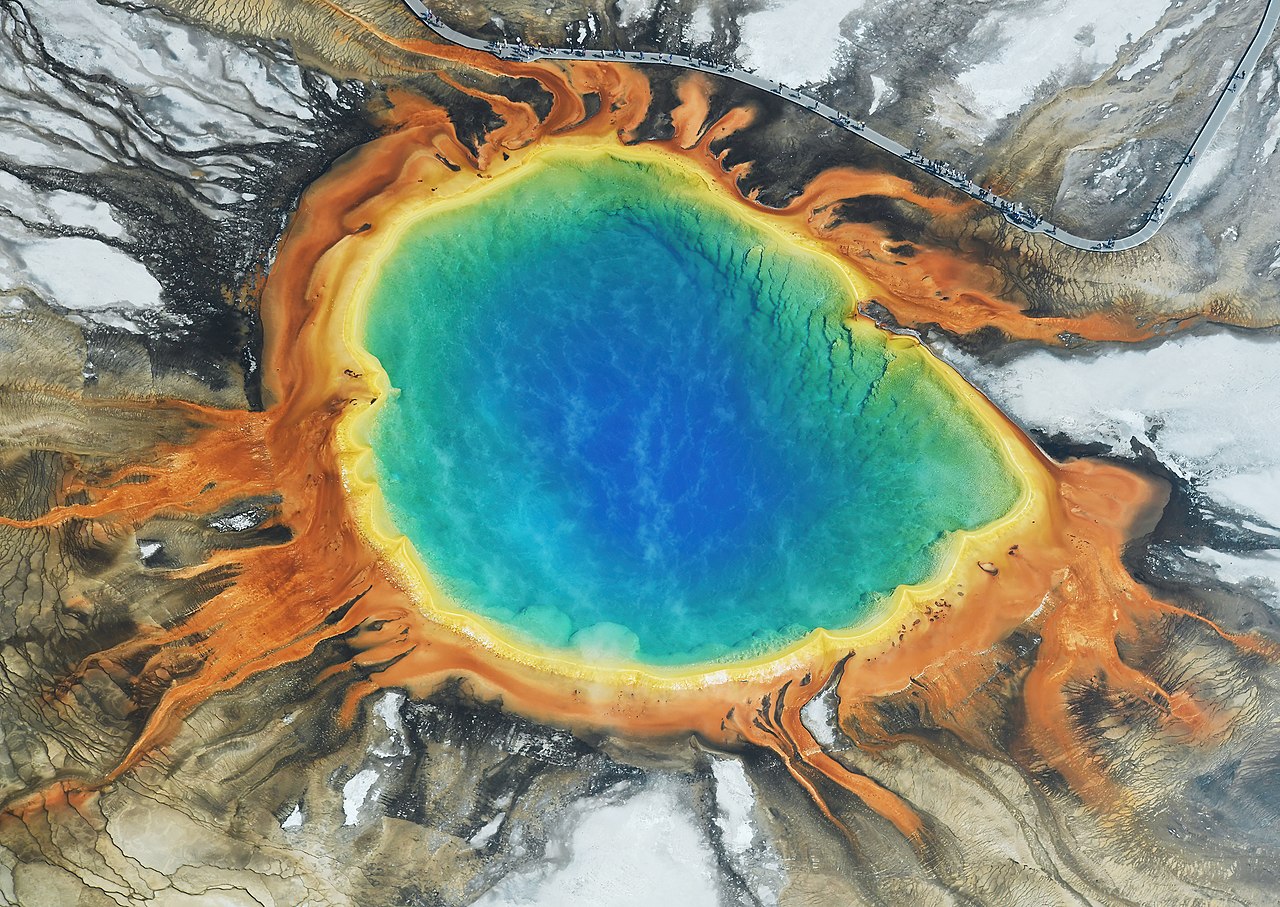
- Grand Prismatic Spring: 112 meters across, the largest hot spring in the US and third largest in the world
- Mammoth Hot Springs: Terraces of travertine deposited by geothermally heated water
- Yellowstone Caldera: A supervolcano measuring 72 km long and 55 km wide
Yellowstone contains more than 10,000 geothermal features, including geysers, hot springs, mudpots, and fumaroles. The park's 500+ geysers represent over half of all known geysers on Earth. Steamboat Geyser, the world's tallest active geyser, can erupt to heights exceeding 90 meters.
The Yellowstone Caldera last erupted catastrophically about 640,000 years ago. While another supereruption is not expected in the foreseeable future, the underground magma chamber continues to fuel the park's geothermal activity, heating billions of liters of water that circulate through underground fractures.
Visitor Information
- Annual Visitors: ~4.9 million
- Best Time to Visit: June to September for warm weather and wildlife
- Trails: Over 1,600 km of hiking trails
- Campgrounds: 12 campgrounds with ~2,000 sites
The park is open year-round, though most roads close to wheeled vehicles from early November through mid-April. Winter visitors can explore by snowmobile or snow coach. The park offers over 1,600 kilometers of hiking trails, from short boardwalk strolls around geothermal features to multi-day backcountry treks.
Key Facts
- Yellowstone was the world's first national park, established in 1872 by President Ulysses S. Grant.
- The park contains more than 10,000 hydrothermal features and over 500 geysers.
- Yellowstone Lake is one of the largest high-elevation lakes in North America at 2,357 meters.
- The Yellowstone supervolcano has had three major eruptions in the past 2.1 million years.
- Gray wolves were successfully reintroduced to the park in 1995 after a 70-year absence.
Fun Facts
- Old Faithful is not the most regular geyser in Yellowstone — that distinction belongs to Castle Geyser, which erupts roughly every 12 hours with remarkable precision.
- The park's geothermal heat keeps some areas snow-free in winter, creating warm patches that attract bison and elk.
- Yellowstone's Grand Prismatic Spring gets its rainbow colors from thermophilic bacteria that thrive at different temperatures along the spring's edge.
- Petrified forests in Yellowstone contain trees that were buried by volcanic ash up to 50 million years ago.
Final Thoughts
Yellowstone National Park remains one of the most extraordinary natural landscapes on Earth. Its combination of geothermal wonders, abundant wildlife, and dramatic scenery draws millions of visitors each year. As both a UNESCO World Heritage Site and a Biosphere Reserve, Yellowstone stands as a testament to the power of conservation and the enduring value of protecting wild places for future generations.
