
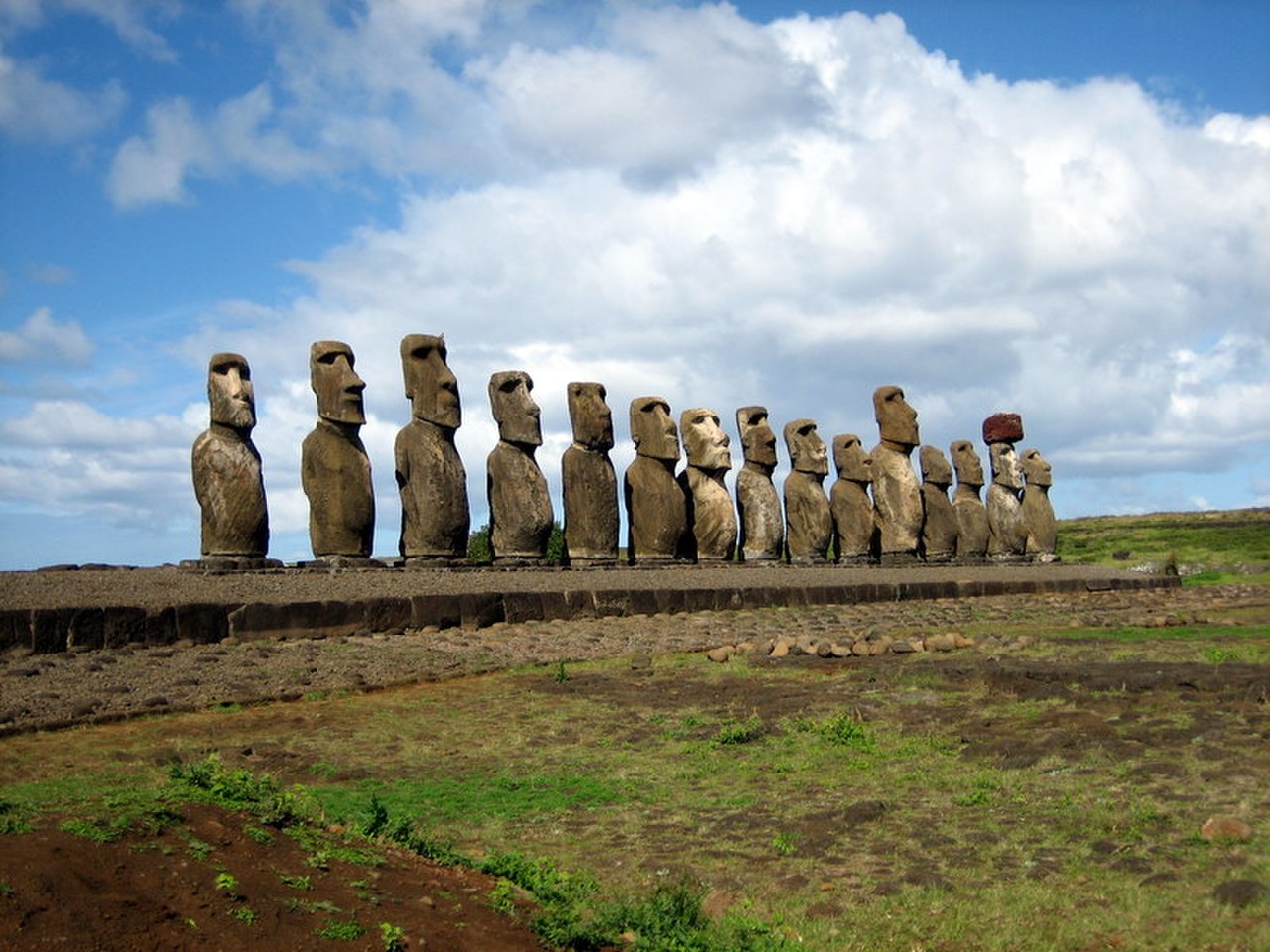
Easter Island — known locally as Rapa Nui and Isla de Pascua to its Chilean administrators — is one of the most remote inhabited places on Earth. The island sits in the southeastern Pacific 3,500 km west of continental Chile (5 hours by jet) and 2,000 km from the nearest inhabited neighbor (Pitcairn Island, population ~50). The closest South American mainland point is Caldera, Chile; the closest land is volcanic Sala y Gómez 415 km east. This profound isolation is what makes the island's archaeological mystery so compelling. The famous moai — 887 catalogued monumental stone statues averaging 4 m height and 13 tonnes weight, with the largest unfinished moai still in the Rano Raraku quarry weighing an estimated 270 tonnes — were carved between roughly 1100 and 1680 AD by the Rapa Nui civilization, then catastrophically toppled in the 18th century as the island's society collapsed. The 1722 Dutch Admiral Jacob Roggeveen's Easter Sunday arrival gave the island its Western name. Today the island is a Chilean special territory with about 8,000 permanent residents (60% Rapa Nui-Polynesian descent, 40% Chilean), the entire island designated a UNESCO World Heritage site, and approximately 100,000 international tourists annually visit despite the very high cost of getting there.
Climate is subtropical maritime — the island's small size, Pacific position, and 27° south latitude mean mild temperatures year-round. Daytime varies only 6-7 °C between winter and summer. Wind is the most distinctive weather feature — Pacific gales can hit at any time, but most days bring moderate trade winds.
Quick verdict
Best overall: Late October-March (Southern Hemisphere summer/warm season).
Best for Tapati Rapa Nui Festival (the year's marquee cultural event): Early-mid February (book accommodation 6-12 months ahead).
Best for moai photography: April-May and September-October (dramatic light, fewer crowds).
Best for diving and snorkeling at Motu Nui: December-March (warmest water 22-24 °C).
Best for Rano Kau and Orongo ceremonial village visits: December-April (driest weather).
Best for budget travelers: May-September (cooler, lower prices, fewer flights but still operational).
Best for hiking Maunga Terevaka (highest point on island): November-April for clearest views.
Best for trail running events: Various marathons in October-March.
Avoid if you can: Christmas-New Year period without booking 6+ months ahead (limited flights and accommodation); November weeks of strong Pacific weather; Tapati Festival accommodation without advance reservation.
Summer / warm season (December-March)
The island at its travel best. Daytime 22-28 °C with reliable sun, sea temperatures climb to 23-25 °C — comfortable for snorkeling and the few diving opportunities. The famous moai sites — Ahu Tongariki (15 standing moai, the island's most photographed), Anakena Beach (with its 7 moai overlooking the only true sandy beach), Rano Raraku (the moai quarry with 397 unfinished statues), and the famous Tahai with sunrise/sunset photography — are all at their photographic peak.
The Rapa Nui National Park (UNESCO) covers 40% of the island. Entry fees of USD 80-100 for foreigners support park preservation; tickets purchased at the park office in Hanga Roa. Within the park, the famous Orongo ceremonial village on the rim of Rano Kau (the island's largest volcanic crater) offers spectacular Pacific views and the unique "birdman" rock carvings related to the famous 18th-century ceremony.
December-January coincides with school holidays in Chile, bringing significant Chilean tourism. Tapati Rapa Nui Festival in early-mid February is the year's defining cultural event — two weeks of traditional Polynesian competitions (the famous Haka Pei sled-down-grass race, traditional fishing with body-painted swimmers, ancestral song competitions, and the crowning of the festival queen). Book Tapati accommodation 6-12 months ahead; the festival doubles or triples accommodation costs.
Autumn shoulder (April-May)
One of the year's best windows for serious travelers. Daytime 18-23 °C with diminishing rain. Crowds drop significantly after Tapati Festival. The famous moai sites at their most peaceful — sunrise photography at Ahu Tongariki without other photographers. The "Mata Tu'u Hotu Iti" Rapa Nui Marathon in May draws international ultra-runners.
Winter / cool season (June-September)
Daytime 15-19 °C with overcast skies and occasional Pacific storms. Rain heavier than summer (average 100+ mm/month versus 60 mm in summer). The famous Rapa Nui Day (June 21, winter solstice) coincides with the ancient Polynesian "Aringa Ora o Rapa Nui" festival. Hotel rates 20-40% lower. Some operators reduce schedules but most operate year-round. The Rapa Nui Cultural Centre and most archaeological sites accessible despite weather.
Spring shoulder (October-November)
Daytime climbs from 18 °C to 23 °C. November is sometimes the windiest month — Pacific storms can deliver gusts past 80 km/h that affect outdoor activities. Tapati preparations begin in late November; visitors get to see practice sessions of the traditional competitions.
Regional/area variations on the island
Hanga Roa (the only town): Year-round. All accommodation and restaurants concentrate here.
Tahai (just north of Hanga Roa): Best for sunset photography year-round.
Ahu Tongariki (15-moai site): Sunrise photography year-round; best November-February for warmest sunrise temperatures.
Anakena Beach (the only sandy beach): Best December-March for swimming.
Rano Raraku quarry: Best April-October for cooler walking; year-round for visits.
Orongo and Rano Kau: Best November-April for clear weather; the cliff walks dangerous in heavy rain.
Maunga Terevaka (the island's highest point at 511 m): Best November-April for clear views.
Ovahe Beach (the smaller pink-sand beach): Year-round.
Festivals & cultural events
Tapati Rapa Nui Festival (early-mid February, two weeks): The year's defining event. Traditional Polynesian competitions including the famous Haka Pei (sledding down hills on banana logs at 80 km/h), Aringa Ora o Rapa Nui (rituals connecting to ancient spirit life), Pukao (the topknots of the moai become symbolic in competitions), and the Tapati Queen crowning.
Día de la Lengua Rapa Nui (Rapa Nui Language Day, varies): Celebrates the indigenous Polynesian language.
Aringa Ora o Rapa Nui (June 21): Winter solstice celebration.
Chilean Independence Day (September 18): Limited celebration locally but Chilean visitors arrive in increased numbers.
Christmas-New Year: Major domestic Chilean tourism period.
Mata Tu'u Hotu Iti Rapa Nui Marathon (May): The island's biggest sporting event.
Practical considerations
LATAM Airlines operates the only commercial passenger flights — 1-2 daily flights from Santiago (5 hours) and 1-2 weekly flights from Papeete, Tahiti. Flights typically book up Tapati Festival period and December-January. Cost reflects monopoly: USD 600-1,500+ round trip from Santiago, USD 1,000-2,500 from international origins via Santiago. Mataveri International Airport (IPC) is on the south coast of Hanga Roa.
Accommodation ranges from family-run residenciales (USD 60-100/night) to mid-range hotels (USD 150-300) to the famous Explora Rapa Nui all-inclusive luxury lodge (USD 1,500+/night). Camping is permitted at limited designated areas only. Most visitors stay 3-5 nights to cover the major archaeological sites.
Entry to Rapa Nui National Park requires a separate ticket (~USD 80) valid 10 days. Some sites within the park (Orongo, Rano Raraku) can only be visited once each on the standard ticket. Guided tours are increasingly required at most sites since 2018 conservation reforms.
Cultural notes
Spanish and Rapa Nui (a Polynesian language) are both spoken; English understood at most tourist-facing establishments but not universal. Chilean peso is the currency; US dollars sometimes accepted at hotels but rarely at restaurants. Cards accepted at major establishments. Tipping 10%. The Rapa Nui people maintain strong Polynesian cultural identity distinct from mainland Chilean — many residents prefer "Rapa Nui" to "Pascuense" as a demonym. Respect ancestral sites — touching moai, climbing on archaeological structures, or removing rocks/artifacts is illegal.
Practical safety and conservation
Rapa Nui has experienced significant political tensions around tourism and indigenous rights — the Chilean government's 2010 ahu kaha (ban on tourists climbing on platforms) and 2018 conservation reforms have improved site preservation. Travelers should follow guide instructions strictly. The island has minimal crime; visitors should follow normal precautions.
Traveler-type advice
Archaeological travelers (the island's main demographic): April-May or October-November for fewer crowds and dramatic light. Multi-day guided tours of all park sites recommended.
Cultural travelers: Early-mid February for Tapati Rapa Nui Festival — book 6-12 months ahead.
Photographers: Sunrise at Ahu Tongariki year-round; April-May for dramatic light without summer haze.
Adventure travelers: November-April for Maunga Terevaka hike and Rano Kau cliff walks.
Honeymooners: December-April with Explora Rapa Nui all-inclusive resort.
Divers and snorkelers: December-March for warmest water at Motu Nui.
Budget travelers: May-September for residencial homestays and shoulder pricing.
Runners: May for Rapa Nui Marathon.
Stopover travelers (Santiago-Papeete route): Year-round; 2-3 nights is the minimum useful stay.
Bottom line
Easter Island rewards late October-March visits decisively for warmest weather and peak archaeological access. The Tapati Festival in early-mid February is the year's defining cultural experience. The island's combination of profound isolation, extraordinary archaeological mystery, and powerful Polynesian culture makes it one of those rare destinations where the journey is as memorable as the arrival — the moai live up to every expectation.