
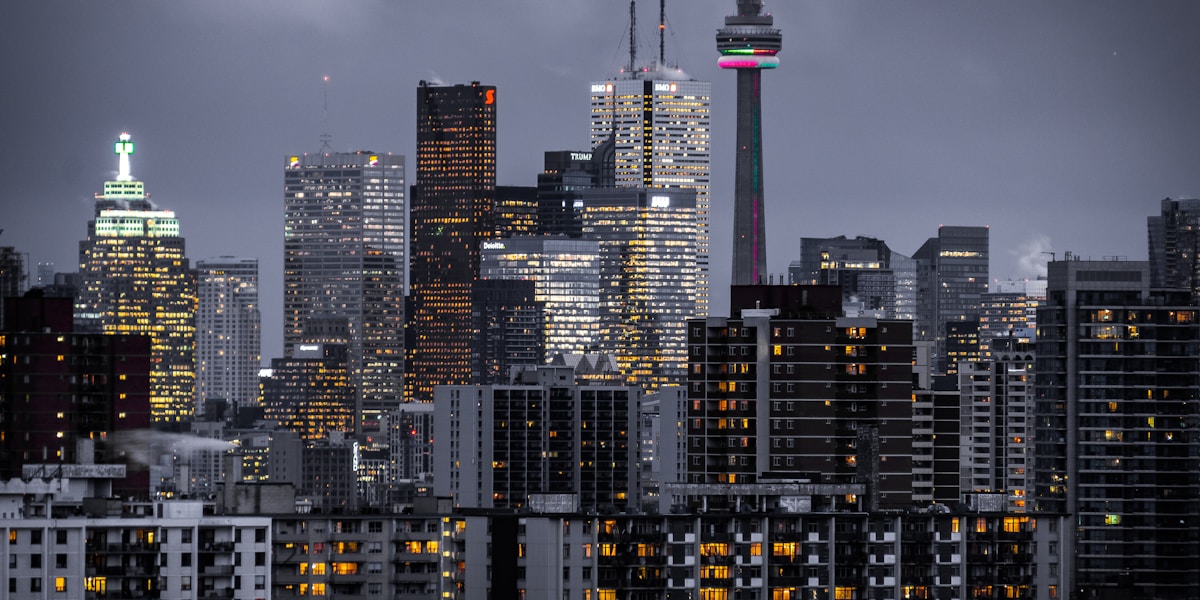
A city's skyline is its visual signature, instantly recognizable and deeply tied to its geography. The reason Manhattan has two clusters of skyscrapers (Midtown and Lower Manhattan) is geological — bedrock is close to the surface in those areas and too deep in between. Geography writes the rules; architecture fills in the details.
Introduction
From the harbor-framed towers of Hong Kong to the river-reflecting spires of Shanghai, the world's most dramatic skylines emerge where natural landscapes and human ambition intersect. Understanding the geography behind skylines reveals why cities look the way they do.

New York City, USA
- Tallest Building: One World Trade Center, 541 m
- Skyscrapers (150m+): ~300
- Bedrock: Manhattan schist, close to surface
Manhattan's iconic skyline is fundamentally shaped by its geology. The island's bedrock — primarily Manhattan schist — sits close to the surface in Lower Manhattan and Midtown, providing the solid foundation needed for skyscrapers. In between, the rock dips deeper, which historically discouraged tall construction and created the distinctive two-cluster skyline.
The narrow island geography also drives vertical building. With water on three sides and limited land, Manhattan had nowhere to grow but up. The 1916 Zoning Resolution, requiring setbacks as buildings rose, created the distinctive wedding-cake profiles of Art Deco towers like the Empire State Building and Chrysler Building.
Hong Kong, China
- Tallest Building: International Commerce Centre, 484 m
- High-rises (100m+): Over 7,000
- Backdrop: Victoria Peak, 552 m
Hong Kong's skyline is framed by one of the most dramatic natural settings of any city. Victoria Harbour separates Hong Kong Island from Kowloon, with towers rising on both sides against a backdrop of steep, forested mountains. Victoria Peak at 552 meters provides a natural amphitheater for viewing the urban spectacle below.
The nightly "Symphony of Lights" laser show illuminates the skyline across the harbor, highlighting the density and variety of the towers. Hong Kong's skyline changes constantly — the city has demolished more skyscrapers than most cities have built, continuously replacing older buildings with taller ones.
Dubai, UAE
- Tallest Building: Burj Khalifa, 828 m
- Geography: Flat desert coastline
- Construction Boom: 2000s-present
Dubai's skyline is remarkable precisely because geography provided no natural drama — the city sits on a flat desert coastline with no hills, mountains, or natural harbor. Every element of its dramatic silhouette was engineered from scratch, from the 828-meter Burj Khalifa to the sail-shaped Burj Al Arab.
The flat terrain gave Dubai a blank canvas, but also engineering challenges. The Burj Khalifa's foundation required 192 concrete piles driven 50 meters into the sand. Dubai's skyline is a testament to what human engineering can achieve when geography provides few natural advantages and few natural constraints.
Rio de Janeiro, Brazil
- Iconic Features: Sugarloaf Mountain, Christ the Redeemer
- Geography: Mountains meet the sea
- Beach Frontage: Copacabana, Ipanema
Rio's skyline is unique because natural features dominate the human-built environment. Sugarloaf Mountain (396 m), Corcovado with the Christ the Redeemer statue (710 m), and the dramatic granite peaks of the Tijuca Massif frame the city's towers rather than being overshadowed by them.
The city is squeezed between mountains and the Atlantic Ocean, creating a winding urban landscape that wraps around bays, lagoons, and steep hillsides. This geography makes Rio's skyline three-dimensional in a way that few cities can match, visible from countless angles and elevations.
Shanghai, China
- Tallest Building: Shanghai Tower, 632 m
- Pudong Skyline: Built entirely since 1990
- River: Huangpu River divides old and new
Shanghai's skyline tells a story of dramatic transformation. The Bund on the western bank of the Huangpu River features colonial-era European architecture from the early 20th century. Directly across the river, the Pudong skyline — built entirely since 1990 — features the Oriental Pearl Tower, Shanghai World Financial Center, and the twisting 632-meter Shanghai Tower.
The contrast between the two riverbanks makes Shanghai's skyline one of the most photographed in the world. The Huangpu River provides a natural stage that separates and showcases both the historical and ultra-modern faces of the city.
Key Facts
- Manhattan's two-cluster skyline is caused by the depth of bedrock beneath the island.
- Hong Kong has over 7,000 high-rises, more than any other city on Earth.
- Dubai's Burj Khalifa stands 828 meters tall on a foundation driven 50 meters into desert sand.
- Rio de Janeiro's skyline is dominated by natural features rather than skyscrapers.
- Shanghai's entire Pudong skyline was built from farmland in just 30 years.
Fun Facts
- Manhattan's bedrock is 450-million-year-old schist, one of the hardest rocks on Earth.
- Hong Kong demolishes more skyscrapers than most cities build, constantly rebuilding its skyline.
- The Burj Khalifa is so tall that residents on upper floors see the sun set several minutes later than those at ground level.
- The Christ the Redeemer statue in Rio was voted one of the New Seven Wonders of the World.
Final Thoughts
The world's great city skylines are collaborations between geology, geography, and human ambition. Bedrock, coastlines, mountains, and rivers set the stage; architects and engineers fill it with towers that define the visual identity of cities for generations.
Test Your Knowledge!
Think you know your architecture and cities? Try our interactive quiz!
Play Geography Games →