
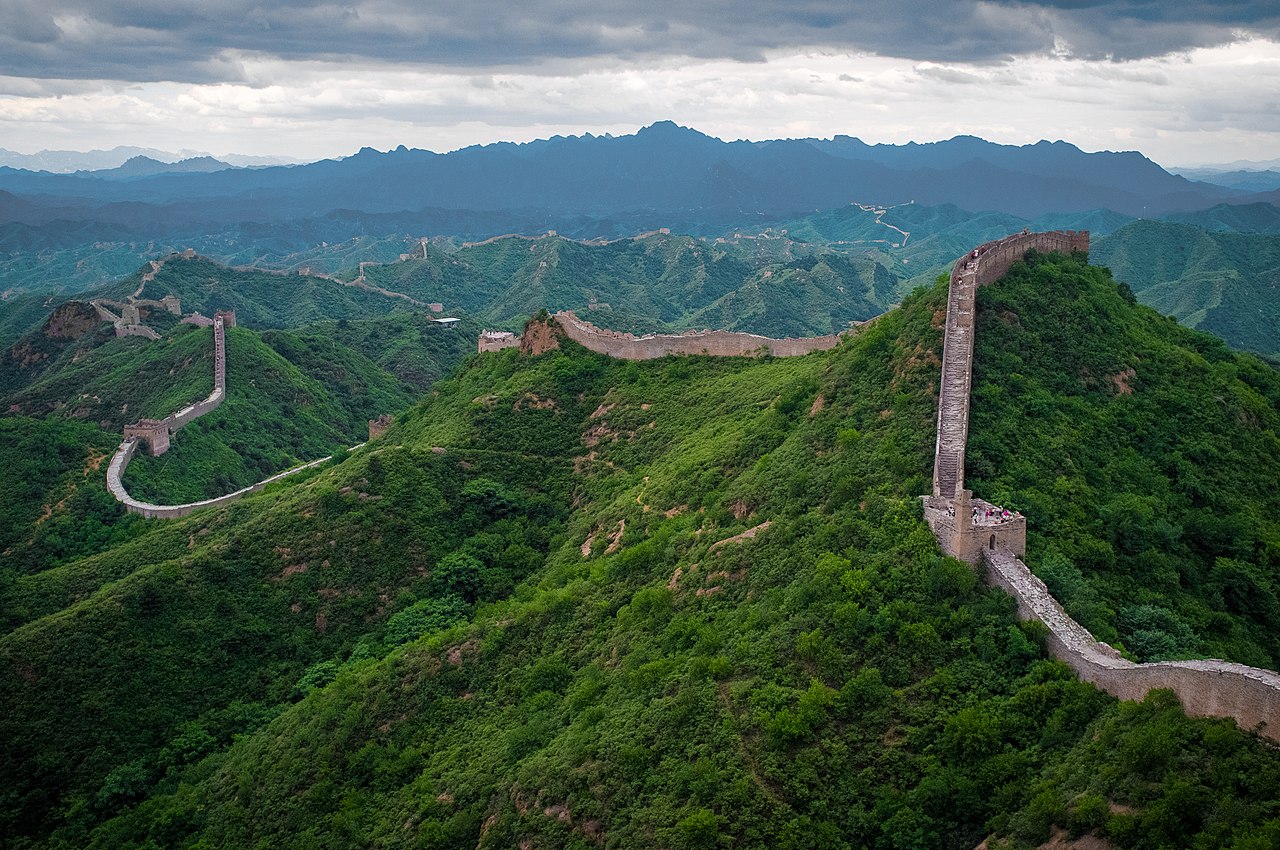
China has one of the most diverse climates on Earth, ranging from tropical in the far south to subarctic in the far north, with average January temperatures around -30°C (-22°F) in Harbin and July highs near 40°C (104°F) in the Turpan Depression. The best time to visit most of China is April to May or September to October, when temperatures are mild and rainfall is moderate.
Why China's Climate Is So Varied
Spanning roughly 50 degrees of latitude and more than 5,000 km from east to west, China contains nearly every climate type found on the planet. Within a single country you can find tropical rainforest, arid desert, alpine tundra, and continental forest. Climatologists generally identify five broad zones: tropical and subtropical in the south, humid continental across the centre and northeast, arid and semi-arid in the northwest, and the cold high-altitude climate of the Tibetan Plateau.
Two forces shape this complexity. The first is the East Asian monsoon, which pumps warm, moist air inland from the Pacific in summer and drives cold, dry air south from Siberia in winter. The second is the Tibetan Plateau, averaging over 4,000 m in elevation, which is so massive it generates its own weather and blocks moisture from reaching the deserts of the northwest. To explore the country behind the weather, see our china country guide.
The Four Seasons Across China
Because of the monsoon, China experiences sharp seasonal swings, but how dramatic they feel depends heavily on where you are:
- Spring (March–May): Mild and increasingly green, typically 5–25°C. One of the two ideal travel windows. Northern China can still see dust storms blown in from the Gobi.
- Summer (June–August): Hot and humid almost everywhere, 20–40°C. The Yangtze cities of Wuhan, Nanjing, and Chongqing are nicknamed the "Three Furnaces" for their oppressive heat.
- Autumn (September–November): Crisp, clear, and comfortable, again 5–25°C. Beijing's famously blue October skies make this the favourite season for many visitors.
- Winter (December–February): Bitterly cold in the north (down to -30°C in Harbin) but mild in the tropical south, where Hainan stays warm enough for the beach.
Transition seasons are short in the north and long in the south, and elevation matters as much as latitude: Kunming in Yunnan, nicknamed the "Spring City," holds a near-constant 15–24°C all year thanks to its altitude.
Rainfall and the Summer Monsoon
Roughly 70% of China's annual precipitation falls during the monsoon months of May to September, and the rain belt sweeps northward as summer advances. Guangzhou and the south begin getting heavy rain as early as April, while Beijing's wet season peaks in July and August. The result is a strong wet-summer, dry-winter pattern across most of the country.
- Southern China: Wet, with 1,500–2,000 mm of rain a year.
- Northern China: Drier, typically 400–800 mm a year.
- Northwest deserts: Extremely arid, often under 100 mm, with the Taklamakan among the world's driest places.
The Yangtze Delta has its own famous "plum rain" (meiyu) season in June and July, named for the plums ripening as weeks of grey drizzle settle in. Along the southeastern coast, typhoon season runs from July to November, with Hainan, Guangdong, and Fujian most exposed to powerful Pacific storms.
Climate Extremes
The gap between China's hottest and coldest spots is staggering, and can exceed 80°C between summer and winter records. The Turpan Depression in Xinjiang, one of the lowest points on Earth, can hit around 50°C (122°F) in summer, while Harbin in the northeast has fallen below -38°C in deep winter, cold enough to support its world-renowned Ice and Snow Festival. Meanwhile, the Tibetan Plateau stays cold year-round, with intense sunshine, thin air, and freezing nights even in summer. This range is what makes China one of the most climatically diverse nations on the planet.
Best Time to Visit by Region
There is no single best season for all of China, so match your timing to your destination:
- Beijing and the north: September–October for clear skies and comfortable temperatures.
- Shanghai and the east: April–May or October, between the summer heat and winter chill.
- Southern China and Hainan: October–March to dodge the heat and typhoons.
- Tibet: May–October, with the warmest weather from June to September.
- Silk Road and the northwest: May–June and September–October, avoiding the desert summer.
Overall, the shoulder seasons of spring and autumn deliver the most reliable weather nationwide, which is why they are also the busiest and most expensive travel periods.
Frequently Asked Questions
What is the best month to visit China?
October is often the single best month, offering mild temperatures, low humidity, and clear skies across much of the country, especially in Beijing and the north. April and May are equally good for eastern and central China.
Does it snow in China?
Yes. Northern and northeastern cities such as Harbin, Beijing, and Shenyang get regular winter snow, and mountainous and high-altitude regions including Tibet see heavy snowfall. The tropical south, however, rarely if ever sees snow.
Which is the hottest part of China?
The Turpan Depression in Xinjiang is the hottest, with summer temperatures approaching 50°C (122°F). Among major cities, the Yangtze River "Three Furnaces" of Wuhan, Nanjing, and Chongqing are famous for their punishing summer heat and humidity.
When is China's rainy season?
The monsoon brings most rain between May and September, advancing from south to north. The southern coast gets rain earliest, while the Yangtze region endures the lingering "plum rain" of June and July.
