
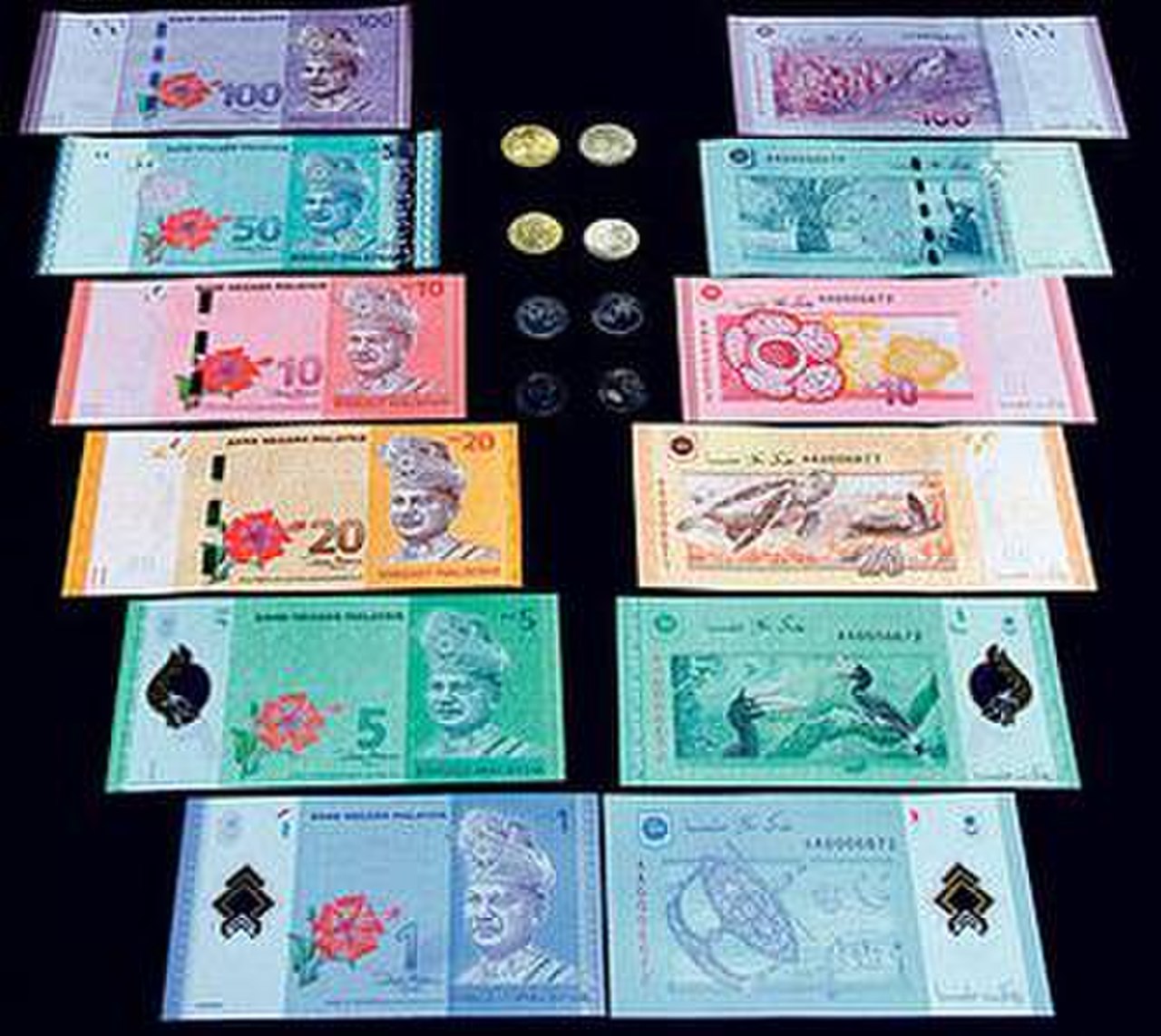
The currency of Malaysia is the Malaysian ringgit, abbreviated as MYR and written with the symbol RM. Issued by the central bank, Bank Negara Malaysia, the ringgit is the only legal tender used across the country, from the skyscrapers of Kuala Lumpur to the rainforest towns of Borneo. One ringgit divides into 100 smaller units called sen, and as of 2026 one US dollar buys roughly 4.5 ringgit.
What Does "Ringgit" Mean?
The word ringgit means "jagged" in Malay. It originally described the serrated, milled edges of the Spanish silver dollars that circulated widely throughout the Malay world and Southeast Asia during the colonial trading era. Those notched coins were so common that the name stuck, and centuries later it became the official name of Malaysia's national currency. Because of this shared silver-coin heritage, the ringgit is etymologically related to several regional currencies. For a long time, English speakers and even official documents informally called it the "Malaysian dollar," and the dollar sign was sometimes used before the RM symbol was standardized in 1993 to avoid confusion with the currencies of neighbouring countries.
Banknotes and Coins in Circulation
Malaysian banknotes are instantly recognizable because every denomination features a portrait of Tuanku Abdul Rahman, the country's first Yang di-Pertuan Agong (the elected king), on the front. The reverse sides celebrate national identity through images of local flora, fauna, cultural motifs, and landmarks such as the Petronas Twin Towers. The notes currently in everyday use are colour-coded:
- RM100 — purple, the highest common denomination
- RM50 — blue-green
- RM20 — orange
- RM10 — red
- RM5 — green, and printed on durable polymer rather than paper
- RM1 — blue
Coins come in denominations of 5, 10, 20, and 50 sen. The 1 sen coin was withdrawn from circulation and prices are now rounded to the nearest 5 sen at the till. The RM1 note remains legal tender, though a RM1 coin was minted in earlier series. Bank Negara Malaysia has also issued special commemorative coins over the years, including very high face-value gold pieces produced for collectors and anniversaries.
A Short History of the Ringgit
Malaysia introduced its own currency in 1967, when it replaced the Malaya and British Borneo dollar at par. Before that, the region had relied on shared colonial-era money. The new ringgit gave the young federation, which had formed in 1963, a financial symbol of independence. Bank Negara Malaysia, founded in 1959, became responsible for issuing notes and managing monetary policy.
The most dramatic chapter in the ringgit's story came during the 1997–98 Asian financial crisis, when speculative pressure sent the currency tumbling. In a controversial move, Prime Minister Mahathir Mohamad imposed capital controls and pegged the ringgit at a fixed rate of RM3.80 to the US dollar in September 1998. The decision broke with International Monetary Fund orthodoxy at the time but helped stabilize the economy. The fixed peg was finally lifted in July 2005, and the ringgit now operates under a managed float, meaning its value moves with the market while the central bank intervenes when necessary. You can learn more about the country in our malaysia country guide.
Using Money as a Traveler
Malaysia is increasingly cashless in cities, where credit cards, debit cards, and e-wallet apps are accepted in malls, restaurants, and hotels. However, cash is still king at hawker centres, night markets, small shops, rural areas, and especially in East Malaysia on the island of Borneo. It is wise to keep a supply of small notes for street food and taxis. Licensed money changers in shopping districts almost always offer better exchange rates than airport counters or hotel desks, and ATMs are plentiful in urban centres. One rule to remember: it is illegal to carry more than RM30,000 worth of ringgit (and equivalent foreign currency) in or out of the country without declaration, and physical export of the banknotes themselves is tightly restricted, so convert leftover ringgit before you leave.
The Ringgit Today
The ringgit is one of Southeast Asia's most actively traded currencies, supported by Malaysia's diversified economy, which spans electronics manufacturing, palm oil, petroleum, and tourism. Its exchange rate is influenced by global commodity prices, US interest rates, and regional capital flows. Bank Negara Malaysia continues to modernize the currency, investing in security features such as colour-shifting ink, watermarks, and security threads to combat counterfeiting, while promoting digital payment systems that are gradually reducing the country's reliance on physical cash.
Frequently Asked Questions
What is the currency symbol for the Malaysian ringgit?
The ringgit uses the symbol RM, placed before the amount (for example, RM50). Its three-letter ISO 4217 code is MYR, which you will see on exchange boards and banking apps.
How many sen are in one ringgit?
One ringgit is divided into 100 sen. Coins are issued in 5, 10, 20, and 50 sen, while the 1 sen coin is no longer in circulation, so cash totals are rounded to the nearest 5 sen.
Can I use US dollars or Singapore dollars in Malaysia?
No. The ringgit is the only legal tender for everyday transactions. Foreign currencies are not generally accepted by shops, so you should exchange money at a licensed changer or withdraw ringgit from an ATM.
Is the Malaysian ringgit pegged to the US dollar?
Not anymore. The ringgit was pegged at RM3.80 per US dollar from 1998 until 2005. Since then it has been a managed float, meaning its value changes with the market under the watch of Bank Negara Malaysia.