
Dry Tortugas National Park, established on October 26, 1992, protects 64,701 acres of open water, coral reefs, and seven small islands in the Gulf of Mexico, 70 miles west of Key West, Florida. The park is dominated by Fort Jefferson, one of the largest masonry structures in the Western Hemisphere — a massive hexagonal fortress built on Garden Key between 1846 and 1875 that was never completed and never fired a shot in battle.
Introduction
Accessible only by seaplane or boat (a 2.5-hour ferry ride from Key West), Dry Tortugas is one of the most remote and least visited parks in the system, with approximately 84,000 visitors annually. Those who make the journey are rewarded with pristine coral reefs, crystal-clear tropical waters, spectacular snorkeling, incredible bird migration spectacles, and the surreal experience of camping on a tiny island dominated by a 19th-century fort rising from the sea.
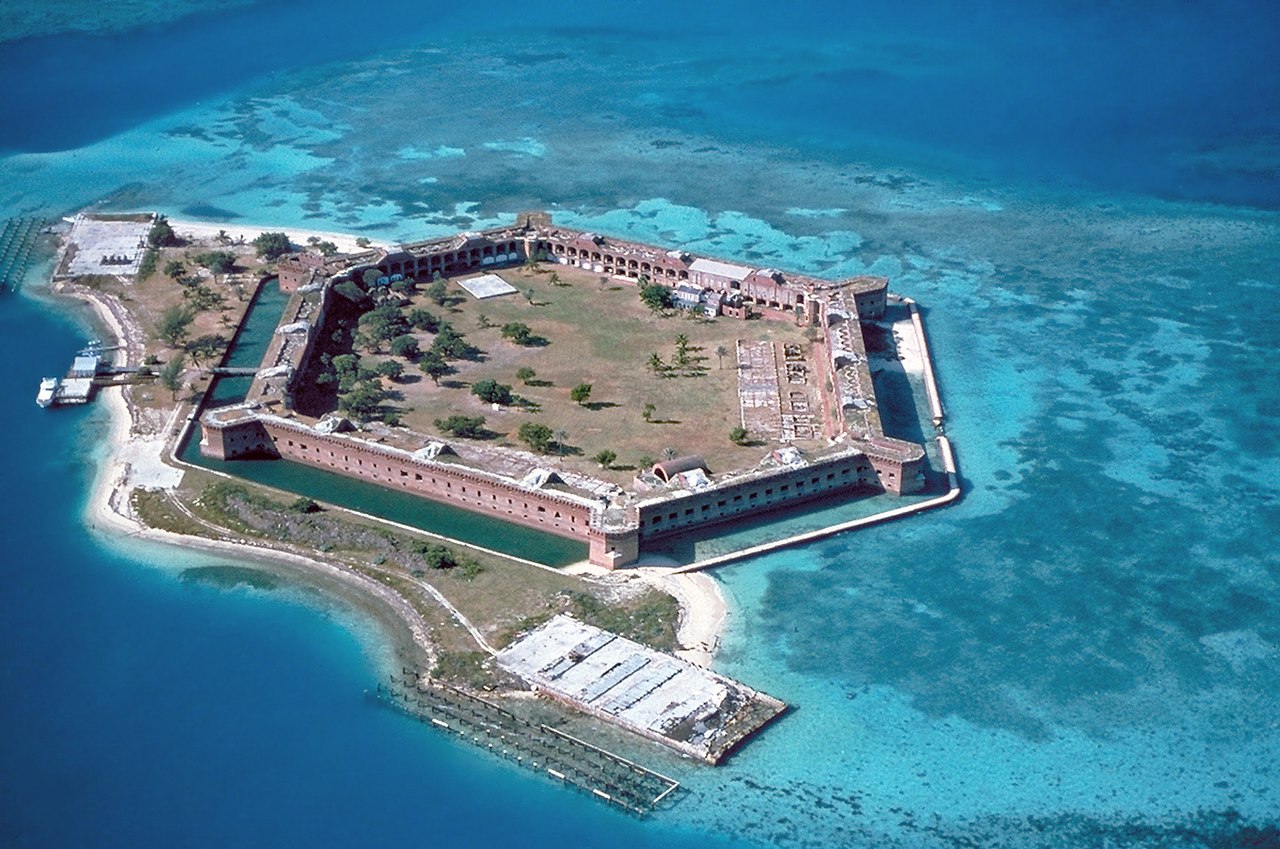
Fort Jefferson
- Construction Period: 1846-1875 (never completed)
- Brick Count: Over 16 million bricks — largest masonry structure in the Americas
- Design: Hexagonal with 2,000 firing positions
- Perimeter: Half a mile around the moat wall
- Famous Prisoner: Dr. Samuel Mudd (Lincoln assassination conspiracy)
Fort Jefferson is an engineering marvel and a strategic folly. Designed to control navigation in the Gulf of Mexico and protect the vital shipping lanes between the Atlantic and the Gulf, the hexagonal fort was built using over 16 million bricks — making it the largest masonry structure in the Western Hemisphere. Its six walls were designed to mount 450 heavy guns and house a garrison of 1,500 soldiers, dominating the surrounding waters from its position on Garden Key.
The fort was never completed and never saw combat. The development of rifled artillery during the Civil War rendered brick fortifications obsolete before Fort Jefferson's walls were finished. During the war, it served as a Union military prison, its most famous inmate being Dr. Samuel Mudd, convicted as a conspirator in the assassination of President Lincoln for setting the broken leg of John Wilkes Booth. The fort was later used as a quarantine station before being abandoned in 1874.
Marine Ecosystem
- Coral Species: Over 30 species documented
- Fish Species: Over 442 in park waters
- Sea Turtle Species: 5 species including loggerhead, green, and hawksbill
- Research Natural Area: Part of the park is a no-take zone
The waters surrounding the Dry Tortugas support some of the healthiest coral reef ecosystems remaining in the Florida Keys. Over 30 species of coral, 442 species of fish, and hundreds of species of marine invertebrates have been documented. The park's Research Natural Area, established in 2007 as a no-take marine reserve, has shown dramatic recovery of fish populations and coral health — demonstrating the effectiveness of marine protection.
Five species of sea turtles use park waters, including the loggerhead, green, hawksbill, leatherback, and Kemp's ridley — the world's most endangered sea turtle. Loggerhead and green turtles nest on the park's beaches each summer. The crystal-clear waters, with visibility often exceeding 100 feet, make the Dry Tortugas one of the premier snorkeling and diving destinations in North America. The moat wall of Fort Jefferson itself provides an easily accessible snorkeling site teeming with tropical fish, corals, and nurse sharks.
Bird Life
- Sooty Terns: Approximately 80,000 nesting pairs on Bush Key
- Brown Noddies: Over 5,000 nesting pairs
- Bird Species Total: Over 299 documented
- Spring Migration: April-May brings massive songbird fallouts
Bush Key, adjacent to Garden Key, hosts one of the most spectacular bird nesting colonies in North America. Approximately 80,000 pairs of sooty terns — a seabird that spends most of its life over open ocean — return each year between February and September to nest on the island. Their constant calls create a wall of sound audible from Fort Jefferson. Brown noddies, also numbering in the thousands, nest alongside the terns.
The Dry Tortugas sit at the convergence of migratory routes between North and South America, making them a critical stopover for exhausted songbirds crossing the Gulf of Mexico in spring. During weather events in April and May, thousands of warblers, tanagers, buntings, and other migrants "fall out" of the sky onto the tiny islands, creating a birdwatching spectacle that draws birders from around the world. Over 299 bird species have been documented in the park.
Visiting & Logistics
- Access: Seaplane (40 minutes) or ferry (2.5 hours) from Key West
- Camping: 11 primitive sites on Garden Key (first-come, first-served)
- Best Time to Visit: March through May for birds; year-round for snorkeling
- Annual Visitors: Approximately 84,000
Reaching the Dry Tortugas requires planning. The Yankee Freedom III ferry departs Key West daily at 8:00 AM for the 2.5-hour crossing, returning in the afternoon and providing roughly 4.5 hours in the park. Seaplanes from Key West take approximately 40 minutes and offer spectacular aerial views of the reef system. Private boats can also access the park but must be self-sufficient with all water, fuel, and supplies.
The 11 primitive campsites on Garden Key offer one of the most unique camping experiences in the national park system — falling asleep on a tiny tropical island inside a 19th-century fort, surrounded by coral reefs and 70 miles from the nearest road. Campers must bring everything including fresh water (there is none in the park) and pack out all trash. Night snorkeling from the campground, with bioluminescent organisms lighting the water, is an unforgettable experience. The fort is open for self-guided tours, and ranger programs run daily when the ferry is in port.
Key Facts
- Dry Tortugas is located 70 miles west of Key West, accessible only by boat or seaplane.
- Fort Jefferson contains over 16 million bricks — the largest masonry structure in the Western Hemisphere.
- The park's waters support over 442 fish species, 30+ coral species, and 5 species of sea turtles.
- Approximately 80,000 pairs of sooty terns nest on Bush Key each year — one of the largest colonies in the Western Hemisphere.
- With approximately 84,000 annual visitors, it is one of the least visited national parks in the system.
Fun Facts
- The "Dry" in Dry Tortugas refers to the absence of fresh water on the islands — "Tortugas" (Spanish for turtles) was added by Ponce de León in 1513 for the sea turtles he found there.
- Fort Jefferson was never completed because the weight of its massive brick walls caused the coral foundation to slowly sink — engineers battled subsidence for decades.
- Dr. Samuel Mudd, imprisoned at the fort for his role in the Lincoln assassination, gained fame by helping fight a yellow fever outbreak and was eventually pardoned.
- The park's Research Natural Area (no-take zone) has seen fish populations increase by over 300% since its establishment in 2007, proving the power of marine reserves.
Final Thoughts
Dry Tortugas National Park is unlike any other place in the national park system — a remote cluster of tiny islands dominated by a massive brick fortress rising from turquoise waters, surrounded by pristine coral reefs and teeming with seabirds. Its inaccessibility is its greatest protection and its greatest gift to those who make the journey. Camping within the walls of Fort Jefferson, with sooty terns calling overhead and bioluminescence sparkling in the moat below, is an experience that defies the ordinary.
Test Your Knowledge!
Think you know America's national parks? Try our interactive geography quiz!
Play Geography Games →