
Few national flags carry as much turbulence in their history as the flag of Afghanistan. The banner most associated with the country today is strikingly austere: a plain white field inscribed with the black Arabic text of the Islamic declaration of faith. Adopted in 2021 when the Taliban regained control of the country and re-established the Islamic Emirate of Afghanistan, this white-and-black design stands in sharp contrast to the bold black, red, and green tricolor that flew over the republic for decades before. To understand the white flag, you have to understand a country whose emblem has been redrawn more times than almost any other nation on Earth.
A Country of Many Banners
Afghanistan holds an unusual distinction in the world of vexillology: it has changed its flag more often than nearly any other country. Across the twentieth and early twenty-first centuries, the nation cycled through monarchies, republics, communist governments, civil war, and emirates, and almost every shift in power brought a new banner. Colors came and went, emblems were added and erased, and the proportions of stripes were rearranged again and again. This constant revision is itself a kind of historical record, a visual chronicle of a land repeatedly contested and reshaped. The flag adopted in 2021 is simply the latest entry in this long, restless sequence, and it is one of the most visually radical departures from what came before.
The Colors and What They Carry
The current design draws on a palette that runs through the country's flag history: black, red, green, and white. The flag in use under the Islamic Emirate reduces this palette dramatically to a white field with black text. White, in much Islamic tradition, is associated with purity and faith, and here it forms the clean backdrop against which the religious inscription stands out. The black of the lettering provides maximum legibility and gravity, the words reading clearly across the open field.
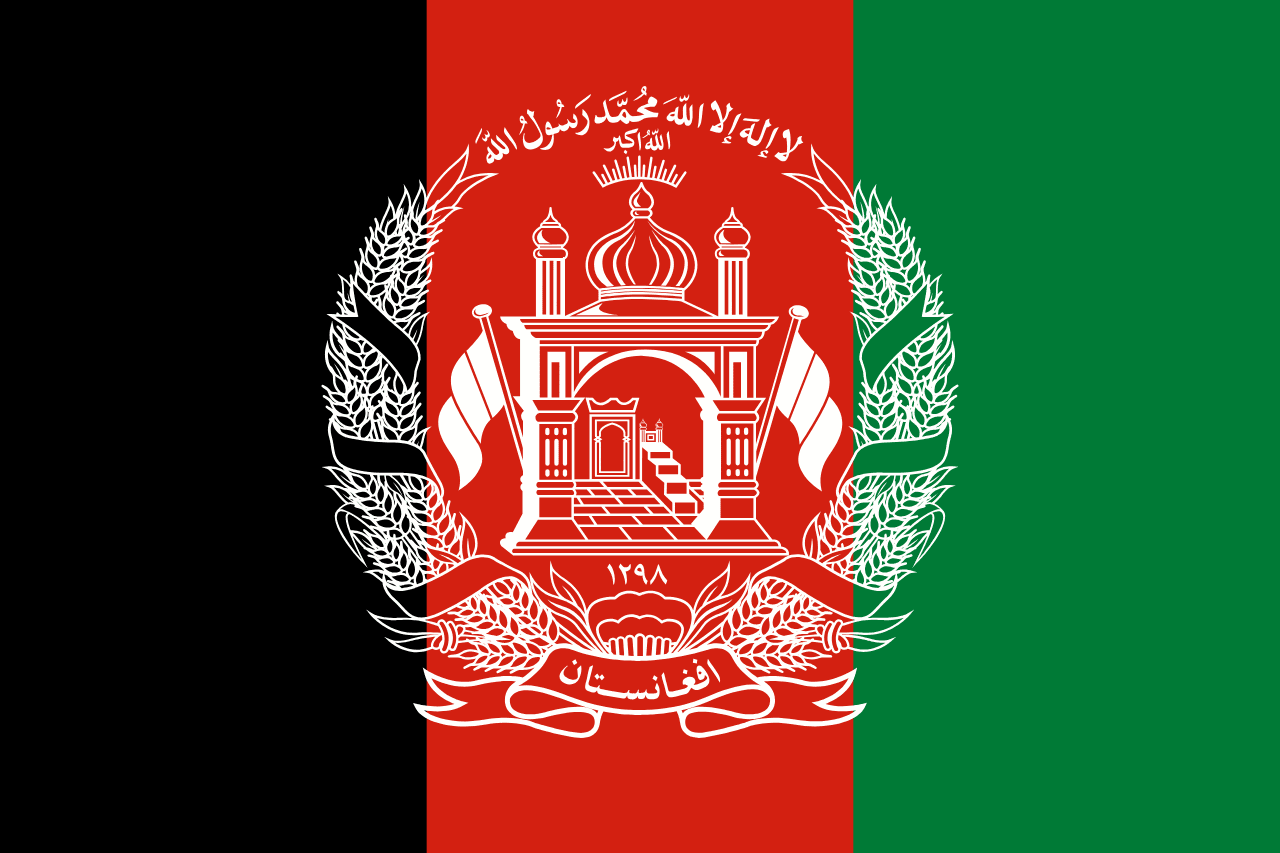
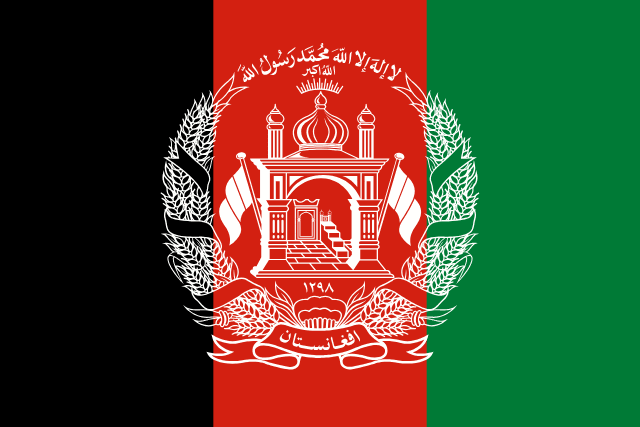
The other colors in Afghanistan's broader flag heritage are not forgotten. Across the country's many banners, black has often evoked the dark past and the periods of foreign domination, red has symbolized the blood shed in the struggle for independence, and green has stood for hope, prosperity, and the faith of Islam. These associations were carried by the tricolor that preceded the current flag, and they remain part of the visual vocabulary that Afghans recognize.
Reading the Design
The defining feature of the current flag is the shahada, the Islamic declaration of faith, rendered in black Arabic calligraphy across the white field. This single inscription does the work that crests, stars, and elaborate emblems do on other flags: it announces the identity and orientation of the state in one line of script. The design is deliberately spare. There is no central seal, no border, no layered symbolism competing for attention. The message is the medium, and the white ground exists to frame the words.
This simplicity is a meaningful design choice. Where the previous republican flag packed a detailed national emblem, including a mosque and wheat sheaves, into the center of a vertical tricolor, the Emirate's flag strips everything back to text on a field. It is a banner built around legibility and declaration rather than heraldic complexity.
How the Flag Evolved
To appreciate the 2021 flag, it helps to trace the arc that led to it. For much of the modern era, Afghanistan flew variations of a black-red-green tricolor, usually arranged in vertical bands, with a national emblem in the center. This was the look most of the world came to associate with the country, especially during the years of the Islamic Republic. Earlier in its history the country experimented with different layouts and color orders, reflecting the monarchy, the brief republics, and the communist period, each of which favored its own arrangement and iconography.
The white flag bearing the shahada had been used by the Taliban movement during its earlier period of control and as a movement banner in the years between. When the group regained control in 2021 and re-established the Islamic Emirate of Afghanistan, this white flag became the standard once more. The shift from the colorful tricolor to the white field was therefore not the invention of a new symbol but the return of an older one, swapped back into national use as power changed hands. Readers who want fuller political and geographic context can explore our afghanistan country guide.
Comparing It to Similar Flags
A white flag inscribed with the shahada in black is part of a small family of banners that center the Islamic declaration of faith. The most widely recognized relative is the flag of Saudi Arabia, which also displays the shahada in white Arabic calligraphy, though on a green field and accompanied by a sword. The Afghan Emirate flag inverts that color logic, placing black text on white rather than white text on green, and it omits the sword entirely.
The earlier Afghan tricolor, by contrast, belonged to a different design family altogether, sharing its black-red-green palette with several other flags in the region and beyond. Among the world's mostly white flags, Afghanistan's is distinguished by the prominence and centrality of its script: rather than a small badge in a corner, the entire field is given over to the inscription. That makes it easy to tell apart from white-based banners that rely on emblems, crests, or colored cantons.
Identity, Culture, and Everyday Use
Because Afghanistan sits in Asia, at the crossroads of Central and South Asia, its flags have always carried weight far beyond decoration, signaling which authority governs and under what principles. The current banner functions as the official emblem of the Islamic Emirate, appearing on government buildings, at official ceremonies, and in state communications. For many Afghans in the diaspora and at home, the question of which flag represents the nation remains emotionally charged, precisely because the black-red-green tricolor and the white shahada flag are tied to very different visions of the country's identity and recent history.
This is one reason the flag of Afghanistan is studied so closely by people interested in geography and political symbolism. A flag is rarely just cloth and color here; it is a statement about who holds power and what the state claims to stand for. Few banners make that link as plainly as one that places a religious declaration across an entire field.
Interesting Facts
- Afghanistan has changed its national flag more times than almost any other country in the world.
- The current flag, adopted in 2021, is a white field bearing the black shahada, the Islamic declaration of faith.
- It represents the Islamic Emirate of Afghanistan and replaced the black-red-green republican tricolor.
- The flag's palette across history has drawn on four colors: black, red, green, and white.
- Its closest design cousin is the flag of Saudi Arabia, which also features the shahada in calligraphy.
- Afghanistan is located in Asia, bridging Central and South Asia.
Frequently Asked Questions
When was the current flag of Afghanistan adopted?
The white flag bearing the black shahada was adopted in 2021, when the Taliban regained control of the country and re-established the Islamic Emirate of Afghanistan. The design had been used by the movement earlier and returned to national use as power changed hands.
What do the colors of the flag mean?
The current flag is a white field with black text. White is associated with purity and faith, while the black calligraphy ensures the inscription stands out clearly. Across Afghanistan's wider flag history, black has evoked the troubled past, red the blood of those who fought for independence, and green the faith of Islam and hope for the future.
Who designed the flag of Afghanistan?
The current flag is not credited to a single named designer. It is based on the white shahada banner long associated with the Taliban movement, which became the national flag when the Islamic Emirate was re-established. Like much of Afghanistan's flag history, it reflects a political and religious tradition rather than an individual creator.
What continent is Afghanistan on, and how does its flag compare to similar ones?
Afghanistan is in Asia, at the meeting point of Central and South Asia. Its current flag belongs to a small group of banners that feature the Islamic shahada, the best-known being Saudi Arabia's green flag. Afghanistan's version is distinguished by its black-on-white scheme and the absence of any sword or additional emblem.