

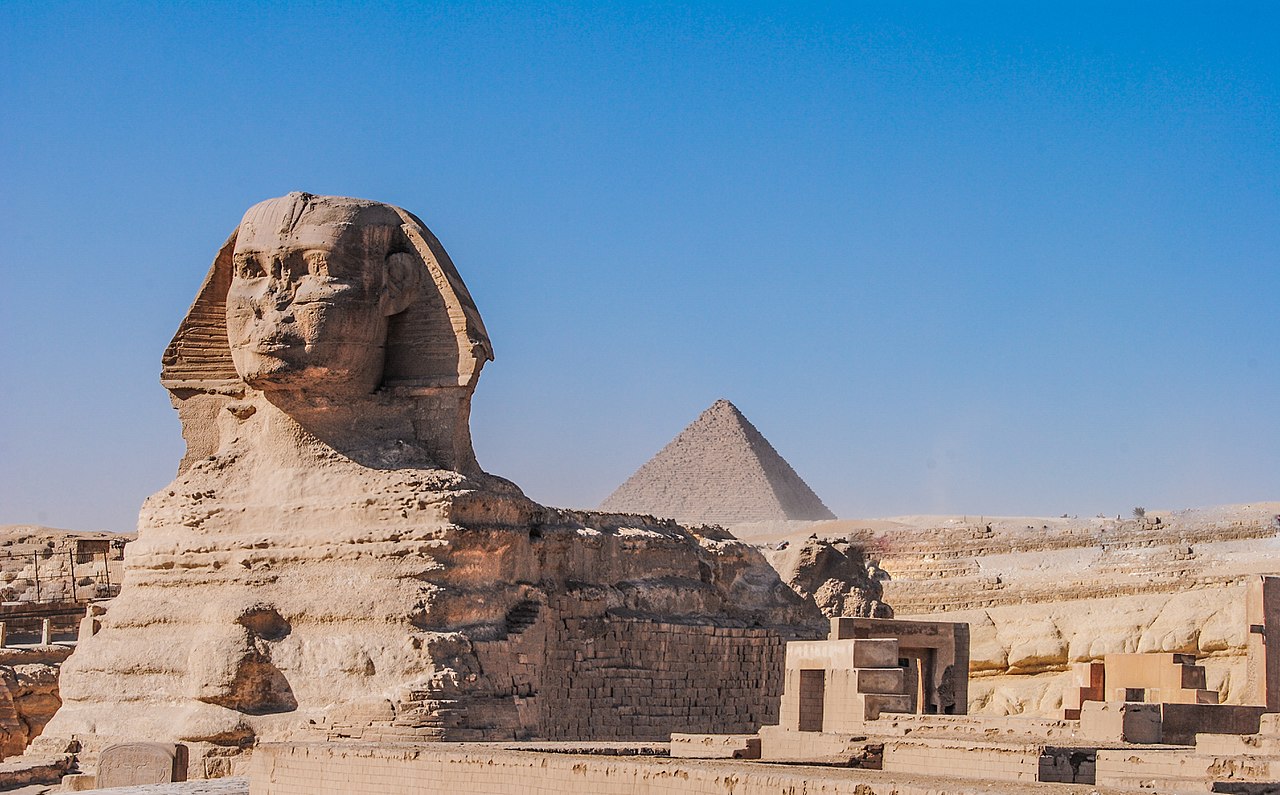
The Great Sphinx of Giza is the oldest and largest monolith statue in the world, measuring 73 meters long, 20 meters tall, and 19 meters wide. Carved from a single ridge of limestone on the Giza Plateau around 2500 BCE, likely during the reign of Pharaoh Khafre, the Sphinx has the body of a lion and the head of a human. Its nose, measuring one meter wide, has been missing since at least the 15th century.
Introduction
The Great Sphinx of Giza, crouching on the west bank of the Nile near Cairo, is the world's oldest and largest monolithic statue. Measuring 73 meters long, 20 meters high, and 19 meters wide, this limestone monument with the body of a lion and the head of a human has been a source of wonder, speculation, and mystery for over 4,500 years.
Most Egyptologists believe the Sphinx was carved during the reign of Pharaoh Khafre around 2500 BCE, making it roughly contemporary with the second-largest of the three Great Pyramids that rise behind it. Despite millennia of study, fundamental questions about the Sphinx — who built it, why, and what lies beneath — continue to be debated.
History & Origins
- Estimated Date: ~2500 BCE (reign of Pharaoh Khafre)
- Dynasty: Fourth Dynasty of the Old Kingdom
- Carved From: A single limestone bedrock ridge
- Original Name: Unknown (ancient Egyptians may have called it Hor-em-akhet, "Horus of the Horizon")
The Sphinx was carved directly from the natural limestone bedrock of the Giza Plateau, with additional blocks added to complete the paws and other areas where the natural rock was insufficient. The quarry created by the carving is still visible around the monument. The head is carved from harder stone than the body, which accounts for the better preservation of the facial features.
For most of its history, the Sphinx has been buried up to its shoulders in sand. The Egyptian pharaoh Thutmose IV (1401-1391 BCE) erected a stela between its paws describing a dream in which the Sphinx promised him the throne if he cleared the sand. Multiple subsequent excavations were attempted, but the Sphinx was not fully uncovered until the 1930s.
Architecture & Design
- Length: 73 m
- Height: 20 m
- Width: 19 m
- Face Width: 4.1 m
The Sphinx faces due east, aligning with the rising sun at the equinoxes. Its body is that of a recumbent lion, a symbol of royal power in ancient Egypt. The human head, likely depicting Pharaoh Khafre, wears a nemes headdress (the striped head cloth of the pharaohs) and originally featured a uraeus (cobra) on its forehead, a false beard, and a nose — all of which have been lost over the millennia.
Evidence suggests the Sphinx was originally painted. Traces of red pigment have been found on the face, and it may once have been painted in vivid colors that have long since weathered away. A small temple between the paws and a larger temple directly in front of the Sphinx were used for worship and ritual offerings.
Cultural Significance
The Sphinx is one of the most enduring symbols of ancient Egypt and of human civilization itself. Its combination of human intelligence (the head) and animal strength (the lion body) was understood in Egyptian culture as a representation of divine royal power. The monument has inspired myths, legends, and speculation across cultures for thousands of years.
The Greek name "Sphinx" comes from the mythological creature that posed riddles to travelers outside Thebes. Though the Egyptian and Greek sphinxes are quite different, the association has given the Giza monument an aura of mystery that persists to this day. Debates about hidden chambers, alternative dating, and its "real" builder continue to fascinate both scholars and the public.
Key Facts
- The Great Sphinx is the largest monolithic statue in the world.
- It was carved from a single piece of limestone bedrock around 2500 BCE.
- The missing nose was likely removed by chisels in medieval times, not by Napoleon's troops as myth suggests.
- The Sphinx faces exactly due east, toward the rising sun at the equinoxes.
- For most of its history, the monument was buried up to its shoulders in desert sand.
Fun Facts
- Napoleon did not shoot off the Sphinx's nose — sketches from before his expedition in 1798 already show the nose missing. A 15th-century historian attributed it to a Sufi zealot.
- The Sphinx once had a braided beard — fragments are now in the British Museum and the Egyptian Museum in Cairo.
- If you include the time it spent buried in sand, the Sphinx has been hidden from view for longer than it has been visible.
- Modern restoration efforts have added over 2,000 limestone blocks to repair erosion damage, leading to debates about whether the repairs are preserving or altering the monument.
Final Thoughts
The Great Sphinx of Giza is humanity's oldest monumental sculpture and one of its most mysterious. Carved from living rock over four and a half millennia ago, it has survived sand, wind, water, vandalism, and the rise and fall of civilizations. It asks no riddle, yet it poses the greatest one of all: how much of our ancient past remains buried beneath the surface, waiting to be discovered?