

Introduction
The ice cap climate, classified as EF in the Köppen system, is the most extreme climate type on Earth. It is defined by having every month with an average temperature below 0°C, meaning conditions are permanently below freezing. This prevents any plant growth and results in landscapes entirely covered by ice and snow, some dating back millions of years.
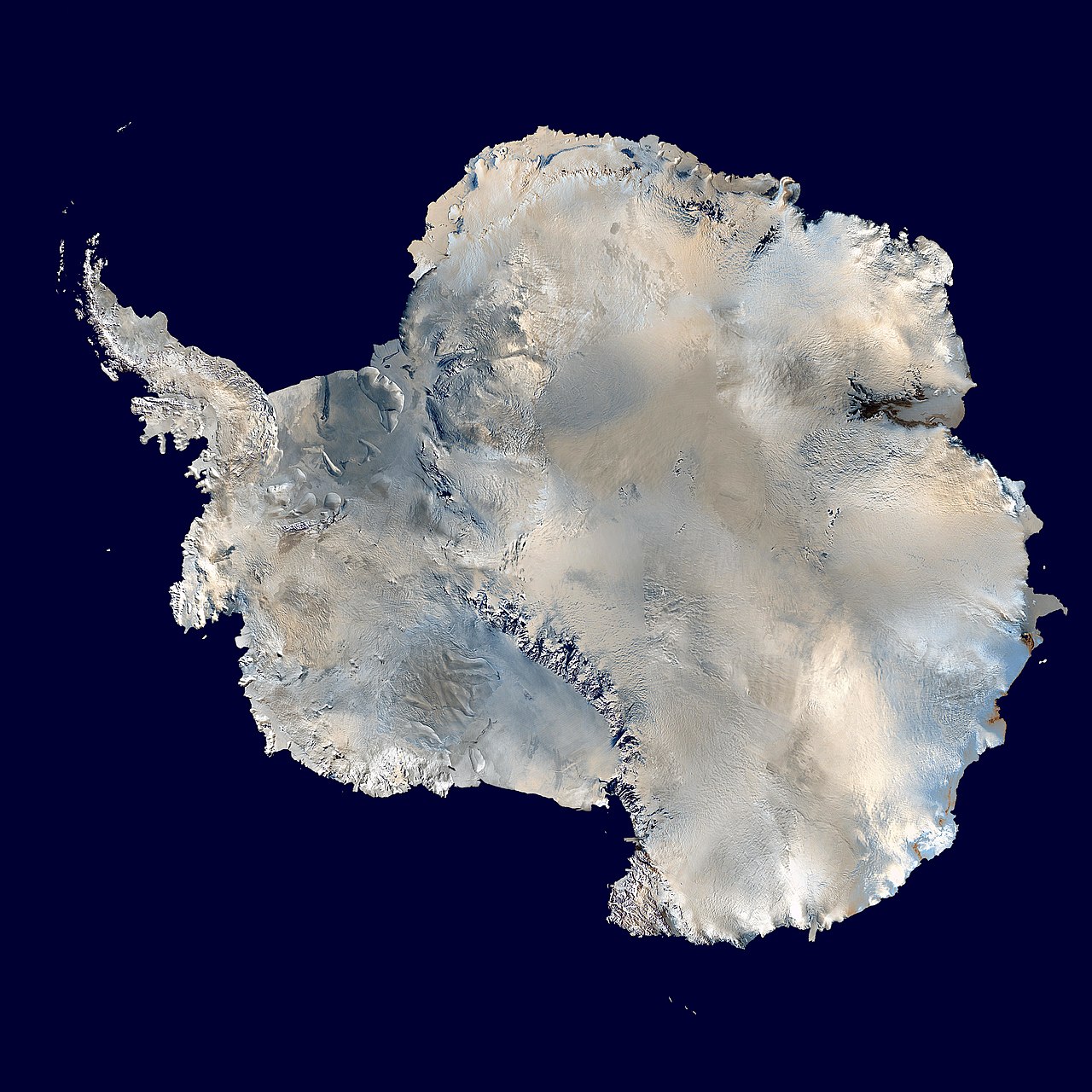
Ice cap climates are found on the Antarctic ice sheet, the interior of the Greenland ice sheet, and the highest summits of mountain ranges. Together, these ice sheets contain roughly 99% of Earth's freshwater ice and hold enough water to raise global sea levels by over 65 meters if fully melted. Their stability is critical to the future of global coastlines.
Temperature Extremes
- Record Low: -89.2°C (Vostok Station, Antarctica, 1983)
- Antarctic Interior Average: -50 to -60°C annually
- Greenland Interior Average: -25 to -35°C annually
- Warmest Month: Still below 0°C everywhere
Antarctica holds the record for the coldest temperature ever recorded on Earth: -89.2°C at Vostok Station on July 21, 1983. Satellite measurements have detected even colder surface temperatures of approximately -98°C in shallow depressions on the East Antarctic Plateau. These extreme temperatures result from high elevation, high latitude, the albedo effect of ice, and radiative cooling under clear skies.
The Greenland ice sheet is somewhat milder due to its lower latitude and elevation, but interior temperatures still average -25°C to -35°C annually. During the long polar winter, months of continuous darkness allow temperatures to drop steadily, while the brief summer, despite 24-hour sunlight, cannot warm the surface above freezing because most incoming energy is reflected by the bright white ice.
Ice Sheet Dimensions
- Antarctic Ice Sheet: 14 million km², up to 4,776 m thick
- Greenland Ice Sheet: 1.7 million km², up to 3,000 m thick
- Combined Volume: ~26.5 million km³ of ice
- Sea Level Equivalent: ~65 m if fully melted
The Antarctic ice sheet is the largest body of ice on Earth, covering 14 million square kilometers and reaching a maximum thickness of 4,776 meters. It contains roughly 26 million cubic kilometers of ice, enough to raise global sea levels by about 58 meters. The ice sheet is so heavy that it has depressed the underlying bedrock by up to 500 meters.
The Greenland ice sheet is smaller but still massive, covering 1.7 million square kilometers with ice up to 3,000 meters thick. If fully melted, it would raise sea levels by approximately 7 meters. Unlike Antarctica, Greenland is losing ice at an accelerating rate, with recent years seeing surface melting across unprecedented areas, including the ice sheet's 3,200-meter summit.
Precipitation & Wind
- Annual Precipitation: Less than 50 mm (Antarctic interior)
- Classification: Antarctica is technically a desert
- Katabatic Winds: Speeds exceed 300 km/h at coast
- Blizzards: Ground blizzards from wind-driven snow
Despite being covered in ice, the interior of Antarctica is one of the driest places on Earth, receiving less than 50 millimeters of water-equivalent precipitation per year. It qualifies as a polar desert. The ice sheet has accumulated not because of heavy snowfall but because the small amount of snow that falls never melts, building up layer upon layer over millions of years.
Katabatic winds are a defining feature of ice cap climates. Cold, dense air forms over the high interior of the ice sheet and flows downhill toward the coast under gravity, accelerating to extreme speeds. At Commonwealth Bay in Antarctica, average wind speeds exceed 80 km/h, with gusts recorded above 300 km/h, making it one of the windiest places on Earth.
Life in Ice Cap Zones
- Plant Life: Virtually none on ice sheets
- Antarctic Peninsula: Mosses, lichens, 2 flowering plant species
- Animals: Penguins, seals, and seabirds at coasts
- Research Stations: ~70 in Antarctica, several in Greenland
The ice cap itself supports virtually no life. The interior of Antarctica is as lifeless as the surface of Mars, with no plants, insects, or land animals. However, the coastal fringes support thriving ecosystems, with emperor penguins, Weddell seals, and snow petrels breeding on the ice edge. The Antarctic Peninsula, which extends beyond the ice cap zone, supports two native flowering plant species.
Approximately 70 research stations operate in Antarctica, staffed by scientists from over 30 countries. These stations study climate, glaciology, astronomy, and biology in one of the most extreme environments accessible to humans. In winter, some stations are completely isolated for months, with temperatures and darkness making travel impossible.
Ice Cores & Climate Records
- Oldest Ice Core: ~800,000 years (EPICA, Antarctica)
- Information Stored: Temperature, CO2, methane, volcanic ash
- Current Target: Finding ice up to 1.5 million years old
- Climate Insight: Shows link between CO2 and temperature
Ice cores drilled from the Antarctic and Greenland ice sheets provide the most detailed records of past climate available to science. Air bubbles trapped in the ice preserve samples of ancient atmospheres, allowing scientists to measure carbon dioxide, methane, and temperature going back 800,000 years. These records clearly show that CO2 levels and global temperatures have moved in lockstep throughout this period.
The oldest Antarctic ice core, from the EPICA project, revealed eight glacial cycles spanning 800,000 years. Scientists are now searching for ice up to 1.5 million years old, which would reveal whether the frequency of ice ages changed at that point, as other evidence suggests. These ice cores are among the most valuable scientific records on Earth.
Key Facts
- Ice cap climates have no month averaging above 0°C, and Antarctica recorded -89.2°C, the coldest temperature on Earth.
- The Antarctic ice sheet is up to 4,776 m thick and would raise sea levels by ~58 m if fully melted.
- Antarctica's interior receives less than 50 mm of precipitation annually, making it technically a desert.
- Ice cores from Antarctica preserve climate records spanning 800,000 years.
- Katabatic winds on the Antarctic coast can exceed 300 km/h.
Fun Facts
- Antarctica is the only continent with no permanent human population, no native land mammals, and no trees.
- The South Pole receives only one sunrise and one sunset per year, each lasting about two days.
- If the Antarctic ice sheet were spread evenly over the entire Earth, it would form a layer about 50 meters thick.
- The Greenland ice sheet is so heavy that it has pushed the land beneath it below sea level in places.
Final Thoughts
The ice cap climate represents the coldest extreme of Earth's climate spectrum, where temperatures never rise above freezing and ice sheets miles thick have accumulated over millions of years. These vast reservoirs of frozen water hold the key to understanding past climates and predicting future sea level rise. As the planet warms, the fate of the ice sheets will shape coastlines and weather patterns for millennia to come.