
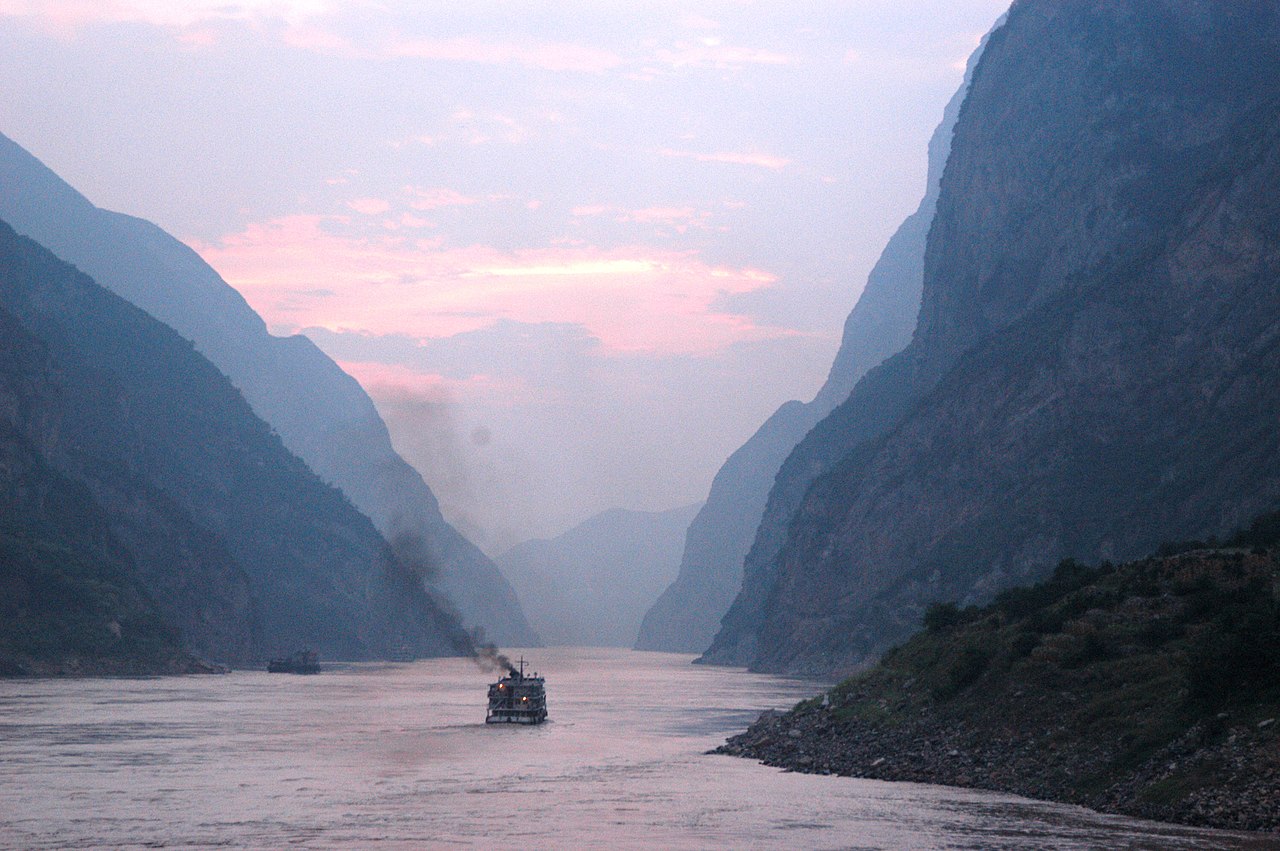
Yes. The Yangtze is longer than the Yellow River. The Yangtze stretches 6,300 km, while the Yellow River (Huang He) stretches 5,464 km. The Yangtze is about 1.15 times the length of the Yellow River — longer by 836 km. The Yangtze is the longest river in Asia and the 3rd-longest in the world; the Yellow River is the 6th-longest in the world.
The Short Answer
The Yangtze and Yellow River are two of the most historically and culturally important rivers in the world. Both flow generally west-to-east across China. The Yangtze is in southern China, draining the Tibetan Plateau and central China; the Yellow River is in northern China, draining the Loess Plateau and the North China Plain. Both have been central to Chinese civilization for over 5,000 years.
While the Yangtze is longer, the Yellow River is often called "the cradle of Chinese civilization" because early Chinese civilizations like the Shang and Zhou dynasties developed in its basin. The Yangtze region has been increasingly important in recent centuries, especially as China's economic center has shifted southward.

The Real Numbers
- Yangtze River length: 6,300 km (3,915 mi)
- Yellow River length: 5,464 km (3,395 mi)
- Difference: 836 km — about the distance from London to Berlin
- Ratio: Yangtze is about 1.15× the length of the Yellow River
Watersheds
- Yangtze drainage basin: 1,808,500 km² — about 1/5 of China
- Yellow River drainage basin: 752,443 km² — about 1/12 of China
The Yangtze drains a much larger area — about 2.4× the Yellow River's basin. The Yangtze basin is home to about 400 million people; the Yellow River basin is home to about 200 million. Combined, the two river systems support roughly half of China's population.
The Yangtze
The Yangtze rises on the Tibetan Plateau at elevations over 5,000 m and flows east through gorges, plateaus, and plains before emptying into the East China Sea near Shanghai. Major features:
- Three Gorges: Qutang, Wu, and Xiling Gorges — partly submerged by the Three Gorges Dam
- Three Gorges Dam: The world's largest hydroelectric plant by installed capacity (22,500 MW)
- Major cities on the Yangtze: Chongqing, Wuhan, Nanjing, Shanghai
- Yangtze River Delta: Contains Shanghai and surrounding cities — one of China's richest economic regions
- Discharge: About 31,900 m³/s — among the largest in Asia
The Yellow River
The Yellow River rises in the Bayan Har Mountains of western China and flows generally east through the Loess Plateau before turning south, then east, then north in the famous "Great Bend." It empties into the Bohai Sea (a gulf of the Yellow Sea). Major features:
- The Loess Plateau: Where the river picks up massive amounts of yellow silt, giving it its distinctive color
- "China's Sorrow": Historic nickname due to frequent devastating floods
- Major cities on the Yellow River: Lanzhou, Yinchuan, Baotou, Jinan, and others
- Silt content: The Yellow River is among the world's most sediment-laden rivers — about 1.6 billion tons per year
- Discharge: About 2,571 m³/s — much less than the Yangtze
Civilizational Significance
The Yellow River is sometimes called "the cradle of Chinese civilization." Early Chinese dynasties (Xia, Shang, Zhou, Qin, Han) developed primarily in the Yellow River basin. Ancient Chinese culture, writing, and many aspects of what would become Chinese civilization emerged here. Major archaeological sites are found along the river.
The Yangtze region developed differently. While ancient cultures existed in the Yangtze basin (the Hemudu culture, for example), Chinese civilization's political center remained in the north (around Xi'an, Luoyang, Kaifeng) for most of its history. The Yangtze became increasingly important from the Tang dynasty (618-907 AD) onward, and the economic center of China has shifted to the Yangtze region in recent centuries.
Floods and Disasters
The Yellow River has been one of the deadliest rivers in human history. Major floods include the 1887 flood (estimated 900,000-2 million deaths) and the 1931 floods (estimated 1-4 million deaths). The "Yellow River as China's sorrow" reflects centuries of devastating floods caused by silt buildup raising the river above surrounding plains.
The Yangtze has also experienced devastating floods. The 1931 Yangtze flood was among the deadliest in history (estimated 1-4 million deaths combined with Yellow River flooding). The Three Gorges Dam was built partly for flood control, though questions remain about its effectiveness and environmental costs.
Modern Importance
The Yangtze basin contains some of China's most important cities and accounts for about 40% of China's GDP. The river is a major commercial waterway — about 65% of China's inland waterway cargo moves on the Yangtze. The Yangtze River Delta megaregion (Shanghai, Suzhou, Hangzhou, Nanjing, Ningbo) is one of the world's largest urban concentrations.
The Yellow River basin remains crucial for Chinese agriculture, supplying water to the North China Plain (China's breadbasket). The river is heavily dammed and diverted for irrigation. Climate change and over-extraction have caused the Yellow River to sometimes fail to reach the sea — a phenomenon known as "Yellow River cutoff."
Environmental Challenges
Both rivers face severe environmental challenges. The Yangtze has been heavily polluted by industrial and agricultural runoff. Many species are endangered, including the baiji (Yangtze river dolphin, declared functionally extinct in 2006). China has been working to clean up the Yangtze through major government initiatives.
The Yellow River faces water scarcity. Over-extraction for irrigation and industrial use has caused the river to sometimes dry up before reaching the sea. The Loess Plateau where the river picks up its silt has been severely degraded by erosion. Massive reforestation efforts have helped reduce sediment loads.
Key Facts
- The Yangtze is about 1.15× the length of the Yellow River.
- The Yangtze has 2.4× the drainage area of the Yellow River.
- The Yangtze is the 3rd-longest river in the world; the Yellow is the 6th.
- The Yellow River is sometimes called "China's sorrow" due to historic floods.
- Combined, the two rivers support about half of China's population.
Fun Facts
- The Yellow River's sediment load is so heavy that the river is sometimes thicker like mud than like water in places.
- The Yangtze River dolphin (baiji) was declared functionally extinct in 2006 — likely the first cetacean extinction caused by humans.
- The Three Gorges Dam created a reservoir 660 km long, displacing 1.4 million people.
- The Yellow River's "Great Bend" creates a giant 90-degree turn in the river's northern flow.
- Both rivers have changed course significantly throughout history — the Yellow River has shifted its mouth dramatically multiple times.
Cultural References
Both rivers feature prominently in Chinese literature, poetry, and art. The Yangtze appears in countless classical Chinese poems — Li Bai's "Going Down to Jiangling" and Du Fu's works among many others. The Three Gorges have been celebrated in Chinese painting for over a thousand years. Modern Chinese literature, film, and music continue to draw on Yangtze imagery.
The Yellow River appears throughout Chinese culture as "Mother River" (母亲河) — the source of Chinese civilization. The "Yellow River Cantata" (1939) is one of modern China's most famous musical works, written during the Sino-Japanese War as a patriotic anthem. The river's symbolism in Chinese culture is comparable to the Nile's symbolism in Egyptian culture or the Ganges' in Indian culture.
Tourism
Both rivers attract significant tourism. The Yangtze's Three Gorges are a major destination — millions take cruises through the gorges each year. Cities along the Yangtze (especially Wuhan, Nanjing, Chongqing, and the Yangtze River Delta region) host major attractions.
The Yellow River is less developed for tourism but offers significant attractions including the Hukou Waterfall (China's second-largest waterfall after Huangguoshu), the historic Silk Road cities along its course (Lanzhou, Yinchuan), and the ancient Chinese cultural sites of Henan and Shandong provinces.
The Bottom Line
The Yangtze is longer than the Yellow River — about 15% longer. The Yangtze is also wider, deeper, and carries far more water. Both are central to Chinese civilization, but in different roles: the Yellow River was the original heartland of ancient Chinese civilization; the Yangtze is the economic powerhouse of modern China. Both face serious environmental challenges that will determine their futures and the prosperity of the hundreds of millions of people who depend on them. China's decisions about water management, pollution control, dam construction, and climate adaptation will profoundly affect both rivers in coming decades. Their fate is closely tied to China's broader environmental and economic policies. Together, the Yangtze and Yellow River systems will continue to be central to Chinese civilization for centuries to come, just as they have been for the past five thousand years. The two rivers represent the geographic foundation of one of the world's oldest continuous civilizations and remain critical to its modern incarnation.