
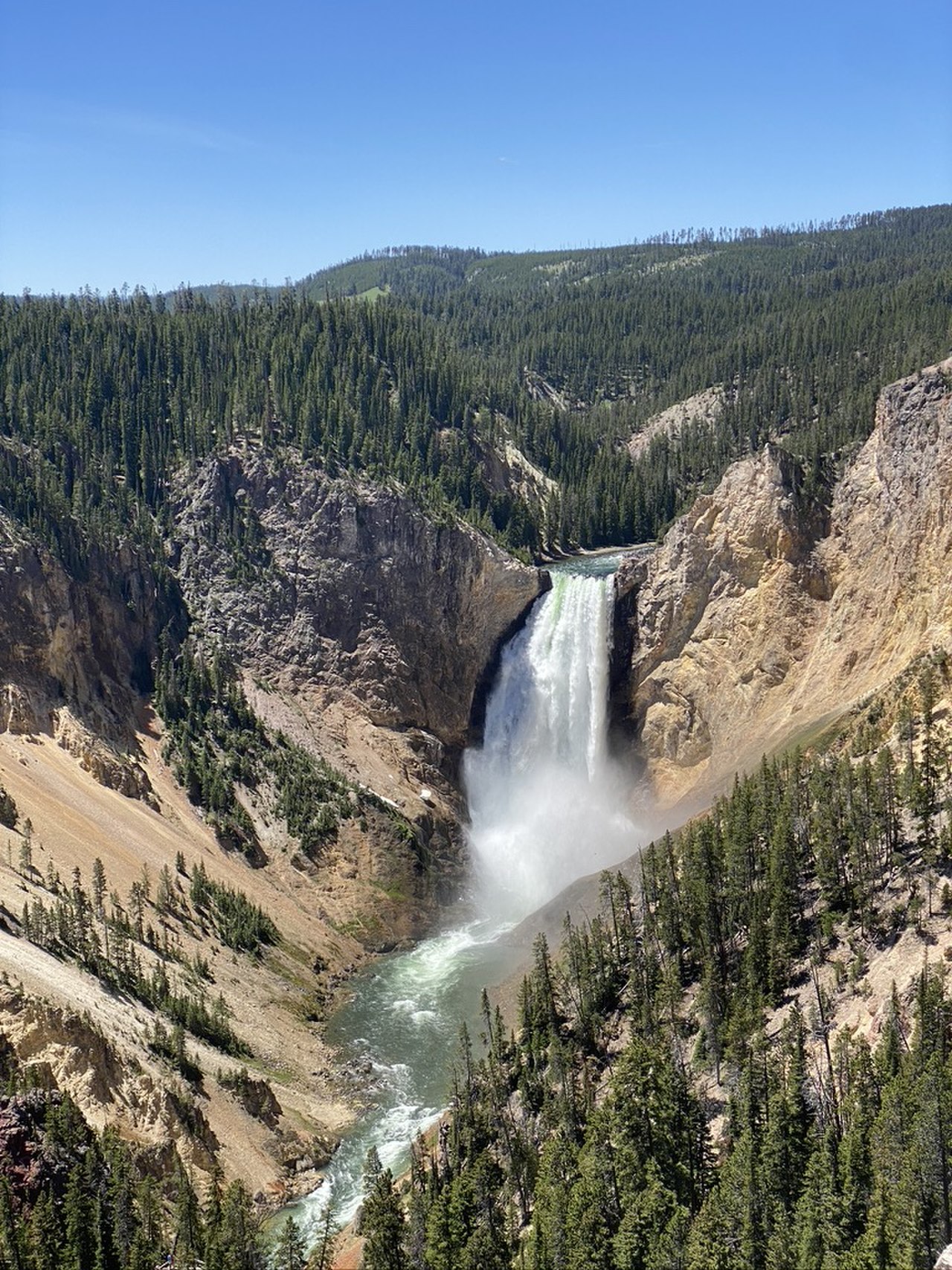
Yellowstone National Park is one of the largest national parks in the contiguous United States, sprawling across three states and famous for its geysers, wildlife, and supervolcano. Rhode Island is the smallest US state by area. So how do they compare? Yellowstone wins clearly — it would dwarf Rhode Island.
The Short Answer
Yes, Yellowstone is bigger than Rhode Island. Yellowstone covers 8,983 km². Rhode Island covers 4,001 km². Yellowstone is approximately 2.25 times the size of Rhode Island.
Side-by-Side Numbers
- Yellowstone area: 8,983 km² (3,468 sq mi)
- Rhode Island area: 4,001 km² (1,545 sq mi)
- Difference: Yellowstone is ~4,982 km² larger
- Ratio: Yellowstone is ~2.25× the size of Rhode Island
- Yellowstone population: ~0 permanent residents
- Rhode Island population: ~1.1 million
Yellowstone National Park
Yellowstone was the world's first national park, established in 1872 by President Ulysses S. Grant. The park spans three states — primarily Wyoming (96%), with smaller portions in Montana (3%) and Idaho (1%). It sits on top of the Yellowstone supervolcano, one of the largest volcanic systems on Earth. The supervolcano hasn't had a catastrophic eruption in 640,000 years, but it still drives the park's famous geothermal features: about 10,000 hydrothermal features including 500+ active geysers, hot springs, mudpots, and fumaroles.
Famous features include Old Faithful (erupting about every 90 minutes), the Grand Prismatic Spring (the largest hot spring in the US), Mammoth Hot Springs, the Grand Canyon of the Yellowstone, and Yellowstone Lake (the largest high-elevation lake in North America). The park is home to one of the largest concentrations of mammals in the lower 48 states: roughly 5,000 bison (the largest free-ranging herd in the US), 700+ grizzly bears, gray wolves (reintroduced in 1995), elk, moose, pronghorn, bighorn sheep, and trumpeter swans. About 4.5 million people visit Yellowstone each year.
Rhode Island
Rhode Island is the smallest US state by area but not by population — it has about 1.1 million people, making it more densely populated than most states. Its full official name is "the State of Rhode Island and Providence Plantations," though the "Providence Plantations" portion was officially removed in 2020 after voter approval. The state was founded in 1636 by Roger Williams as a haven for religious dissenters, making it one of the most historically significant of the original 13 colonies despite its small size.
Rhode Island's geography includes the eastern shore of Narragansett Bay, the mainland to the west, and several islands including Aquidneck Island (where Newport sits) and Block Island. The state has about 640 km of coastline despite its small area. Providence, the capital, is the largest city. Other notable cities include Warwick, Newport (famous for its Gilded Age mansions like The Breakers), Cranston, and Pawtucket.
The Comparison in Context
Yellowstone being more than twice the size of Rhode Island is one of the classic geographic factoids about American national parks. To put the comparison in perspective: you could fit two Rhode Islands inside Yellowstone with significant room to spare. The park is also larger than Connecticut (14,357 km²)... actually no, smaller than Connecticut. But it is larger than Rhode Island and also larger than Delaware (6,446 km²). Yellowstone is the 4th largest US national park, behind Wrangell-St. Elias in Alaska (32,375 km²), Gates of the Arctic in Alaska (30,448 km²), and Denali in Alaska (24,464 km²) — but if we exclude Alaska, Yellowstone is the largest national park in the contiguous United States.
Ecology and Wildlife
Yellowstone supports one of the largest nearly-intact temperate ecosystems on Earth. The Greater Yellowstone Ecosystem, which extends well beyond park boundaries, covers about 86,000 km² and is one of the largest intact temperate ecosystems remaining on the planet. The park hosts nearly 300 bird species, 16 fish species (most native), 6 reptile species, and 4 amphibian species. Old-growth conifer forests, alpine meadows, and high-elevation tundra create habitat diversity for major mammal populations.
Rhode Island's ecology is shaped by its small size and dense development. Despite its size, the state has 36 state parks and beaches, including the popular Misquamicut, Scarborough, and Goosewing Beaches. Native wildlife includes white-tailed deer, raccoons, opossums, gray squirrels, eastern coyotes (which colonized the state in the late 20th century), and a robust seabird population. The state's coastal salt marshes and estuaries are critical habitats for migratory shorebirds.
Population Contrast
Yellowstone has essentially zero permanent residents. About 4,000 seasonal workers staff the park during summer; numbers drop to roughly 500 in winter. Rhode Island has about 1.1 million people. So Rhode Island packs roughly a million more people into less than half the area. Population density tells the story: Rhode Island has about 275 people per km² (one of the most densely populated US states); Yellowstone has essentially 0.
Tourism and Economy
Yellowstone generates over $500 million per year in tourism-related economic activity in its gateway communities — West Yellowstone (Montana), Gardiner (Montana), Cody (Wyoming), and Jackson (Wyoming). The park itself has limited commercial development confined to a few villages (Mammoth, Old Faithful, Canyon, and others). Rhode Island's economy is much more diverse — over $66 billion in GDP, dominated by healthcare, financial services, manufacturing, education (Brown University, RISD, the University of Rhode Island), and tourism. Newport's sailing and yachting culture, the state's beaches, and historical attractions draw significant tourism.
History
Yellowstone has been used by Indigenous peoples for at least 11,000 years. Tribes including the Crow, Shoshone, Bannock, Blackfeet, Nez Perce, and others used the area seasonally for hunting, gathering, and obsidian quarrying. European-American exploration began in earnest with the 1869 Cook-Folsom-Peterson Expedition, followed by the 1870 Washburn-Langford-Doane Expedition, which led directly to the park's establishment in 1872. The park is a UNESCO World Heritage Site and an International Biosphere Reserve.
Rhode Island's history is among the most consequential of any small state. Roger Williams founded Providence in 1636 after being banished from Massachusetts Bay Colony for religious differences, establishing the colony on principles of religious freedom and separation of church and state. Rhode Island was the first colony to renounce allegiance to the British Crown (May 4, 1776) and the last of the original 13 to ratify the US Constitution (May 29, 1790), making it the 13th state.
Geothermal Features vs Coastal Features
Yellowstone's geothermal features are unmatched anywhere on Earth. The park contains roughly half of all geysers in the world, including iconic ones like Old Faithful, Castle, Steamboat (the world's tallest active geyser, occasionally erupting 90+ m), and Beehive. The Grand Prismatic Spring spans about 110 m across with its rainbow of microbial mat colors. The Norris Geyser Basin is the hottest, most acidic, and oldest hydrothermal area in the park.
Rhode Island's defining geographic feature is Narragansett Bay, which cuts deeply into the state from the south, creating a complex coastline of islands, peninsulas, and tidal inlets. The bay supports a $200+ million annual commercial fishing industry (shellfish, lobster, finfish), historic ports like Newport and Providence, and major recreational sailing. The bay's ecosystem has been heavily impacted by industrial pollution and is the subject of ongoing restoration efforts.
Supervolcano Risk
The Yellowstone supervolcano is one of the most-studied volcanic systems on Earth. The magma chamber beneath the park is so large that a full eruption would dwarf any historical volcanic event — potentially ejecting hundreds of times more material than the 1980 Mount St. Helens eruption. The last major eruption was 640,000 years ago. The USGS Yellowstone Volcano Observatory monitors continuously and rates the threat as low for any imminent major event, but small steam explosions, hydrothermal eruptions, and earthquakes do occur regularly. Rhode Island faces no comparable geological hazards; the state's biggest natural risks are coastal flooding, hurricanes (the 1938 hurricane killed 564 people in New England and devastated parts of Rhode Island), and nor'easter storms.
Key Facts
- Yellowstone is about 2.25× the size of Rhode Island.
- Yellowstone was the world's first national park (1872).
- Rhode Island is the smallest US state by area but the 2nd most densely populated.
- Yellowstone sits on top of a supervolcano.
- Rhode Island has about 640 km of coastline despite its small size.
Fun Facts
- Yellowstone contains about half the world's geysers.
- Rhode Island is the only US state with two capitols (Providence and the deprecated Newport).
- Old Faithful erupts about every 90 minutes.
- Rhode Island has the official state name change of 2020 (removing "Providence Plantations").
- Yellowstone's buffalo herd is the largest free-ranging herd in the US.
The Bottom Line
Yellowstone is larger than Rhode Island — about 2.25 times larger by area. The comparison highlights how vast Yellowstone really is. A single national park exceeds the size of an entire US state. Both are iconic in their own ways — Yellowstone as a global wilderness symbol and the world's first national park; Rhode Island as a tiny but historically pivotal early American colony. Both will continue to draw visitors and shape American identity in different ways.
Quiz US Geography!
Test your knowledge of Yellowstone, Rhode Island, and US geography.
Play Geography Games →