
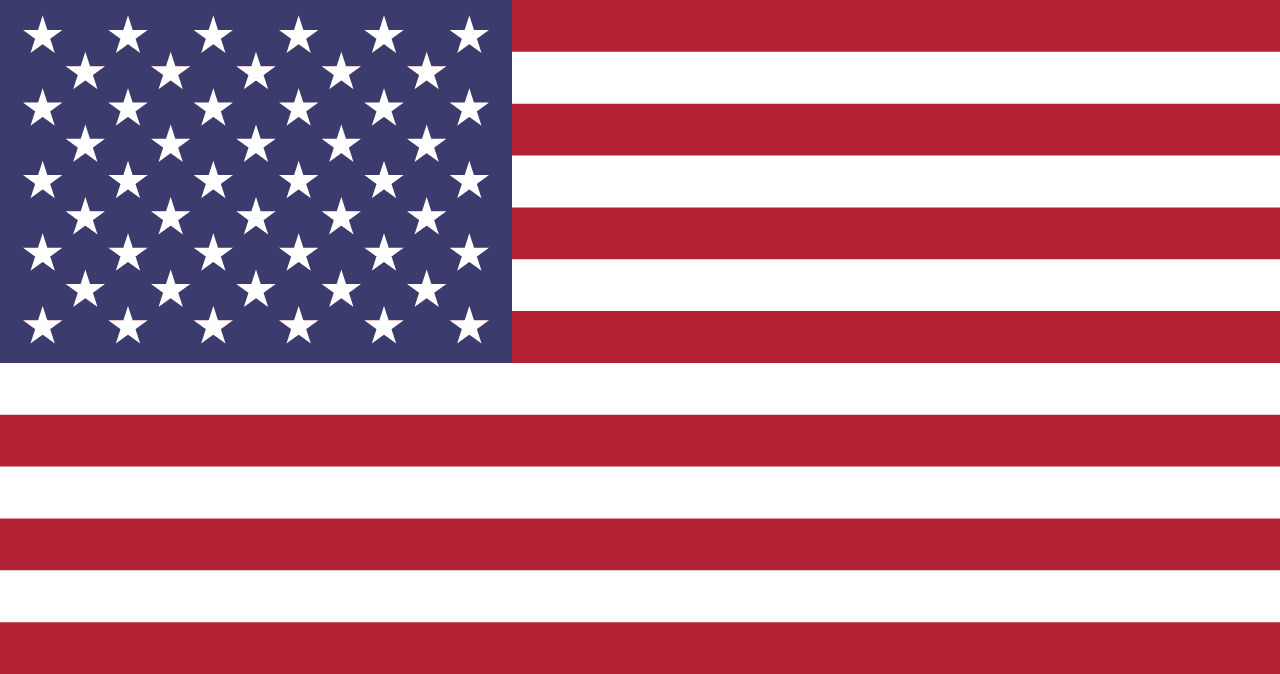
Few pieces of cloth are as instantly recognizable as the banner Americans call the Stars and Stripes. With its thirteen alternating red and white bands and a deep blue rectangle crowded with fifty small white stars, the flag of the United States is woven into school mornings, baseball games, lunar photographs, and presidential funerals alike. It is a design that has been revised more often than almost any other national flag, growing star by star as the country itself expanded. Understanding it means understanding not just a color scheme but a running visual record of American history.
A Banner Built From Stars and Stripes
The current design is governed by exacting specifications. Thirteen horizontal stripes alternate red and white, beginning and ending with red. In the upper left corner, known to vexillologists as the canton, sits a blue rectangle bearing fifty white five-pointed stars. Those stars are arranged in nine rows that alternate between six and five stars apiece, a staggered grid that fits the count neatly without leaving awkward gaps. The official proportions are set at a 10:19 ratio, meaning the flag is nearly twice as wide as it is tall, giving it the long, rippling silhouette familiar from countless ceremonies. The precise shades even carry their own names: Old Glory Red, White, and Old Glory Blue.
What the Colors and Symbols Represent
The meaning of the flag is admirably literal, which is part of why it has endured. The fifty stars stand for the fifty states that currently make up the union, one star for each. The thirteen stripes honor the original thirteen colonies that declared independence and became the country's first states. Because the number of stars tracks the number of states, the canton has functioned almost like a running tally across more than two centuries.
The red, white, and blue palette is read in the popular imagination as a trio of virtues, with red often associated with hardiness and valor, white with purity and innocence, and blue with vigilance, perseverance, and justice. Whatever interpretation one favors, the combination has proved so resonant that it has been echoed by flags and movements far beyond American borders.
How the Design Grew Over Time
The first American flag was adopted on June 14, 1777, and it carried thirteen stars to match its thirteen stripes, one set for each founding colony. From there, the flag became a living document. As new states joined the union, designers added stars, and the layout was reworked again and again to accommodate them. In total the flag has been modified 27 times since 1777, an evolution unmatched by most national banners, which tend to be frozen at the moment of their creation.
The version flying today, with fifty stars, was adopted on July 4, 1960, following Hawaii's admission as the fiftieth state the year before. Its design has an unusually charming origin story. The 50-star arrangement was created by Robert G. Heft, a 17-year-old who submitted it as a high school project and reportedly earned only a B- for the effort. When his design was ultimately selected as the national standard, the grade was famously reconsidered. For the deeper story of the nation behind the flag, see our united states country guide.
Look-Alikes and Relatives Around the World
The Stars and Stripes has inspired a small family of flags that borrow its striped structure or its starred canton. Liberia's flag is the closest cousin: founded in the nineteenth century by people with deep ties to the United States, the nation adopted a banner of eleven red and white stripes with a single white star on a blue field, a clear homage to the American template. Malaysia's flag, often nicknamed the "Stripes of Glory," features fourteen red and white stripes and a blue canton, though its canton holds a yellow crescent and star reflecting the country's own heritage rather than the American star pattern. Chile's flag shares the red, white, and blue palette and a starred blue canton, but its layout, with two broad horizontal bands and a single star, reads quite differently up close.
What distinguishes the United States flag from all of these is the density and arithmetic of its stars. No other widely flown national flag packs fifty individual stars into its canton, and none ties that number so directly to internal political divisions. Where look-alikes borrow the motif, the American flag uses it as a precise census.
A Fixture of National Identity
Known affectionately as Old Glory, the Star-Spangled Banner, or simply the Stars and Stripes, the flag is among the most recognized symbols on earth. It anchors the Pledge of Allegiance recited in classrooms, appears at the center of national sporting events, and is the subject of an extensive Flag Code that lays out etiquette for how it should be displayed, folded, illuminated, and retired. Flag Day, observed each year on June 14, marks the anniversary of that first 1777 adoption and celebrates the banner specifically rather than the broader nation.
The flag also carries solemn duties. It is lowered to half-staff to mourn the dead and to mark national tragedies. On military uniforms, the flag patch is worn with the stars facing forward, so that the canton leads and the stripes appear to stream behind, simulating a flag carried into the wind during a charge rather than one printed backward.
The Flag in Everyday and Extraordinary Places
You will find the Stars and Stripes on government buildings, schoolhouses, courthouses, and the front porches of private homes across the country. It rises at the start of the school day and at the opening of countless public events. It has also traveled to places no other flag has reached: six American flags have been planted on the surface of the Moon by Apollo astronauts, making it the only national banner to mark another world. Earthbound feats are impressive too, with one record-setting flag measuring an astonishing 505 feet long and 225 feet wide.
Quick Facts Worth Knowing
- The flag has been redesigned 27 times since 1777, more than almost any other national flag.
- The 50-star version was designed by 17-year-old Robert G. Heft for a school assignment that earned a B-.
- Six American flags have been planted on the Moon.
- The largest flag ever produced measured 505 feet by 225 feet.
- Betsy Ross is traditionally credited with sewing the first flag, though historians dispute the claim.
- The stars sit in nine rows alternating six and five across, fitting all fifty without gaps.
Frequently Asked Questions
When was the current United States flag adopted?
The 50-star flag flying today was adopted on July 4, 1960, after Hawaii became the fiftieth state. The very first American flag, however, dates back to June 14, 1777, and the design has been altered 27 times in the years between.
What do the colors and symbols on the flag mean?
The fifty stars represent the fifty current states of the union, while the thirteen stripes represent the original thirteen colonies. The colors are popularly understood as red for valor and hardiness, white for purity, and blue for vigilance, perseverance, and justice.
Who designed the 50-star flag?
The current arrangement was designed by Robert G. Heft, who was 17 years old when he submitted it as a high school project. He reportedly received a B- at first, a grade revisited once his design was chosen as the national standard. The legend of Betsy Ross sewing the original flag remains a separate and disputed tradition.
What continent is the United States on, and which flags resemble it?
The United States is located in North America. Its flag is most closely echoed by Liberia's striped banner with a single star, while Malaysia and Chile share elements such as red-white stripes or a starred blue canton, though each differs in count and layout.
