
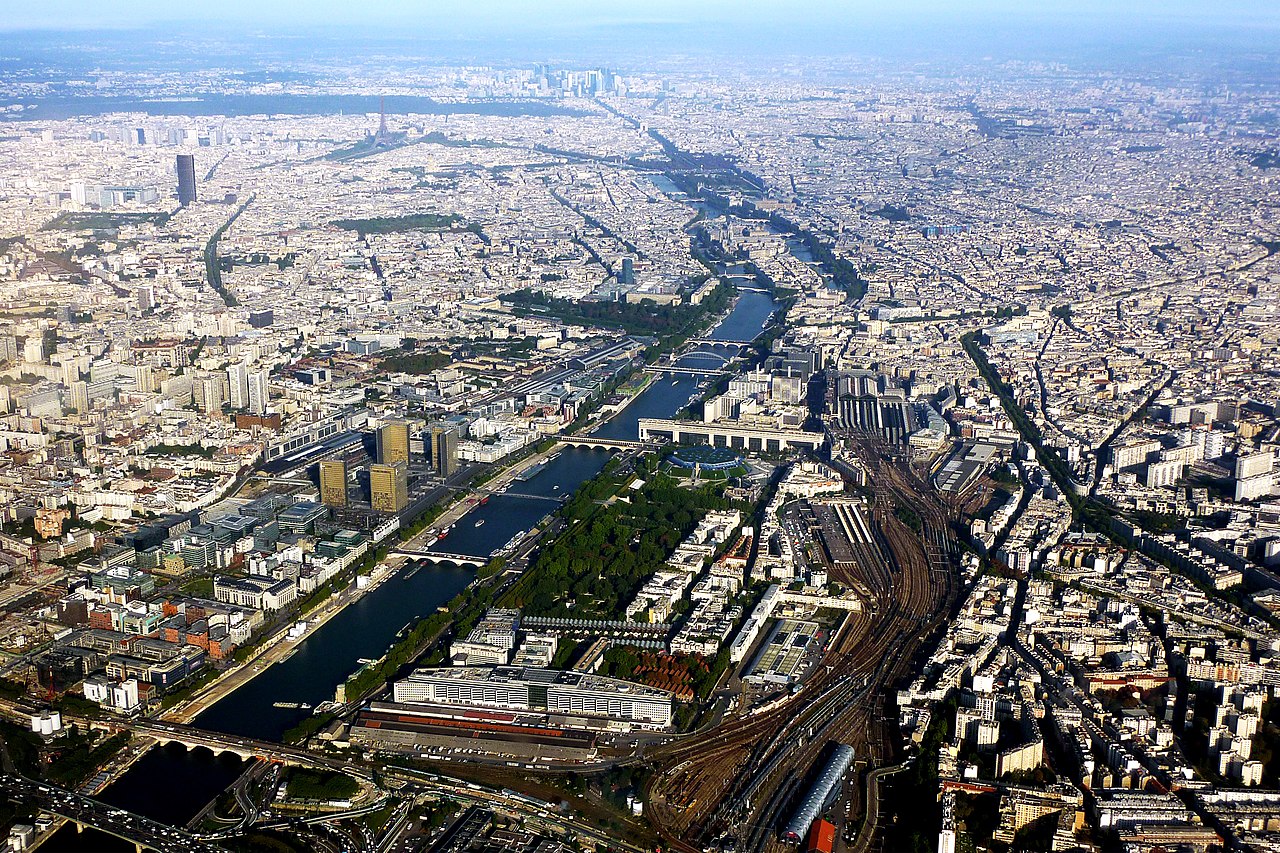
The Seine is one of the most famous rivers in the world, flowing approximately 777 kilometers from its source on the Langres Plateau in Burgundy through the heart of Paris to the English Channel at Le Havre. The river's gentle meanders through Paris, spanned by 37 bridges, have made it one of the most romantic and photographed waterways on Earth.
Introduction
The Seine has been central to French civilization for over 2,000 years. The Celtic Parisii tribe settled on the Île de la Cité in the Seine, giving Paris its name. Notre-Dame Cathedral, the Louvre, the Musée d'Orsay, and the Eiffel Tower all stand on or near its banks. The Seine is not just a river; it is the geographical soul of France.
Source to Sea
- Length: ~777 km
- Source: Source-Seine, Langres Plateau, Burgundy (~471 m elevation)
- Mouth: English Channel, at Le Havre/Honfleur, Normandy
The Seine begins as a small stream in a grotto at Source-Seine in Burgundy, owned by the city of Paris since 1864. A statue of a nymph marks the official source. The river flows northwest through the Paris Basin, one of France's most fertile agricultural regions, before reaching Paris and continuing through Normandy to the sea.
The Seine Estuary at Le Havre and Honfleur has been significantly modified by human activity, with the construction of the Port of Le Havre and the Pont de Normandie bridge. The estuary was once much wider and shallower, but channelization and dredging have narrowed it for shipping. The natural mudflats and salt marshes of the estuary remain important bird habitats.
Geography & Course
- Basin Area: ~78,650 km²
- Paris Bridges: 37 bridges cross the Seine within Paris
- Major Tributaries: Marne, Oise, Yonne, Aube
The Seine Basin covers roughly 15 percent of France's total area, concentrated in the northern part of the country. The Paris Basin, through which most of the Seine flows, is a large sedimentary basin of limestone, chalk, and sand that creates the gentle, rolling landscape of northern France.
The Seine's course through Paris is approximately 13 kilometers long, with the Île de la Cité and Île Saint-Louis sitting in the river's center. The 37 bridges that cross the Seine in Paris range from the medieval Pont Neuf (completed 1607, despite its name meaning "New Bridge") to modern structures. The banks of the Seine in Paris are a UNESCO World Heritage Site.
Climate & Hydrology
- Average Discharge: ~560 m³/s at Paris
- Major Floods: 1658, 1910, 2016, 2018
- Flood Control: Upstream reservoirs built after the 1910 flood
The Seine has a relatively stable, rainfall-fed flow regime, though it is subject to winter and spring flooding. The Great Flood of 1910 submerged much of central Paris, with water levels reaching 8.62 meters at the Pont d'Austerlitz — 6 meters above normal. The Zouave statue on the Pont de l'Alma has served as an unofficial flood gauge since the 1910 flood.
Four large upstream reservoirs, built between 1949 and 1990, help control flooding by storing excess water during high-flow periods. Despite this infrastructure, the Seine rose dangerously in June 2016, forcing the evacuation of Louvre artworks and disrupting the city for weeks. Climate change is expected to increase the frequency of extreme flooding events.
Ecology & Wildlife
- Fish Species: ~32 species now present in Paris (up from 3 in the 1970s)
- Water Quality: Dramatically improved; swimming allowed for 2024 Olympics
- Biodiversity: Herons, cormorants, and kingfishers now common along the Seine
Like the Thames, the Seine has undergone a remarkable ecological recovery. In the 1970s, pollution from industry and sewage had reduced the river through Paris to only three fish species. Massive investment in wastewater treatment has restored water quality, and 32 fish species are now present, including trout and Atlantic salmon in the upper reaches.
For the 2024 Paris Olympics, the Seine was cleaned sufficiently for open-water swimming events — the first time swimming was permitted in the river since 1923, when it was banned due to pollution. The river now supports healthy populations of grey herons, great cormorants, and kingfishers along its Parisian stretch.
Human Geography & History
- Population in Basin: ~18 million people (including greater Paris ~12 million)
- Cultural Heritage: Notre-Dame, Louvre, Musée d'Orsay, Eiffel Tower all on/near the Seine
- Impressionism: Monet, Renoir, Sisley, and Pissarro all painted the Seine
Paris exists because of the Seine. The Parisii tribe settled on the Île de la Cité around 250 BCE, taking advantage of the island's defensive position in the river. The Romans expanded the settlement to both banks, and Paris has been the capital of France ever since. The Seine has been the city's commercial artery, its defensive moat, its water supply, and its aesthetic centerpiece.
The Seine is arguably the most painted river in art history. The Impressionist movement was largely born along its banks, with Monet painting the river at Argenteuil, Giverny, and Rouen; Renoir painting boating scenes at Chatou; and Sisley capturing the river's moods at Moret-sur-Loing. The bookstalls (bouquinistes) along the Seine's banks have been a Paris institution since the 16th century.
Key Facts
- The Seine flows ~777 km from Burgundy through Paris to the English Channel.
- The banks of the Seine in Paris are a UNESCO World Heritage Site.
- The Great Flood of 1910 submerged much of central Paris, with waters 6 m above normal.
- The Seine was clean enough for Olympic swimming events in 2024, the first time since 1923.
- 37 bridges cross the Seine within the city of Paris.
Fun Facts
- The Pont Neuf, completed in 1607, is the oldest surviving bridge in Paris despite its name meaning "New Bridge."
- Paris's motto, "Fluctuat nec mergitur" ("She is tossed by the waves but does not sink"), features a ship on the Seine.
- The bouquinistes (booksellers) along the Seine have operated since the 16th century and are themselves a UNESCO heritage feature.
- The Impressionist movement was largely born on the banks of the Seine in the 1870s.
Final Thoughts
The Seine is far more than a river — it is the soul of Paris and a mirror of French civilization. From the Celtic Parisii to the Olympic swimmers of 2024, the Seine has been the constant companion of one of the world's great cities. Its ecological recovery and cultural richness make it a model for how cities and rivers can coexist and thrive together.
Test Your Knowledge!
Think you know the world's rivers? Test your knowledge!
Play Geography Games →