
Egypt is the kind of place where a five-lane highway can run past a 4,500-year-old pyramid, and where the same river that fed the pharaohs still feeds nearly 100 million people today. It is a land of staggering contrasts: endless desert pressed against a thin green ribbon of farmland, ancient temples next to neon-lit Cairo cafés. Here are ten genuinely surprising facts that go far beyond the postcard view of camels and tombs.
1. Almost the Entire Country Is Empty Desert
Egypt covers roughly one million square kilometres, but around 95 percent of that land is uninhabited desert. The vast majority of Egyptians are squeezed into the narrow Nile Valley and Delta, which make up only a small fraction of the territory. This means Egypt has one of the most lopsided population distributions on Earth. Stand on the edge of Cairo and you can watch dense apartment blocks abruptly stop, replaced by the bone-dry Western Desert in the space of a single street. To ease the crush, the government has spent recent years building an entirely new administrative capital in the desert east of Cairo, complete with one of the tallest towers in Africa.
2. The Nile Is the World's Longest River — and Egypt's Lifeline
The Nile stretches roughly 6,650 kilometres from the heart of Africa to the Mediterranean, making it the longest river on the planet (a title it narrowly contests with the Amazon). For Egypt it is everything. The ancient Greek historian Herodotus famously called the country "the gift of the Nile," and he was not exaggerating. Without the river's annual flood, which historically deposited rich black silt across the valley, there would be no Egyptian civilisation at all. Today the Aswan High Dam controls those floods and generates a large share of the nation's electricity, while feluccas — traditional wooden sailboats — still drift past the same banks they have for thousands of years.
3. Cairo Is the Largest City in the Arab World
Cairo, the capital, is a sprawling megacity whose greater metropolitan area holds more than 20 million people, making it the biggest urban centre in both the Arab world and Africa. Egyptians lovingly call it Umm al-Dunya, "the Mother of the World." The city never seems to sleep: traffic roars at midnight, juice stands stay open into the small hours, and the call to prayer echoes across thousands of minarets. To learn more about the nation's geography and people, see our full country guide. Cairo's historic Islamic core is a UNESCO World Heritage Site packed with medieval mosques, madrasas and the labyrinthine Khan el-Khalili bazaar.
4. The Pyramids Were Already Ancient to the Ancient Romans
We tend to lump "ancient Egypt" into one blur, but the timescales are mind-bending. The Great Pyramid of Giza was completed around 2560 BCE. By the time Cleopatra ruled Egypt around 30 BCE, the pyramids were already more than 2,500 years old — meaning Cleopatra lived closer in time to us than to the builders of the pyramids. The Great Pyramid stood as the tallest human-made structure on Earth for nearly 3,800 years, until medieval cathedrals finally surpassed it. It is the last surviving member of the Seven Wonders of the Ancient World, and astonishingly precise in its alignment to the cardinal directions.
5. Egyptians Speak Arabic — but Write Their Own Dialect
The official language is Modern Standard Arabic, used in writing, news and formal settings. In daily life, however, Egyptians speak Egyptian Arabic, a distinct and lively dialect. Thanks to Egypt's enormous film and music industry, this dialect is widely understood across the entire Arab world — making it something of a regional lingua franca. The ancient Egyptian language did not vanish entirely, either: it survives as Coptic, still used in the liturgy of Egypt's Christian minority. Deciphering the old hieroglyphic script only became possible after the discovery of the Rosetta Stone in 1799, which carried the same decree in three scripts.
6. Koshari Is a National Obsession
If one dish captures Egypt, it is koshari — a glorious carbohydrate pile-up of rice, macaroni, lentils and chickpeas, topped with spiced tomato sauce and crispy fried onions. It is cheap, filling, vegetarian and sold everywhere from street carts to dedicated koshari restaurants. Other staples include ful medames, slow-cooked fava beans eaten for breakfast, and ta'meya, the Egyptian version of falafel made from fava beans rather than chickpeas. Wash it all down with sweet mint tea or karkadeh, a tart, ruby-red hibiscus drink served hot in winter and ice-cold in summer. Egyptian food is humble, generous and deeply tied to community.
7. The Suez Canal Carries a Tenth of Global Trade
Opened in 1869, the Suez Canal slices through Egyptian territory to connect the Mediterranean Sea with the Red Sea, sparing ships the long and dangerous voyage around the southern tip of Africa. Roughly 10 percent of all global maritime trade passes through this single waterway, and the tolls it collects are a major pillar of Egypt's economy. The world was reminded of its importance in 2021, when a single massive container ship, the Ever Given, ran aground and blocked the canal for six days, snarling supply chains across the planet. A 2015 expansion added a parallel channel to let more ships pass in both directions.
8. The Red Sea Coast Is a Diver's Paradise
Egypt is not only desert and ruins. Its Red Sea coastline, around resorts like Sharm El-Sheikh and Hurghada, offers some of the finest coral reef diving anywhere in the world. The warm, clear waters host vibrant coral gardens, reef sharks, sea turtles and clouds of tropical fish, drawing scuba divers and snorkelers from around the globe. Inland, the deserts hide their own wildlife: the fennec fox with its enormous radar-like ears, desert hedgehogs, and the elusive Egyptian mongoose. The Nile still shelters Nile crocodiles in its southern stretches, and the wetlands of the Delta are a vital rest stop for millions of migrating birds.
9. The Country Loves Football Above All
Sport in Egypt means one thing above all others: football. The national team, the Pharaohs, has won the Africa Cup of Nations a record number of times, and matches between Cairo's two giant clubs, Al Ahly and Zamalek — a fixture known as the Cairo Derby — can bring the whole country to a standstill. Egypt has also produced global stars like Mohamed Salah, whose face appears on murals across the country. Beyond football, Egypt is a surprising powerhouse in squash, regularly producing world champions and dominating the international rankings in a sport that flies under the radar elsewhere.
10. The Calendar and the Days of the Year Began Here
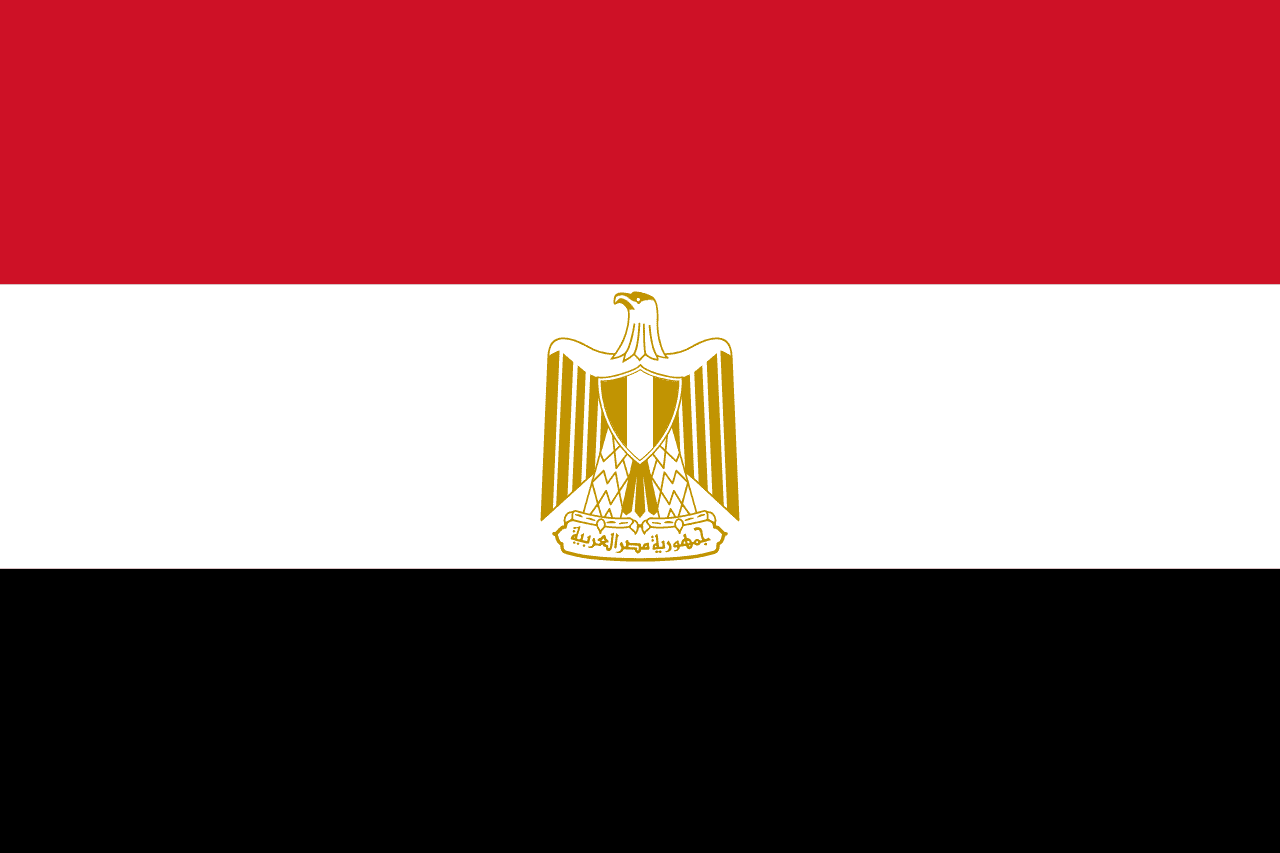
Ancient Egyptians were obsessive observers of the sky, and they gave the world one of its most enduring inventions: a 365-day solar calendar divided into twelve months. By tracking the heliacal rising of the star Sirius, which coincided with the Nile's flood, they built a remarkably accurate yearly cycle that influenced the later Roman and modern calendars. They also pioneered early forms of medicine, geometry and monumental engineering. You can see the nation's enduring pride in its symbols today — including the eagle of Saladin on its flag, a banner shared with several other Arab nations.
Frequently Asked Questions
What is the capital of Egypt?
The capital is Cairo, the largest city in the Arab world and Africa, with a greater metropolitan population of over 20 million people. A brand-new administrative capital is currently being built in the desert to its east to relieve the older city's overcrowding.
What is Egypt most famous for?
Egypt is best known for the Pyramids of Giza and the Great Sphinx, the treasures of the pharaohs such as Tutankhamun's golden mask, the River Nile, and ancient hieroglyphic writing. It is also famous for the Suez Canal and its Red Sea diving resorts.
Did it really rain so rarely that Cairo barely has drainage?
Almost. Cairo receives only a few centimetres of rain per year, so heavy downpours are rare events that the city is poorly equipped to handle. When unusual storms do strike, streets can flood quickly — a quirky consequence of living in one of the driest inhabited places on Earth.
Conclusion
Egypt is far more than a collection of ancient monuments frozen in time. It is a living, crowded, fast-moving country where the deepest history on Earth meets the noise and energy of a modern megacity, all balanced on the thin green edge of a single extraordinary river. These ten facts barely scratch the surface — and that, perhaps, is the most Egyptian thing of all.
