
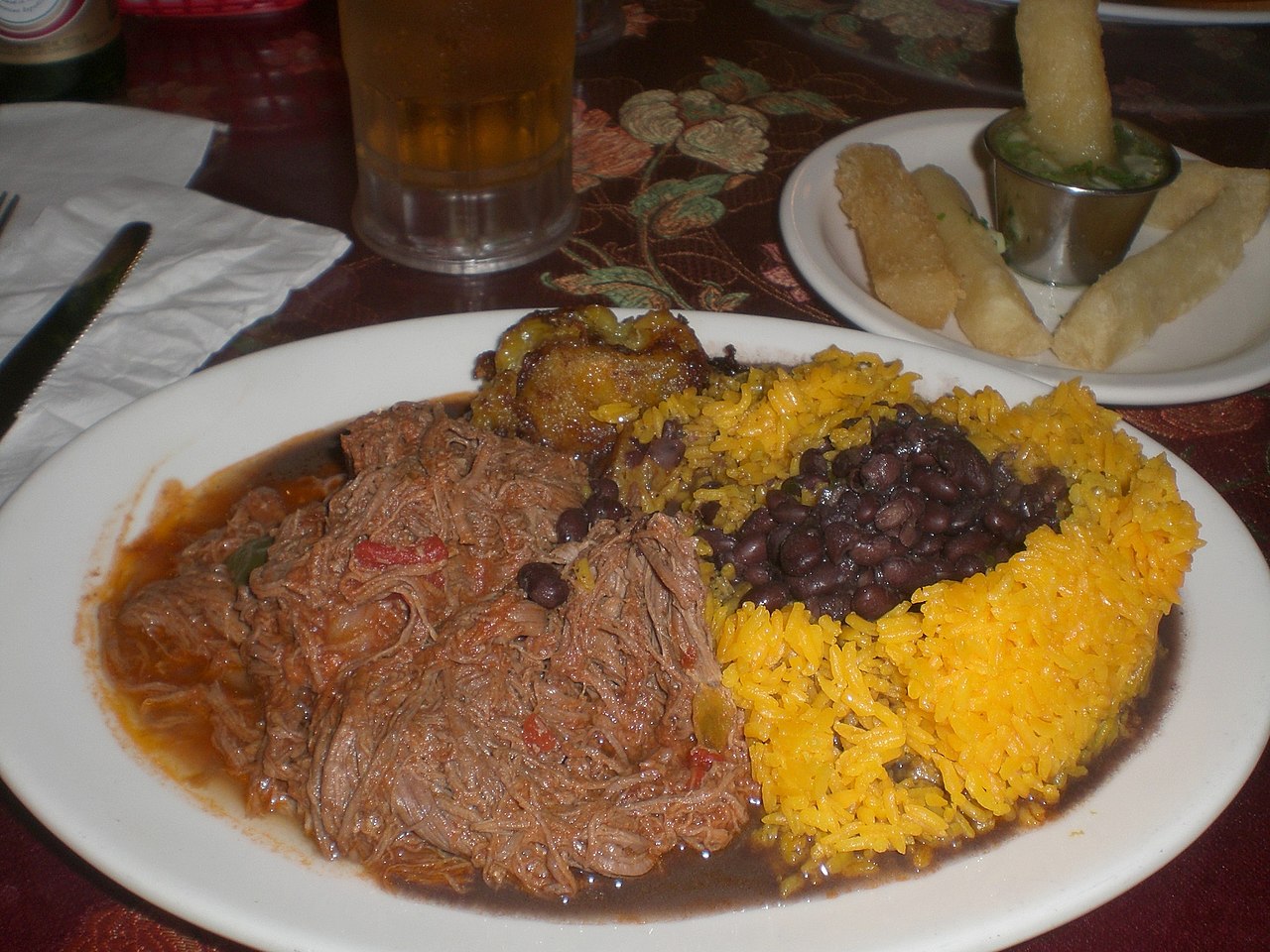
The traditional food of Cuba centers on ropa vieja, the lechon asado (roast pork), arroz con pollo, moros y cristianos, and the pressed Cuban sandwich — a slow-cooked, sofrito-based cuisine that fuses Spanish colonial cooking, African technique, and native Taino ingredients. Cuban food is built on humble staples — rice, beans, pork, citrus, and root vegetables — transformed into deeply flavorful dishes through patience and a handful of bold seasonings.
What Defines Cuban Cooking
Almost every savory Cuban dish begins with sofrito: garlic, onion, green pepper, and tomato gently fried in oil, often seasoned with cumin, oregano, and bay leaf. This aromatic base is the backbone of stews, beans, and braises across the island.
The other defining element is mojo, a marinade of sour orange juice, garlic, and oil used to flavor pork and chicken. Cuban cuisine is generally savory rather than spicy-hot — chili heat is rare. Instead, flavor comes from slow cooking, citrus brightness, and the contrast of rich meats against simple rice and beans.
Iconic Main Dishes
- Ropa Vieja: Cuba's national dish — flank or skirt beef braised until it shreds into "old clothes," simmered in tomato, peppers, and onions.
- Lechon Asado: Whole pig marinated in mojo and slow-roasted, the centerpiece of Noche Buena (Christmas Eve) feasts.
- Arroz con Pollo: A one-pot chicken-and-rice dish tinted golden with saffron or annatto and studded with peas and peppers.
- Picadillo: Seasoned ground beef cooked with olives, raisins, and capers, served over white rice.
- Vaca Frita: Beef boiled, shredded, then pan-fried crisp with onions and a squeeze of lime.
Pork is the heart of Cuban celebration cooking, while beef dishes like ropa vieja and vaca frita showcase the island's mastery of turning tough, affordable cuts into tender, flavor-packed meals.
Sides, Snacks, and Street Food
- Moros y Cristianos: Black beans and white rice cooked together — "Moors and Christians" — eaten at nearly every meal.
- Tostones and Maduros: Twice-fried green plantains and sweet caramelized ripe plantains, the universal Cuban side.
- Yuca con Mojo: Boiled cassava bathed in garlic-citrus mojo sauce.
- Croquetas de Jamon: Creamy bechamel-and-ham croquettes, breaded and fried — Cuba's favorite snack.
- Cuban Sandwich: Ham, roast pork, Swiss cheese, mustard, and pickles pressed in Cuban bread, perfected in Tampa and Miami.
- Empanadas and Pan con Lechon: Beef-filled turnovers and roast-pork sandwiches sold at street windows.
Plantains appear in nearly every meal, prepared green for a starchy crunch or ripe for sweetness. These accompaniments turn simple plates into satisfying, balanced meals — a reflection of the resourcefulness that defines Cuban home cooking.
Desserts and Drinks
Cuban sweets lean tropical and rich. Flan de leche, a silky caramel custard, is the quintessential dessert, followed by creamy arroz con leche (cinnamon rice pudding) and flaky pastelitos de guayaba filled with guava paste and cream cheese. Tropical fruits like guava, coconut, mango, and papaya flavor countless treats.
Drinks are equally celebrated. Cafecito — intensely strong, sweet espresso topped with a whipped-sugar crema — is served all day at the ventanita (sidewalk window). On the cocktail side, the mojito (rum, mint, lime, sugar, soda) and the daiquiri (rum, lime, sugar) were both born in Havana and famously favored by Ernest Hemingway. Cuba's rum tradition stretches back centuries, with Havana Club its best-known label.
The Cultural Roots of Cuban Food
Cuban cuisine is a layered inheritance. Spanish colonizers brought pork, rice, citrus, and the sofrito tradition. Enslaved Africans contributed plantains, root vegetables, and slow-cooking techniques that shaped dishes like ajiaco, the hearty stew of meats and tubers tracing back to the indigenous Taino. Caribbean and even Chinese immigrant influences round out the table.
Decades of food scarcity under rationing forced cooks to be inventive with limited ingredients, yet the core traditions endured. The result is a soulful, comforting cuisine that prizes generosity and shared meals. To learn more about the island that produced these flavors, see our cuba country guide.
Frequently Asked Questions
What is Cuba's national dish?
Ropa vieja — shredded beef braised in a tomato-and-pepper sauce — is widely regarded as Cuba's national dish. Lechon asado (whole roast pork in mojo) is the most important celebration food, especially for Christmas Eve.
Is Cuban food spicy?
Generally no. Cuban cooking is savory and aromatic rather than hot. Flavor comes from garlic, cumin, oregano, citrus, and slow cooking rather than chili peppers, which are rarely used.
What do Cubans eat every day?
A typical Cuban meal pairs rice and beans — often moros y cristianos — with a protein such as pork or chicken, plus fried plantains. Strong sweet cafecito and a flan or pastelito round out daily eating.
Is the Cuban sandwich actually from Cuba?
Its roots are Cuban, built on Cuban bread and roast pork, but the sandwich as known today was popularized and perfected in the Cuban-immigrant communities of Tampa and Miami in the early 20th century.