
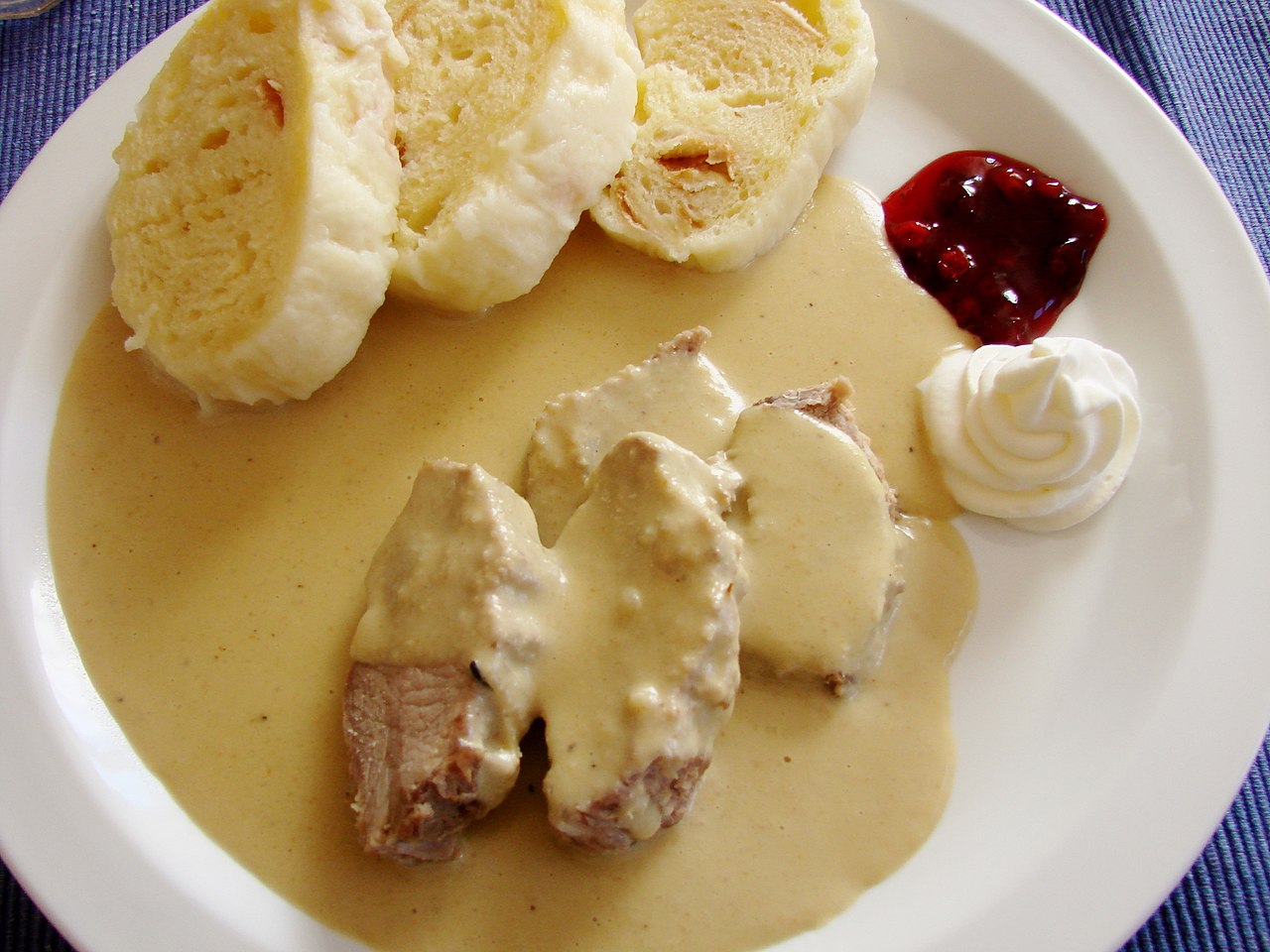
The traditional food of the Czech Republic is hearty Central European fare built around roasted meats, bread dumplings (knedlíky), and rich sauces — with svíčková, vepřo-knedlo-zelo, and trdelník among the 15 must-try dishes, all designed to pair with the world's finest beer. Czech cuisine reflects a cool Bohemian and Moravian climate, a deep brewing heritage, and a love of generous, comforting portions enjoyed slowly over a cold pivo.
The Essential National Dishes
If you try only a handful of Czech dishes, start with these icons that appear on nearly every pub and family table:
- Svíčková na smetaně — marinated beef sirloin in a velvety root-vegetable cream sauce, served with bread dumplings, a swirl of cream, and tart cranberry compote. It is widely regarded as the pinnacle of Czech home cooking.
- Vepřo-knedlo-zelo — roast pork with bread dumplings and stewed sauerkraut. This "pork-dumpling-cabbage" trio is the quintessential Czech pub lunch.
- Guláš — a thick, beefy Czech goulash, richer and less soupy than the Hungarian version, often served in a hollowed-out bread bowl or with dumplings.
- Kuře na paprice — chicken braised in a creamy paprika sauce, another dumpling-friendly classic.
Bread dumplings tie this cuisine together: dense, sliced loaves of boiled dough that soak up every drop of sauce. Almost no main course arrives without them.
Street Food and Pub Snacks
Czech casual eating shines in beer gardens, Christmas markets, and the busy squares of Prague:
- Trdelník — a spiral "chimney cake" of dough wound on a spit, grilled over charcoal and rolled in sugar and walnuts. Though now a Prague tourist favourite, it makes a warm, sweet treat, sometimes filled with ice cream.
- Smažený sýr — deep-fried breaded cheese (usually Edam) with tartar sauce and fries, the beloved Czech vegetarian fast food.
- Klobása — a grilled sausage with mustard and a slice of bread, a staple at every beer garden and football match.
- Chlebíčky — open-faced sandwiches on baguette slices topped with ham, egg, potato salad, or fish, served at celebrations and delis.
These snacks are cheap, filling, and built to accompany a glass of beer rather than replace a sit-down meal.
Soups, Comfort Food, and Sweet Mains
Czech soups are substantial enough to be a meal in themselves, and some "desserts" double as lunch:
- Kulajda — a creamy South Bohemian mushroom-and-potato soup flavoured with dill and topped with a poached egg.
- Bramboračka — a robust potato soup with mushrooms, root vegetables, and marjoram, traditionally served on Christmas Eve.
- Česnečka — a restorative garlic soup, the Czech remedy for cold weather and long nights.
- Ovocné knedlíky — fruit-filled dumplings (plum, apricot, or strawberry) dusted with sugar, melted butter, and quark cheese. Many Czechs eat them as a light main course in summer.
The late-summer ritual of making fresh plum dumplings is a cherished seasonal tradition in Czech households.
Desserts and the Famous Beer Culture
Round out a Czech meal with classic baked sweets and a drink that defines the nation:
- Koláče — round pastries filled with poppy seed, plum jam, or sweet cheese, served at weddings and festivals.
- Medovník — a multi-layered honey cake with cream filling, a favourite for birthdays and celebrations.
- Větrník — a caramel-and-custard choux pastry that is a coffee-house staple.
No discussion of Czech food is complete without pivo (beer). The Czech Republic is the birthplace of Pilsner, first brewed in Plzeň (Pilsen) in 1842, and Czechs drink roughly 140 litres per person each year — by far the highest in the world. With over 400 breweries serving a population of about 10.7 million, beer is often cheaper than bottled water in pubs. For a stronger pour, try Becherovka, the herbal bitter liqueur from the spa town of Karlovy Vary, or Moravian slivovice, a fiery plum brandy reserved for toasts. To learn more about the country behind these flavours, see our czech republic country guide.
Why Czech Food Tastes the Way It Does
Czech cuisine grew out of a continental climate and a farming tradition rich in pork, root vegetables, cabbage, wheat, and orchard fruit. Long winters favoured preserving — hence sauerkraut, smoked meats, and fruit brandies — while abundant grain and soft water made the region perfect for brewing. The result is honest, warming food meant for sharing: not flashy, but deeply satisfying and proudly local. Regional differences add variety, with Moravia in the southeast known for wine and slivovice and Bohemia in the west for its beer halls and dumplings.
Frequently Asked Questions
What is the national dish of the Czech Republic?
Vepřo-knedlo-zelo — roast pork with bread dumplings and sauerkraut — is widely considered the national dish, while svíčková na smetaně is regarded as the finest example of Czech home cooking.
What do Czech people drink with their food?
Beer, above all. The Czech Republic invented Pilsner in 1842 and has the world's highest per-capita beer consumption. Herbal Becherovka and plum slivovice are popular spirits for toasting.
Is Czech food good for vegetarians?
Traditional Czech cuisine is meat-heavy, but smažený sýr (fried cheese), fruit dumplings, potato soups, and koláče offer satisfying meat-free options, and modern Prague has many vegetarian restaurants.
What is trdelník and is it really Czech?
Trdelník is a sweet, sugar-coated chimney cake grilled on a spit. While hugely popular with tourists in Prague today, it has Central European roots and makes a tasty, if not strictly traditional Czech, street treat.