
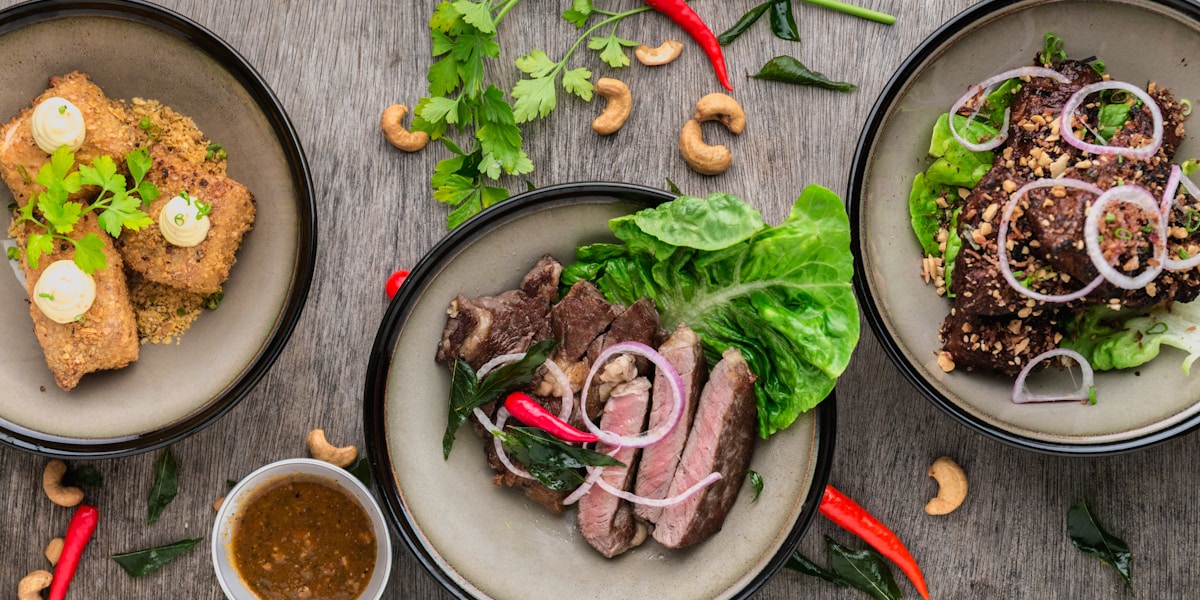
The traditional food of South Africa centres on braai (barbecue), biltong, bobotie, bunny chow, pap, and a sweep of dishes drawn from indigenous African, Dutch, Cape Malay, Indian, and British kitchens. Few cuisines pack as many cultural worlds onto a single plate, which is exactly why South Africa is so often called the Rainbow Nation in the kitchen as much as anywhere else.
The 15 Must-Try Dishes
If you want a complete tasting tour of the country, these are the dishes locals will point you toward, grouped from savoury staples to sweets and drinks:
- Braai — the national grilling ritual of boerewors, lamb chops, and sosaties cooked over wood or charcoal.
- Biltong — air-dried, vinegar-cured strips of beef, ostrich, or game seasoned with coriander and pepper.
- Bobotie — spiced minced meat baked under a golden egg-and-milk custard, widely regarded as the national dish.
- Bunny chow — a hollowed loaf of bread filled with curry, born in Durban's Indian community.
- Pap en wors — stiff maize porridge served with grilled sausage and chakalaka relish.
- Potjiekos — a layered meat-and-vegetable stew cooked slowly in a three-legged iron pot.
- Durban curry — fiery, fragrant lamb, chicken, or bean curries served with roti or rice.
- Vetkoek — deep-fried dough rolls stuffed with mince or jam.
- Droëwors — dried, snackable sausage, essentially biltong's coiled cousin.
- Chakalaka and pap — a spicy tomato-and-bean vegetable relish that accompanies almost everything.
- Malva pudding — a warm, spongy apricot cake drenched in cream sauce.
- Koeksisters — braided fried dough soaked in cold syrup until sticky and glassy.
- Melktert — a cinnamon-dusted milk tart with a soft custard filling.
- Amarula — a cream liqueur made from the fruit of the wild marula tree.
- Rooibos tea — a caffeine-free red herbal tea grown only in the Western Cape.
The Braai: South Africa's Sacred Ritual
No dish defines the country like the braai. More than a barbecue, it is a social institution: friends and family gather around an open fire for hours while meat cooks low and slow. The centrepiece is usually boerewors, a coiled farmer's sausage spiced with coriander, alongside lamb chops, steak, and skewered sosaties marinated in a curried apricot sauce. The tradition runs so deep that September 24 — Heritage Day — is widely celebrated as National Braai Day, a unifying event that crosses every cultural and linguistic line in the country. Pair it with pap and chakalaka and you have the most common shared meal in South Africa.
Biltong, Bunny Chow and the Cape Malay Table
Biltong is the snack South Africans cannot live without — over 20,000 tonnes are consumed each year. Unlike American jerky, it is air-dried rather than smoked and cured with vinegar, giving a denser, more savoury bite. Bunny chow tells a different story: invented by Durban's Indian labourers, the hollowed bread loaf served as both bowl and portable lunch, and the curry-filled "quarter" or "half" is now beloved nationwide. Cape Malay cooking, brought by enslaved people and settlers from Southeast Asia, contributes the gentle sweet-spice of bobotie and aromatic curries that distinguish the Western Cape from the fierier styles of KwaZulu-Natal.
Slow Stews and Indigenous Staples
Where the braai is fast and communal, potjiekos is patient. Meat and vegetables are layered into a cast-iron pot over coals and left undisturbed for hours — the cardinal rule is never to stir. Across the eastern and northern provinces, maize-based pap (also called mealie pap or putu) is the everyday staple, eaten with relishes, stews, and morogo (wild leafy greens). Zulu and Xhosa cooking adds dishes such as umngqusho, a slow-cooked samp-and-beans dish famously favoured by Nelson Mandela. These indigenous foundations underpin nearly every South African meal, however cosmopolitan the toppings become.
Sweets, Wines and Drinks
South Africa's sweet tooth is legendary. Malva pudding — sticky, warm, and swimming in cream sauce — is the finale of countless Sunday lunches, while koeksisters and the custardy melktert reveal the country's Cape Dutch heritage. For drinks, the wine industry dates back to 1659, making it one of the oldest in the New World; Stellenbosch, Franschhoek, and Paarl produce world-class Chenin Blanc and the uniquely local Pinotage, a grape cross created in South Africa in 1925. Rooibos tea grows only in the Cederberg Mountains, and Amarula liqueur captures the flavour of the marula fruit that elephants are famously fond of. To learn more about the country behind the cuisine, see our south africa country guide.
Frequently Asked Questions
What is the national dish of South Africa?
Bobotie is widely considered the national dish — spiced minced meat baked beneath a soft egg custard, reflecting Cape Malay influences. The braai, however, is the most unifying culinary tradition across all communities.
What is the difference between biltong and jerky?
Biltong is air-dried and cured with vinegar and spices like coriander, producing a denser, less sweet result. Jerky is typically smoked or oven-dried and often marinated in sweeter sauces.
What is bunny chow and where did it come from?
Bunny chow is a hollowed loaf of bread filled with curry, created by the Indian community of Durban as a cheap, portable meal. Despite the name, it contains no rabbit — it likely derives from "bania", a term for Indian merchants.
What do South Africans usually drink with their food?
Common choices include locally brewed beer, world-class South African wine, caffeine-free rooibos tea, and Amarula cream liqueur as an after-dinner treat.