
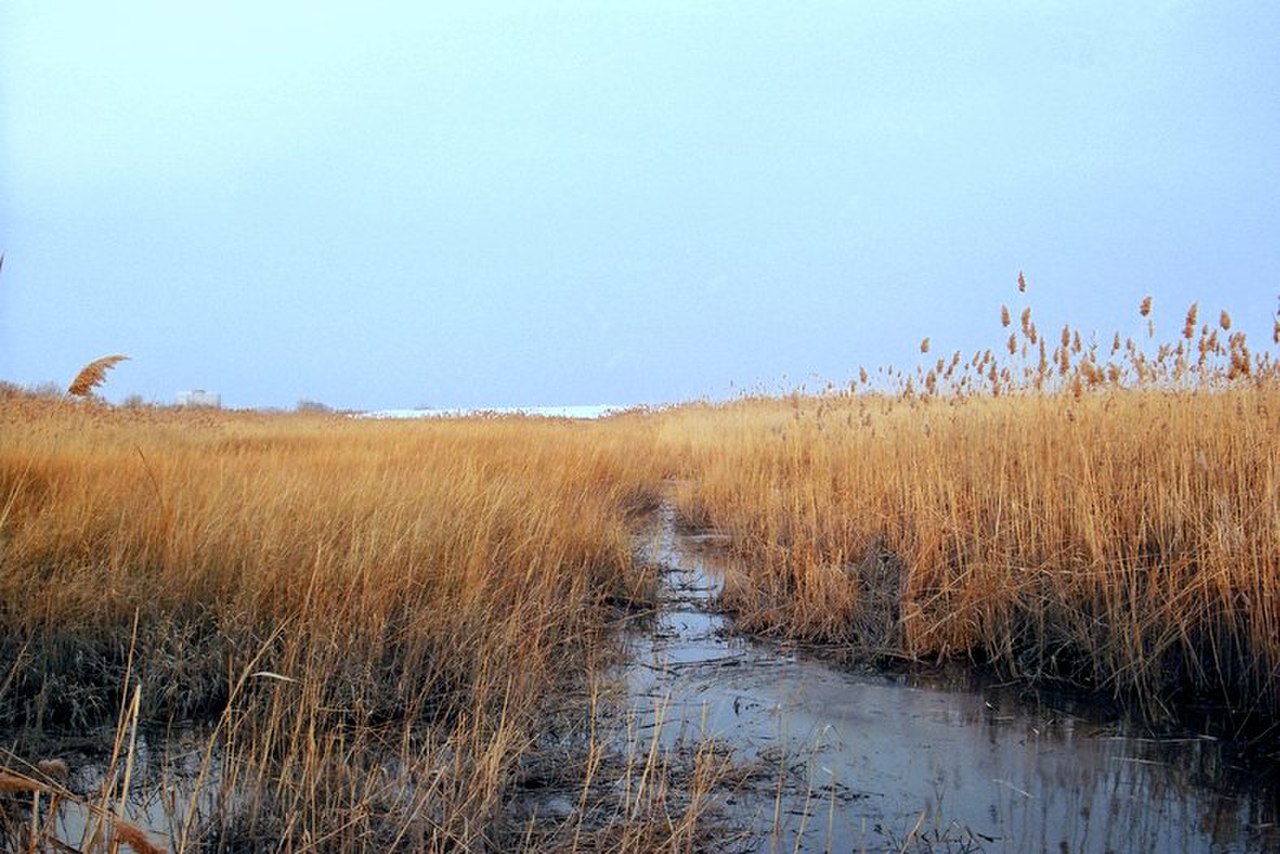
A marsh is a type of wetland dominated by herbaceous (non-woody) plants such as grasses, reeds, rushes, and sedges, growing in soil that is permanently or seasonally flooded with water. Unlike swamps, which are dominated by trees, marshes are open landscapes of soft-stemmed vegetation rooted in waterlogged ground. They occur in both freshwater and saltwater settings and rank among the most biologically productive habitats on Earth.
Marshes are found on every continent except Antarctica, fringing rivers, lakes, estuaries, and sheltered coastlines. Though they can look like little more than flooded grassland, they perform outsized work for the planet: filtering water, buffering storms, storing carbon, and feeding vast food webs of birds, fish, amphibians, and invertebrates. This guide explains what defines a marsh, how marshes form, the main types, and why they matter so much.

What Makes a Marsh Different From Other Wetlands
All wetlands share one feature: water saturates the ground often enough to shape the soil and the plants that grow there. What sets a marsh apart is its vegetation. Marshes are defined by herbaceous, soft-stemmed plants rather than woody ones, giving them their characteristic low, open, grassy appearance.
- Marsh vs. swamp: A swamp is dominated by trees and woody shrubs; a marsh is dominated by grasses, reeds, and sedges.
- Marsh vs. bog: A bog is a peat-forming wetland fed mainly by rainfall, acidic and nutrient-poor; a marsh is usually richer in nutrients and fed by surface or tidal water.
- Marsh vs. fen: A fen is also herbaceous but is fed by mineral-rich groundwater and accumulates peat, whereas marshes typically do not form deep peat.
How Marshes Form
Marshes form wherever the water table sits at or near the surface for extended periods, keeping the soil saturated. The exact setting depends on whether the marsh is freshwater or saltwater.
- Freshwater marshes: Form along river floodplains, around lake margins, and in low-lying depressions where water collects and drains poorly.
- Salt marshes: Form in sheltered coastal areas protected from strong waves, where fine sediment accumulates in bays and behind barrier islands.
- Key requirement: Soil that stays waterlogged for at least part of the year.
The standing water creates an anaerobic (oxygen-poor) environment in the soil. With little oxygen available, decomposition slows dramatically, so dead plant material piles up faster than it breaks down. This is what gives marsh soil its dark color, spongy texture, and remarkable ability to lock away carbon.
The Main Types of Marshes
Geographers usually divide marshes into a handful of categories based on their water source and salinity.
- Salt marsh: Coastal and flooded by tides, dominated by salt-tolerant cordgrass (Spartina). Found along temperate and high-latitude coastlines worldwide.
- Freshwater marsh: Inland, near rivers and lakes, dominated by cattails, bulrushes, sedges, and water lilies. The most widespread type globally.
- Tidal freshwater marsh: Near the coast and influenced by tidal rise and fall, but located upriver where the water remains fresh.
- Wet meadow: Seasonally flooded grasslands that dry out for part of the year, often grading into upland.
Salt marshes are flooded by tides roughly twice a day. That regular flushing delivers fresh nutrients and carries away waste, which is one reason these systems are so extraordinarily productive. Freshwater marshes, by contrast, depend on rainfall, rivers, and groundwater, and they host a much greater variety of plant species. The Florida Everglades is the most famous freshwater marsh system in the world, covering more than 6,000 square kilometers.
Why Marshes Are So Productive and Important
Marshes are biological powerhouses. A single hectare of salt marsh can produce more organic material than a hectare of farmland, generating roughly 5 to 10 tons of organic matter per year. That energy fuels food webs reaching far beyond the marsh itself, as tides and currents export detritus and nutrients into surrounding waters where fish and shellfish feed.
- Biodiversity: Marshes support thousands of bird, fish, amphibian, and invertebrate species, and serve as nurseries for commercially important fish and crustaceans.
- Storm buffer: Salt marshes absorb wave energy and reduce coastal flooding, dissipating up to 90% of incoming wave energy.
- Water quality: Marsh vegetation filters pollutants and excess nutrients, removing as much as 80% of the nitrogen in agricultural runoff.
- Carbon storage: Their waterlogged soils store more carbon per unit area than most land ecosystems.
Because marshes lock away so much carbon, draining or destroying them releases that stored CO2 back into the atmosphere. For this reason, protecting and restoring marshes is increasingly recognized as a cost-effective tool for climate mitigation alongside its better-known benefits for wildlife and flood defense.
Marshes in History and Culture
Humans have lived in and around marshes for millennia. The Mesopotamian Marshes of southern Iraq sustained the Marsh Arabs for some 5,000 years before being deliberately drained in the 1990s; they have since been partially restored. Marshes have also shaped folklore: the methane, or "marsh gas," released by decomposing plant matter was historically blamed for the eerie flickering lights known as will-o'-the-wisps. Today, many marshes are protected under conservation programs that recognize their value to both people and nature.
Key Facts
- Definition: A wetland dominated by grasses, reeds, and other herbaceous plants.
- Distinct from: Swamps (tree-dominated) and bogs (peat-dominated).
- Distribution: Found on every continent except Antarctica.
- Most productive type: Salt marshes, at 5-10 tons of organic matter per hectare each year.
- Famous example: The Florida Everglades, the world's best-known freshwater marsh.
- Climate role: Store large amounts of carbon in waterlogged soils.
- Storm defense: Can dissipate up to 90% of incoming wave energy.
Frequently Asked Questions
What is the difference between a marsh and a swamp?
The key difference is vegetation. A marsh is dominated by soft-stemmed herbaceous plants like grasses, reeds, and sedges, giving it an open grassy look. A swamp is dominated by trees and woody shrubs. Both are wetlands with waterlogged soil, but a swamp is essentially a flooded forest, while a marsh is a flooded grassland.
Are marshes freshwater or saltwater?
They can be either. Freshwater marshes form inland along rivers, lakes, and low-lying areas, while salt marshes form along sheltered coastlines where they are flooded by tides. There are also tidal freshwater marshes near the coast that experience tides but remain fresh because they sit upriver from saltwater.
Why are marshes important to the environment?
Marshes filter pollutants and excess nutrients from water, buffer coastlines against storms and flooding, store large amounts of carbon, and provide habitat and nursery grounds for an enormous range of birds, fish, and other wildlife. Hectare for hectare, they are among the most ecologically valuable ecosystems on Earth.
What plants and animals live in a marsh?
Marsh plants include cordgrass, cattails, bulrushes, reeds, sedges, and water lilies. These habitats teem with wildlife such as wading birds and waterfowl, frogs and other amphibians, fish, crabs, shrimp, and countless insects and invertebrates that form the base of the food web.
To explore how marshes fit into the bigger picture of Earth's water systems and landscapes, see our guides on what is a swamp, what is an estuary, and the water cycle explained.
Test Your Knowledge!
Think you know your geographic features? Try our interactive quiz!
Play Geography Games →