
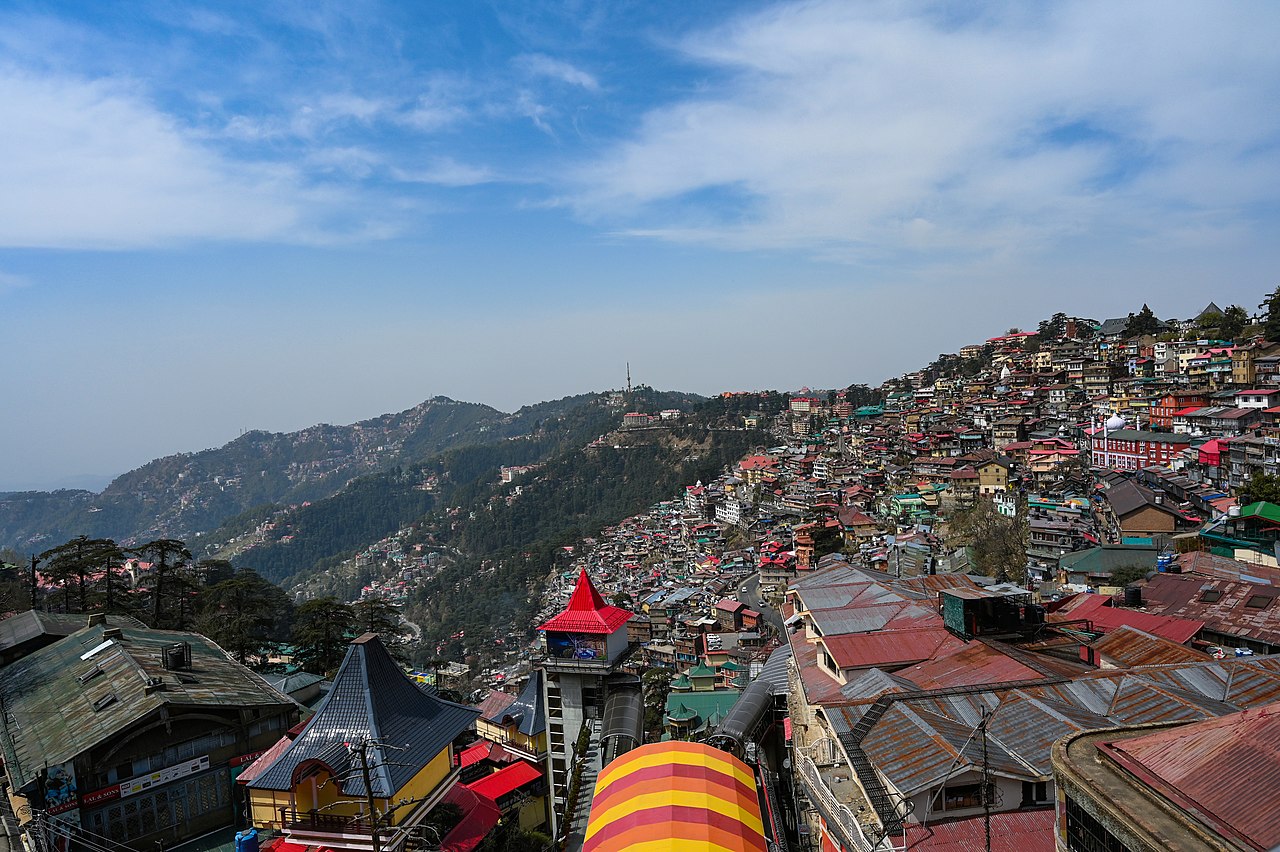
Himachal Pradesh (literally "Land of Snow") is the Indian state where the famous Himalayas meet the plains. The state stretches from the Punjab plains in the south to the Tibetan Plateau in the north, with elevations ranging from 350 m at the lowest valleys to 6,816 m at the famous Reo Purgyil peak. The state's tourism centers around several distinct regions: the hill stations of Shimla (the famous former summer capital of British India at 2,205 m) and Dalhousie/Khajjiar (Switzerland-of-India scenery), the famous backpacker hubs of Manali and McLeod Ganj (the home of the Dalai Lama and Tibetan government-in-exile near Dharamshala), the Spiti Valley (the famous "cold desert" beyond the Rohtang Pass at 3,000-4,500 m elevation, geographically and culturally Tibetan), the famous Great Himalayan National Park (UNESCO World Heritage), the Beas River and the famous Solang Valley, and the apple country around Kotgarh (where the famous Himachali apples grow). The state has produced more Bollywood films set in mountains than any other Indian state — the famous Yash Chopra "snowy romance" scenes were largely filmed here. Climate varies enormously by altitude: lower valleys have subtropical climate (similar to plains India), hill stations have temperate Himalayan climate (cool summers, snowy winters), and trans-Himalayan regions like Spiti have cold high-altitude desert climate. Picking the right month requires matching the destination to its specific seasonal pattern.
Quick verdict
Best overall (hill stations Manali, Shimla, Dharamshala): March-June and September-November.
Best for Spiti Valley and Lahaul (trans-Himalayan): July-mid October only (the Rohtang Pass closes November-May).
Best for snow and skiing (Solang Valley, Kufri): December-February.
Best for the famous Manali-Leh Highway: June-September only (road closed otherwise).
Best for cherry blossoms and apple bloom: Late March-early April.
Best for the Kullu Dussehra festival: October (varies, post-monsoon).
Best for the Spiti Buddhist monasteries (Tabo, Dhankar, Ki): July-September.
Best for white-water rafting (Beas River, Tirthan): April-June.
Best for trekking the Great Himalayan National Park: June-October.
Best for Tibetan New Year (Losar): February-March.
Best for budget travelers: September-November (post-monsoon, before peak winter).
Avoid if you can: July-August monsoon (landslides on mountain roads, frequent road closures); Spiti in winter (cut off entirely); Manali-Leh Highway November-May.
Spring (March-June) — peak hill station season
Himachal Pradesh's main tourist season. Manali (2,050 m), Shimla (2,205 m), Dalhousie (1,970 m), and Dharamshala (1,475 m) all hit peak as Indian travelers from the brutal plains heat (Delhi, Mumbai, Punjab reach 40-45 °C in May-June) escape to cool 18-28 °C daytime temperatures. The famous apple orchards bloom across the Kullu Valley in late March-April. The famous "Rohtang Pass" — the gateway to Lahaul and Spiti — typically opens by late May or early June after winter snow clearing.
Manali is the country's most popular hill station — the town has 5,000+ permanent residents but hosts millions of seasonal tourists. The famous Hidimba Temple, Old Manali, Solang Valley (with paragliding, ATV rides, and zipline activities), the Manu Temple, and the rapidly-growing Cafe culture in Old Manali define the experience. Tibetan-influenced cuisine (thukpa noodle soup, momos, and the famous Tibetan butter tea) reflects the area's history as a transit point on the famous Hindustan-Tibet trade route.
Shimla, the famous "Queen of Hills," retains its British colonial character — the famous Ridge promenade, Mall Road shopping, Christ Church (the second oldest in North India), Viceregal Lodge (the famous British India summer residence), and the famous narrow-gauge "Kalka-Shimla Railway" UNESCO World Heritage train journey through the foothills. Dharamshala/McLeod Ganj (the upper Tibetan town) becomes the spiritual hub — visitors can attend Dalai Lama teachings (when scheduled and announced), visit the Tsuglagkhang Temple complex, and explore the famous Norbulingka Institute.
Summer (June-September) — Spiti Valley season
The trans-Himalayan window. The Rohtang Pass opens, allowing access to Lahaul and Spiti — the famous "cold desert" beyond the main Himalayan range. Spiti has been called "Little Tibet" — geographically, climatically, and culturally Tibetan. Daytime in Spiti is 15-25 °C with crystal-clear high-altitude skies; nights cold (below freezing possible even in mid-summer). The famous monasteries — Tabo (the oldest in India, 996 AD, sometimes called the "Ajanta of the Himalayas" for its frescoes), Dhankar (clinging precariously to a 1,000-foot cliff), Ki (the largest monastery in Spiti), and Kungri — are at their accessible peak. The famous Chandratal Lake at 4,300 m is reachable only in summer.
The Manali-Leh Highway — one of the world's most spectacular mountain highways, traversing five passes including Baralacha La (4,892 m) and Tanglang La (5,328 m) — operates only June-September. The 480-km drive from Manali to Leh in Ladakh takes 2-3 days with overnight stops at Jispa, Sarchu, or Pang. Bikers worldwide make pilgrimages to ride this road.
July-August coincides with the southwest monsoon, which dramatically affects the southern parts of the state. Heavy rains cause landslides and frequent road closures across Kullu Valley, Shimla, and the famous Manali area. The trans-Himalayan Spiti is in the rain shadow and remains relatively dry — making it actually one of the best summer destinations during monsoon when other parts of India are wet.
Autumn (September-November)
One of the year's best windows for the hill stations. Daytime 12-22 °C with crystal clear post-monsoon skies, autumn colors dramatic across the deodar and pine forests, fewer crowds than the summer escape season, lower prices. The famous Kullu Dussehra in October (an internationally significant festival commemorating Lord Rama's victory) brings 300+ deities from surrounding villages to Kullu — locals carry the deities in palanquin processions over multiple days. The festival predates the standard Indian Dussehra by several days.
September-November is also the trekking peak season — the Hampta Pass, Beas Kund, Pin Parvati, and the famous Triund-Ilaqa trek all have ideal conditions. The Great Himalayan National Park has its best wildlife viewing.
Winter (December-February) — snow season
The state transforms. Snow blankets Manali, Shimla, Dalhousie, and surrounding villages from late December through March. Daytime 0-8 °C in hill stations with overnight drops well below freezing. Solang Valley (just outside Manali) and Kufri (near Shimla) become India's premier ski destinations — though by international standards modest. The famous Atal Tunnel (opened 2020, 9.02 km long) now allows year-round access to Lahaul (though not Spiti, which requires the Kunzum Pass). Spiti is essentially cut off in winter with only the famous "Spiti Winter Pilgrimage" possible by experienced 4×4 drivers and trekkers.
Manali in winter has its own appeal — quieter, more romantic, the famous Old Manali cafes with cozy interiors, snow on the Beas River. The famous "Snow Festival" at Manali (varies, January) celebrates the season. Christmas and New Year see Indian honeymoon and family travel surges; book accommodation 2-3 months ahead.
Regional/area variations
Shimla and Kufri (south, 2,200 m): Best March-June and September-November; December-February for snow.
Manali and Solang Valley (Kullu Valley, 2,050 m): Best March-June and September-October; December-February for snow.
Dharamshala and McLeod Ganj (Kangra Valley, 1,500-1,800 m): Best March-June and September-November.
Dalhousie and Khajjiar (Chamba district, 1,970 m): Best April-June and September-November.
Kullu Valley (lower Beas River): Best April-June (apple bloom) and September-October.
Spiti Valley (trans-Himalayan, 3,000-4,500 m): Mid-June through September only.
Lahaul (between Manali and Spiti): June-October (now year-round via Atal Tunnel).
Kinnaur (eastern, on old Hindustan-Tibet road): Best May-October.
Kasol and Parvati Valley (backpacker/Israeli traveler hub): Best March-November.
Tirthan Valley and Great Himalayan National Park: Best April-June and September-October.
Sangla and Chitkul (high Kinnaur villages): May-October.
Festivals & cultural events
Kullu Dussehra (October, varies): The famous week-long festival drawing 300+ deities to Kullu Valley.
Losar (Tibetan New Year, February-March, varies): Celebrated across Tibetan-influenced regions including Spiti, McLeod Ganj.
Holi (March, varies): Spring festival celebrated colorfully across the state.
Shimla Summer Festival (May-June): Cultural events.
Manali Winter Carnival (January-February): Snow-themed activities.
Lavi Fair (mid-November, Rampur): One of the oldest trade fairs in north India.
Hemis Festival (June-July, varies): Significant in Spiti's Hemis monastery.
International Himalayan Festival (October-November): Cultural showcase in Dharamshala.
Dalai Lama Teachings (varies): Multi-day Buddhist teachings at McLeod Ganj when announced.
Practical considerations
Most travelers access Himachal Pradesh via Delhi (the state has limited direct air connectivity). Bhuntar Airport (near Kullu, serves Manali) has limited flights. Shimla and Dharamshala have airports with daily flights. The famous overland route is the train+road journey: train to Chandigarh or Pathankot, then road into the mountains. The famous Kalka-Shimla narrow-gauge railway (UNESCO) is a worthwhile journey in itself. Mountain roads are slow — the 510 km Delhi-Manali drive takes 12-16 hours. The Delhi-Manali Volvo overnight bus is the famous backpacker option. Spiti requires advance arrangement and inner-line permits for foreigners in some areas. Indian Rupee is the currency; cash dominates outside main hotels. Tipping 10%. Visa required for most non-South Asian nationalities.
Cultural and practical notes
Hindi is widely spoken; Pahari (mountain dialects) common locally; Tibetan and Spiti languages in trans-Himalayan regions; English widely understood in tourism. Modest dress at temples and Buddhist monasteries — shoulders and knees covered; remove shoes before entering temples. Photography restricted at some monastery interiors. The state has alcohol restrictions in some districts; check before drinking publicly. Mobile networks weak in remote areas (Spiti, Tirthan).
Traveler-type advice
Hill station travelers (Himachal's biggest demographic): March-June and September-October for prime hill station weather.
Adventure travelers (Spiti, Manali-Leh Highway): July-September for the high-altitude window.
Snow seekers and skiers: December-February at Solang and Kufri.
Cultural and spiritual travelers (Dharamshala, McLeod Ganj): March-June and September-November for Buddhist teachings and pleasant weather.
Adventure photographers: September-October for clear post-monsoon Himalayan vistas.
Honeymooners (popular Indian honeymoon destination): March-June and December-February for snow.
Backpackers: Kasol (Parvati Valley) and Manali year-round; September-October for shoulder pricing.
Buddhist travelers: July-September for Spiti monasteries; year-round at McLeod Ganj.
Trekkers: May-June (pre-monsoon) and September-October (post-monsoon).
Bikers (Manali-Leh enthusiasts): June-September for the famous highway.
Family travelers: April-June for comfortable hill station temperatures.
Bottom line
Himachal Pradesh rewards March-June and September-October visits decisively for the famous hill stations. Spiti Valley adds a July-September window for the famous "Little Tibet" experience. Winter (December-February) delivers snow at Manali and Shimla for snow-seekers. The state offers India's most accessible and varied Himalayan experience — but requires matching your destination to its specific seasonal window carefully.