
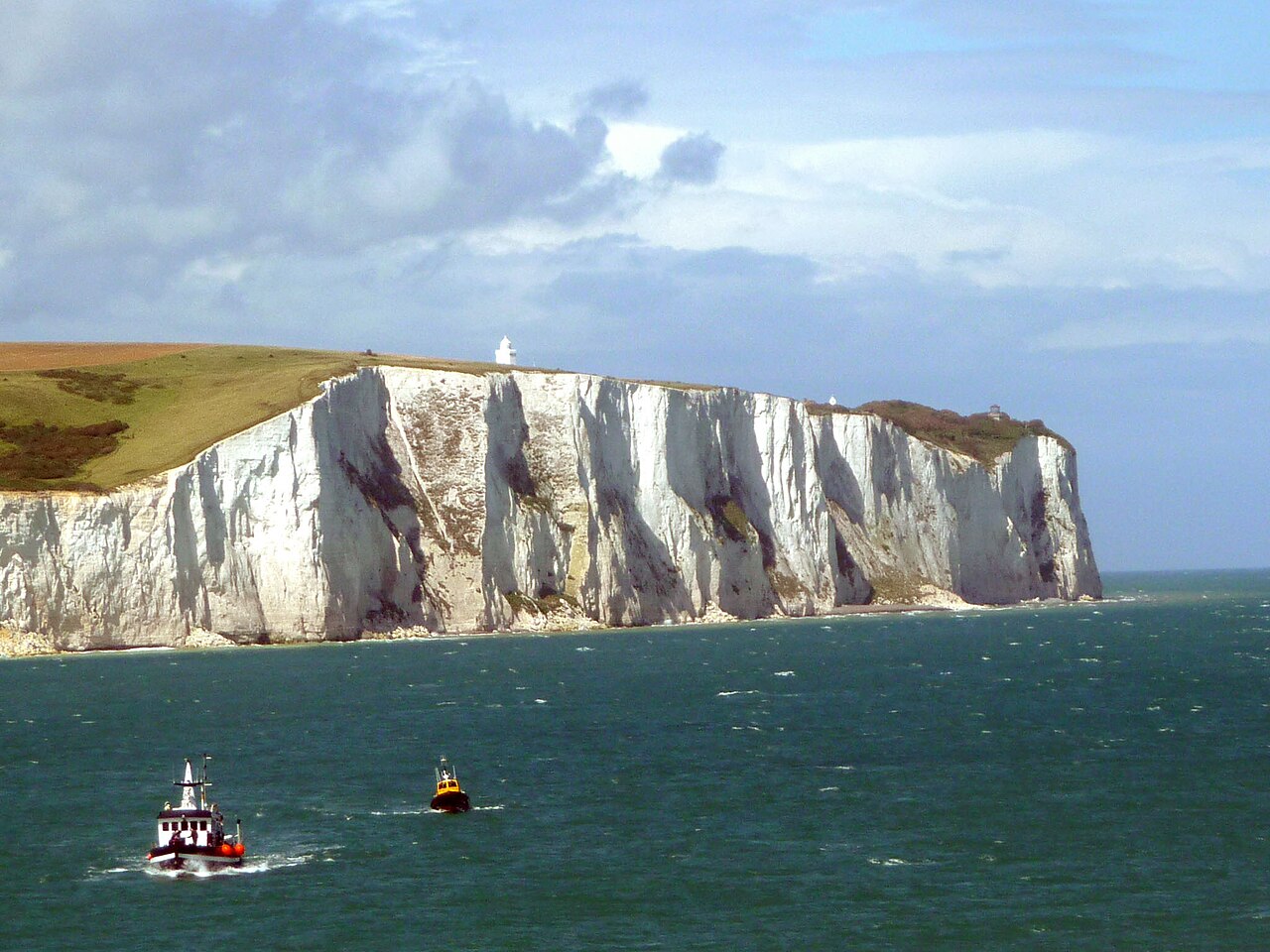
Stand at the edge of a steep drop overlooking a river valley and someone might call it a bluff. Stand at the brink of a sheer rock wall plunging into the sea and almost everyone reaches for the word cliff. Yet plenty of people use the two terms interchangeably, and that fuzziness hides a genuine geographic distinction. Bluffs and cliffs are both abrupt changes in elevation, but they differ in steepness, the materials they are made of, and the processes that carve them. Understanding the difference is not just pedantry: it shapes how we map coastlines, where engineers allow building, and how safely a hiker can approach an edge.
What Is a Bluff?
A bluff is a steep but not vertical bank, headland, or hillside, usually with a broad, rounded crest and a face gentle enough to hold some soil and vegetation. The word has nautical roots: early sailors used "bluff" to describe a wide, blunt promontory rising from the water with a flattened front. That sense of broadness still defines the landform. Bluffs are commonly steep slopes rather than dramatic precipices, and you can often scramble up parts of one, picking your way through grass, shrubs, or scattered trees clinging to the incline.
Because bluffs are typically composed of softer material such as clay, sand, glacial till, or loosely consolidated sediment, their faces are rarely bare rock. Rain, frost, and gravity constantly rework the surface, so a bluff tends to look earthy and textured rather than stony. This composition also means bluffs erode in a relatively gradual, ongoing way, slumping and creeping rather than failing all at once.
What Is a Cliff?
A cliff is a near-vertical or overhanging face of exposed rock. Where a bluff slopes back at an angle that lets soil settle, a cliff drops away abruptly, often presenting bare stone with little or no vegetation on its face. Cliffs are usually made of hard, resistant rock such as granite, limestone, basalt, chalk, or sandstone, which is precisely why they can stand so steeply for so long without collapsing into a gentler form.
Cliffs form through several mechanisms. Sea cliffs arise where waves relentlessly attack a rocky coast, undercutting the base until the unsupported rock above breaks off. Inland cliffs and escarpments can form along fault lines, where tectonic forces lift one block of crust above another, or through the slow excavation of a river cutting a canyon. In glaciated landscapes, ice plucked and scoured rock to leave towering walls. In each case, the defining feature is the same: hard rock standing close to vertical.
The Key Differences at a Glance
The two landforms sit on a spectrum of steepness, but several characteristics reliably separate them:
- Steepness: Bluffs are steep slopes, often well short of vertical; cliffs are near-vertical or overhanging.
- Profile: Bluffs have a broad, rounded crest and a sloping face; cliffs have a sharp, angular edge and a sheer face.
- Surface: Bluffs usually carry soil and vegetation; cliffs expose bare rock.
- Material: Bluffs tend to be soft sediment, clay, or glacial deposits; cliffs are typically hard, resistant rock.
- Erosion style: Bluffs retreat gradually through slumping and creep; cliffs can fail suddenly through rockfall.
- Setting: Bluffs line rivers, lakeshores, and gentler coasts; cliffs dominate rugged coastlines, mountains, and canyons.
One useful rule of thumb: if the steep slope looks like earth and you could imagine plants growing on its face, you are probably looking at a bluff. If it looks like a wall of raw stone, it is a cliff.
How They Form
The formation stories explain why the two look so different. Bluffs frequently appear on the outside bends of meandering rivers, where the fastest current swings against the bank and undercuts it, leaving a steep face above the water. Coastal bluffs develop where waves erode soft sedimentary shorelines, and in formerly glaciated regions, bluffs are often the cut edges of thick deposits of till left behind by retreating ice. Because the underlying material is weak, these slopes settle back to an angle that loose sediment can sustain.
Cliffs, by contrast, owe their drama to durable rock and to differential erosion. When a layer of tough rock sits above weaker material, the soft layer wears away faster, undermining the hard cap until blocks shear off and tumble down. This keeps the face steep. Wave-cut sea cliffs, fault scarps, and canyon walls all share this principle: something is removing material at the base or front faster than the resistant rock can gently slump, forcing a vertical retreat rather than a sloping one.
Notable Examples Around the World
Real landscapes make the distinction concrete. A few celebrated bluffs include:
- Scotts Bluff, Nebraska — a prominent sandstone and clay landmark along the North Platte River that guided travelers on the Oregon Trail.
- Scarborough Bluffs, Ontario — a long stretch of glacial sediment bluffs rising above Lake Ontario, layered with material deposited over thousands of years.
- The bluffs at Council Bluffs, Iowa — the Missouri River bluffs that gave the city its name during the era of westward expansion.
And among the world's most famous cliffs:
- Cliffs of Moher, Ireland — sea cliffs of shale and sandstone towering above the Atlantic on the country's west coast.
- El Capitan, Yosemite, California — a colossal sheer granite face that is a legendary big-wall climbing objective.
- The chalk cliffs of Étretat, France — brilliant white walls cut by the English Channel into arches and pinnacles, immortalized by Impressionist painters.
Notice the pattern: the bluffs are sediment along rivers and lakes, while the cliffs are hard rock along coasts and mountains. If you enjoy testing your knowledge of landforms and the places they appear, our geography games are a fun way to put it into practice.
Can One Become the Other?
The boundary is not permanent. A bluff can steepen into something cliff-like if waves or a river keep cutting away its base faster than the slope can recover, removing support and forcing the face toward the vertical. Coastlines with rising water levels and stronger storms can accelerate this, turning a once-gentle bank into an abrupt drop. The reverse also happens: a cliff battered by frost, rain, and gravity sheds rock that piles up at its base as a sloping apron of debris, called talus or scree. Over time that debris can soften the whole profile until it looks more like a bluff than a wall. Landforms, in other words, are stages in a continuing process rather than fixed categories.
Why the Distinction Matters
Telling a bluff from a cliff has practical weight. Engineers and planners treat them differently because they fail in different ways. Soft bluffs can slump unexpectedly when saturated with water, so even an edge that looks solid may give way; building setbacks account for steady, sometimes accelerating retreat. Hard-rock cliffs feel more stable underfoot but can drop large blocks without warning when undercut. For anyone hiking near an edge, that difference is worth respecting: the grassy bluff that seems safe may be hollow beneath, and the sturdy-looking cliff may stand above a fresh rockfall scar.
Frequently Asked Questions
Is a bluff just a small cliff?
Not exactly. Size is not the deciding factor. A bluff can be very tall and a cliff fairly short. The real differences are steepness, material, and surface: bluffs are sloping faces of softer sediment that often hold vegetation, while cliffs are near-vertical faces of bare, hard rock.
Can a bluff have bare rock on it?
It can, especially where active erosion exposes fresh material, but a bluff's defining trait is that its slope is gentle enough to be partly covered by soil and plants. A face that is consistently bare, vertical rock is better described as a cliff.
Why are river banks often called bluffs but not cliffs?
Most riverbanks are made of sediment rather than hard rock, and the current carves them into steep but sloping faces rather than sheer walls. That combination of soft material and a non-vertical slope is the textbook description of a bluff.
Are sea cliffs and bluffs found in the same places?
Sometimes along the same coastline, depending on the rock. Where the shore is hard rock, waves cut cliffs; where it is soft sediment, they cut bluffs. A single stretch of coast can shift between the two as the underlying geology changes.
Conclusion
Bluffs and cliffs both mark abrupt edges in the landscape, but they tell different stories. A bluff is a broad, sloping bank of softer material that retreats gradually and often wears a coat of soil and greenery. A cliff is a sheer wall of hard rock that stands steep precisely because it resists erosion until it fails outright. Keep an eye on steepness, surface, and the material beneath, and you will rarely confuse the two again, whether you are reading a map, planning a hike, or simply admiring the view from the top.
