
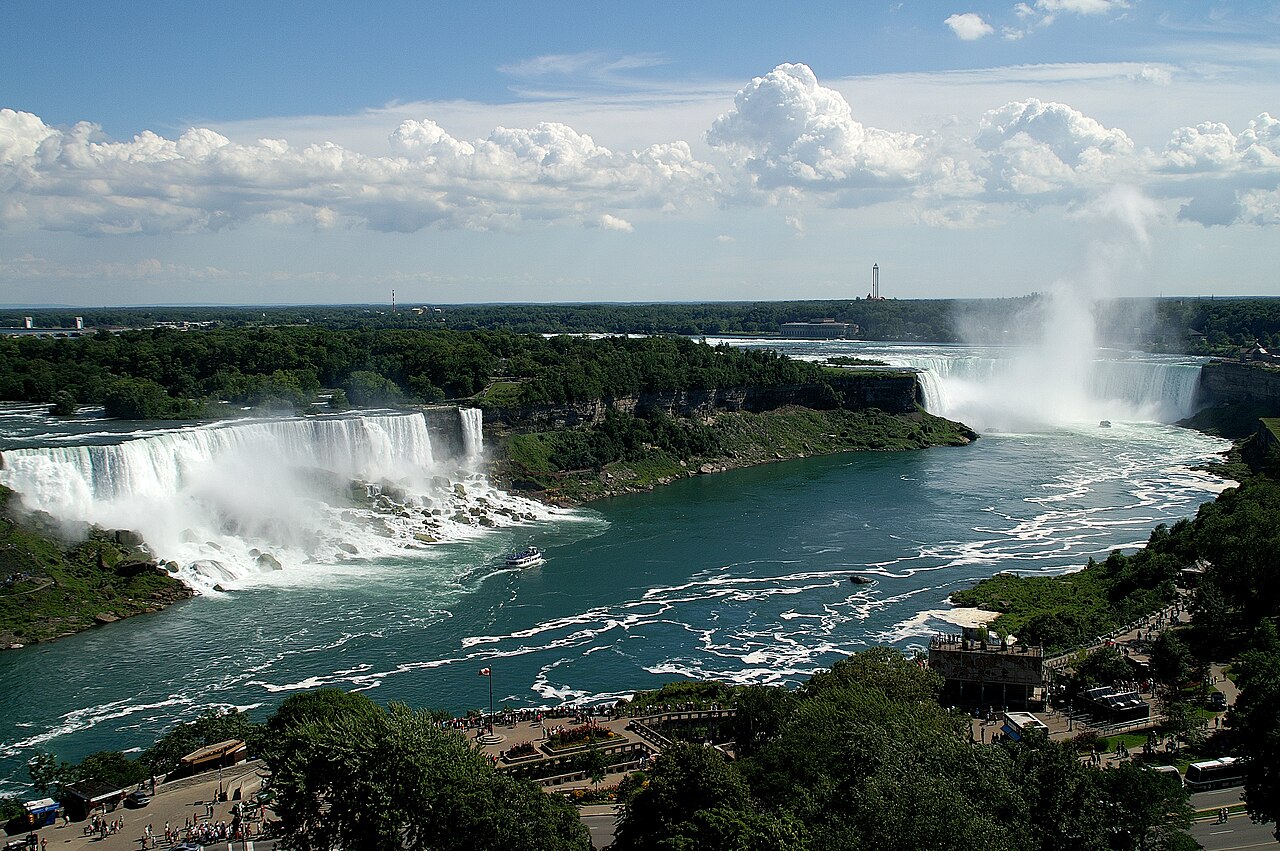
Canada has an enormous range of climates, from the mild oceanic Pacific coast to the frozen Arctic north, with recorded temperatures spanning from -63°C (-81°F) in Snag, Yukon to over 45°C (113°F) in British Columbia. Because the country stretches from roughly 42°N to 83°N latitude across six time zones, no single description fits all of it. For most travellers, the best time to visit is June to September, when summer warmth reaches almost every region and national parks are fully open.
Why Canada's Climate Is So Varied
Canada is the world's second-largest country by land area, and its sheer size produces dramatic climatic contrasts. The Köppen system identifies several major zones here: oceanic (Cfb) on the southwest coast, humid continental (Dfb) across the populated south, subarctic (Dfc) through the boreal forest belt, semi-arid (BSk) in the British Columbia interior, and tundra and ice-cap (ET, EF) in the far north.
Geography drives these differences. The Rocky Mountains block Pacific moisture, leaving the Prairies dry. The Atlantic and Pacific oceans moderate the coasts, while the vast continental interior swings between bitter winters and hot summers. The result is a country where Vancouver sees rain and rarely snow while Winnipeg, less than 2,000 km east, endures some of the coldest urban winters on Earth.
The Four Seasons
Most of southern Canada experiences four distinct seasons, each with a strong personality:
- Summer (June–August): 18–30°C (64–86°F) in the south. Toronto and Montreal regularly top 30°C with high humidity, while Vancouver stays drier and milder near 22°C.
- Autumn (September–October): 5–15°C (41–59°F), bringing world-famous fall foliage across Ontario, Quebec, and the Maritimes.
- Winter (November–March): -30°C to 5°C (-22°F to 41°F). Snow blankets most of the country for months, though the Pacific coast escapes the worst.
- Spring (April–May): 2–15°C (36–59°F), a season of melting snow, mud, and rapidly lengthening days.
Winters here are legendary. Winnipeg averages around -20°C in January and has dropped below -47°C, while even Toronto sees cold snaps of -10°C to -20°C. In the Arctic, temperatures fall below -40°C and the sun barely rises for weeks. Summers, by contrast, can be surprisingly hot, and the Prairies occasionally spawn thunderstorms and even tornadoes in Alberta and Saskatchewan.
Rainfall and Extreme Weather
Annual precipitation ranges from about 100 mm in parts of the high Arctic to over 2,500 mm on the British Columbia coast. A few regional benchmarks show the spread:
- Vancouver (Pacific): around 1,200 mm a year, with most falling October to March and dry summers.
- Toronto (Central): roughly 830 mm spread fairly evenly through the year.
- The Prairies: a semi-arid 300–500 mm, relying on summer rains for farming.
- The Arctic: a sparse 100–300 mm, technically a cold desert.
Canada also sees a full menu of extreme weather. Ice storms strike Ontario and Quebec, blizzards sweep the Prairies and Maritimes, and atmospheric rivers can drench British Columbia. One uniquely Canadian phenomenon is the chinook: a warm, dry wind descending the eastern Rockies that can raise Alberta temperatures by 30°C in just a few hours, melting snow almost instantly.
Climate by Region
Knowing a few regional patterns helps make sense of the whole country. The Pacific coast around Vancouver and Victoria has Canada's mildest climate, with January averages near 4°C and lush temperate rainforest. The Prairies of Alberta, Saskatchewan, and Manitoba run to extremes, with frigid winters and warm, sunny summers under famously big skies. Ontario and Quebec enjoy the classic four-season humid continental rhythm, including hot, muggy summers around the Great Lakes.
The Atlantic Maritimes — Nova Scotia, New Brunswick, Prince Edward Island, and Newfoundland — feel the ocean's influence through fog, wind, and moderated temperatures. The British Columbia interior, shielded by mountains, is so dry that the Okanagan Valley near Osoyoos hosts Canada's only true desert, complete with cacti and rattlesnakes. For more background on the country itself, see our canada country guide.
Best Time to Visit Canada
June to September is the prime travel window for most of the country. National parks are fully accessible, cities fill with festivals, and outdoor activities from hiking to whale watching are at their best. July is typically the warmest month, while August and September often bring lower prices and smaller crowds. Rough regional guidance:
- Toronto and Eastern Canada: June–September.
- Vancouver and BC: May–October.
- Canadian Rockies: June–September.
- Northern Lights (Yukon, Northwest Territories): September–March.
Winter rewards those who embrace the cold, with skiing at Whistler and in the Rockies, the Northern Lights glowing over the north, and Quebec City's famous Winter Carnival in February. Autumn, meanwhile, paints Ontario, Quebec, and the Maritimes in colours that rival New England's.
Frequently Asked Questions
What is the coldest place in Canada?
The coldest temperature ever recorded in Canada — and in all of North America — was -63°C (-81°F) at Snag, Yukon, in 1947. Among large cities, Winnipeg is often cited as the coldest in the world with a population over 600,000.
Where in Canada has the mildest weather?
The southwest Pacific coast, including Vancouver and Victoria, has Canada's mildest climate. January averages hover near 4°C, snow is rare, and winters bring rain rather than deep freezes.
When is the warmest month in Canada?
July is generally the warmest month nationwide, with southern cities like Toronto and Montreal frequently exceeding 30°C, often accompanied by high humidity.
Does it snow everywhere in Canada?
Almost everywhere sees snow, but amounts vary widely. The interior and north get heavy, long-lasting snow, while coastal British Columbia usually receives only occasional, light snowfall that melts quickly.