
Introduction
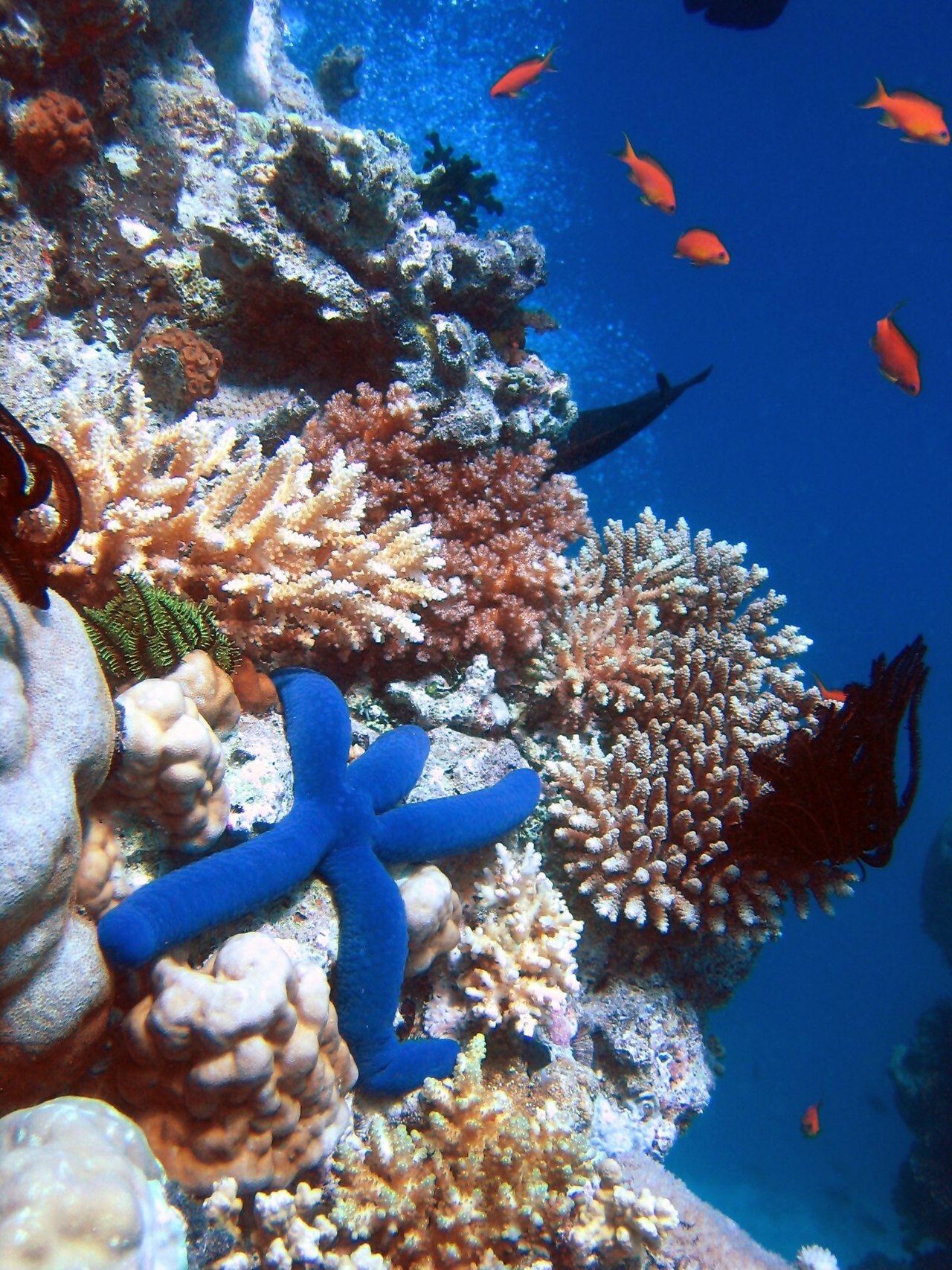
Coral reefs are sometimes called the rainforests of the sea, and the comparison is apt: they cover less than 1% of the ocean floor yet support roughly 25% of all known marine species. Built by tiny coral polyps that secrete calcium carbonate skeletons, reefs grow incrementally over thousands of years into structures that can stretch for hundreds of kilometers. The Great Barrier Reef, visible from space, is the largest living structure on Earth.
Despite their biological richness and economic importance — reefs provide food, income, and coastal protection for over 500 million people — coral reefs are in crisis. Rising ocean temperatures, acidification, pollution, and overfishing threaten to destroy the majority of the world's reefs within decades. The science is clear: without dramatic action to reduce carbon emissions, coral reefs face extinction within a human lifetime.

Reef Structure & Formation
- Builder: Coral polyps (tiny cnidarian animals)
- Skeleton Material: Calcium carbonate (aragonite)
- Growth Rate: 1-10 cm per year for most reef corals
- Reef Age: Some reefs are 6,000-9,000 years old
Coral reefs are built by colonies of tiny polyps — each typically only a few millimeters across — that secrete calcium carbonate skeletons. As polyps die and new generations build on top, the reef grows slowly upward and outward. Most reef-building corals contain symbiotic algae called zooxanthellae that provide up to 90% of the coral's energy through photosynthesis, which is why reefs require clear, sunlit water.
Reefs come in three main forms: fringing reefs that grow directly from the shore, barrier reefs separated from the coast by a lagoon, and atolls that form ring-shaped reefs around a submerged volcanic island. Charles Darwin first proposed this progression in 1842, and his theory has been largely confirmed by modern science.
Biodiversity
- Fish Species: ~4,000 associated with reefs
- Total Marine Species: ~25% of all ocean species found on reefs
- Invertebrates: Thousands of species of mollusks, crustaceans, worms
- New Species: Hundreds discovered on reefs each year
The biodiversity of coral reefs is staggering. A single reef can host over 1,000 species of fish, along with thousands of species of invertebrates, algae, and microorganisms. The Coral Triangle in Southeast Asia, encompassing waters from Indonesia to the Philippines, is the global epicenter of marine biodiversity, with over 600 species of reef-building coral and 3,000 species of fish.
Much of reef biodiversity remains undiscovered. Scientists estimate that between one-third and two-thirds of reef species have not yet been scientifically described. New species are discovered on virtually every research expedition, particularly among the smaller, less conspicuous groups like worms, sponges, and crustaceans that inhabit the reef framework.
Ecosystem Services
- Fisheries: Support livelihoods of 500 million+ people
- Coastal Protection: Reduce wave energy by 97%
- Tourism: Generate $36+ billion annually
- Pharmaceutical Potential: Source of anti-cancer and antiviral compounds
Coral reefs provide ecosystem services estimated at $375 billion per year globally. They are the primary source of protein for over 500 million people in tropical coastal communities, with reef fisheries providing food and income. The structural complexity of reefs reduces wave energy by up to 97%, protecting coastlines from storms, erosion, and tsunami damage.
Reef tourism generates over $36 billion annually, supporting local economies from the Caribbean to the South Pacific. Reef organisms are also a rich source of pharmaceutical compounds, with coral reef species yielding treatments for cancer, HIV, cardiovascular disease, and chronic pain. The loss of reefs before their pharmaceutical potential is explored would represent an incalculable loss.
Threats
- Bleaching: Caused by ocean warming above 1-2°C above normal
- Acidification: CO2 dissolving in seawater weakens coral skeletons
- Overfishing: Removes key species that maintain reef health
- Pollution: Nutrient runoff causes algal overgrowth
Coral bleaching is the most immediate threat to reefs worldwide. When water temperatures rise just 1-2°C above the normal summer maximum for more than a few weeks, corals expel their symbiotic zooxanthellae algae, turning white. If temperatures do not return to normal within weeks, the coral dies. Global bleaching events in 2016, 2017, and 2024 devastated reefs worldwide, with the Great Barrier Reef losing over 50% of its shallow-water coral.
Ocean acidification compounds the problem. As the ocean absorbs atmospheric CO2, seawater becomes more acidic, reducing the availability of carbonate ions that corals need to build their skeletons. At current emission rates, the ocean may become too acidic for coral skeleton formation within this century, fundamentally undermining the ability of reefs to exist.
Conservation & Future
- Current Status: 50% of reefs already damaged or destroyed
- Temperature Threshold: 1.5°C warming is critical limit for reefs
- Marine Protected Areas: Cover ~8% of reef area globally
- Coral Restoration: Growing corals in nurseries for replanting
The prognosis for coral reefs is stark. The IPCC projects that at 1.5°C of global warming, 70-90% of reefs will be lost; at 2°C, virtually all reefs will be destroyed. Current warming trajectories put the world on course for 2.5-3°C by 2100, which would effectively eliminate coral reefs as functional ecosystems.
Conservation efforts include marine protected areas, coral gardening and restoration, assisted evolution to develop heat-tolerant coral strains, and efforts to reduce local stressors like pollution and overfishing. While these measures can help reefs survive in the short term, the long-term fate of coral reefs depends entirely on whether humanity can limit global warming to 1.5°C.
Key Facts
- Coral reefs cover less than 1% of the ocean floor but host ~25% of all marine species.
- Reefs provide food and income for over 500 million people worldwide.
- Global bleaching events have destroyed over 50% of shallow-water coral in some regions.
- Ocean acidification from CO2 absorption threatens the ability of corals to build their skeletons.
- At 2°C of global warming, virtually all coral reefs are projected to be destroyed.
Fun Facts
- Coral polyps are animals, not plants — they are related to jellyfish and sea anemones.
- Some coral species can live for over 4,000 years, making them among the oldest living organisms on Earth.
- The Great Barrier Reef is the only living structure visible from space, stretching 2,300 km along Australia's coast.
- Coral reefs grow so slowly that damage from a single bleaching event can take 10-15 years to recover from, if it recovers at all.
Final Thoughts
Coral reefs are among the most important and most imperiled ecosystems on Earth. Their extraordinary biodiversity, economic value, and ecological services make them irreplaceable, yet they are being destroyed at an alarming rate by warming oceans and human activity. The fate of coral reefs is inextricably linked to the choices humanity makes about carbon emissions in the coming decades — making reef conservation one of the most urgent and consequential environmental challenges of our time.
