
The Deosai Plateau, situated in the Gilgit-Baltistan region of northern Pakistan, is the second-highest plateau in the world after the Tibetan Plateau. Averaging 4,114 meters (13,497 feet) above sea level and covering approximately 3,000 square kilometers, Deosai is a vast, treeless alpine expanse that sits between the Himalayan and Karakoram mountain ranges. Its name, from the local Balti language, translates roughly to "Land of Giants."
Introduction
Despite its extreme altitude and harsh climate, Deosai comes alive each summer with a spectacular carpet of wildflowers that transforms the plateau into one of the most beautiful alpine landscapes in Asia. The plateau is also the last stronghold of the Himalayan brown bear in Pakistan, and its designation as a national park in 1993 was driven primarily by the need to protect this critically endangered subspecies.
Geography & Dimensions
- Area: ~3,000 km²
- Average Elevation: 4,114 m (13,497 ft)
- Highest Point: ~5,200 m on surrounding ridges
- Location: Between Skardu and Astore valleys, Gilgit-Baltistan
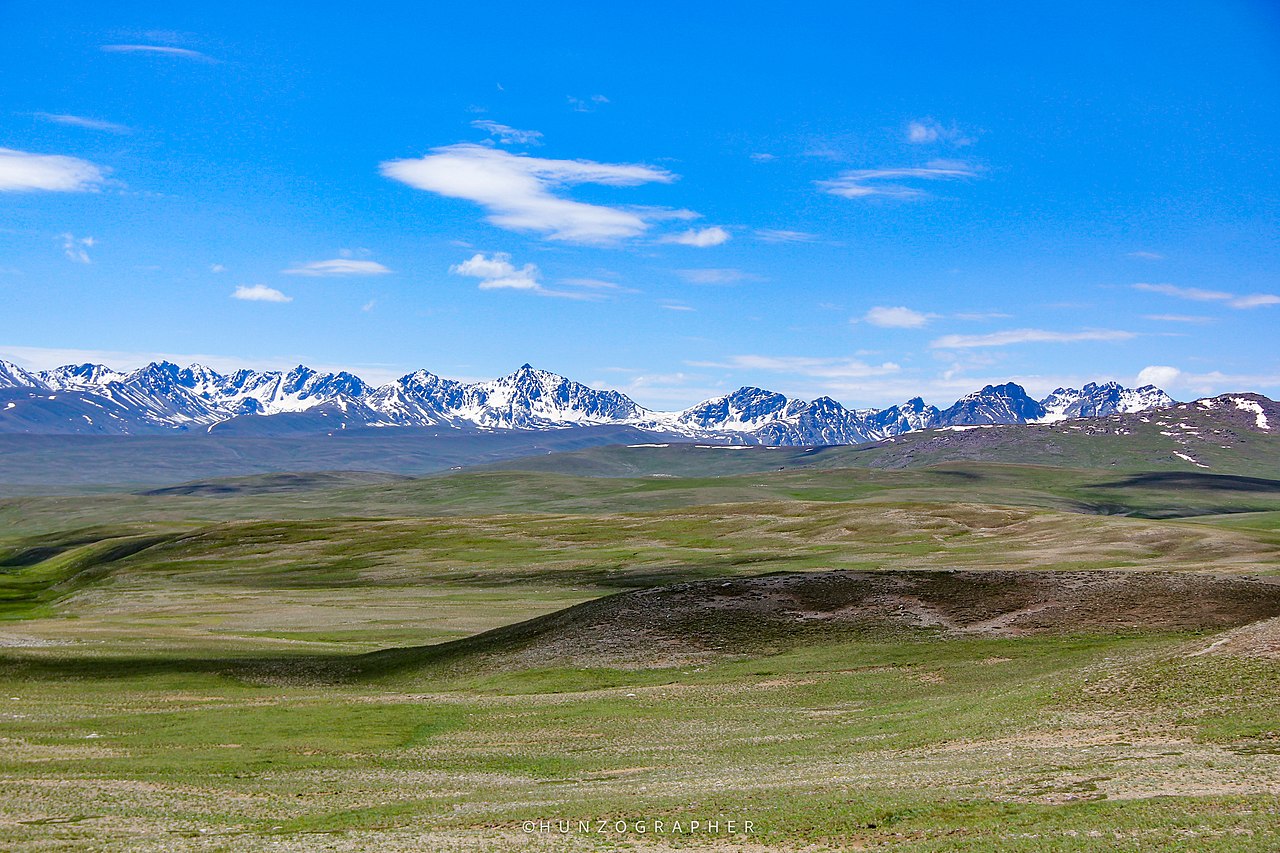
The Deosai Plateau sits at the junction of the western Himalaya and the Karakoram Range, occupying a broad upland between the Skardu Valley to the north and the Astore Valley to the south. The plateau is essentially a gentle, rolling grassland surface at over 4,000 meters, surrounded by peaks and ridges rising to 5,000-5,200 meters. Several rivers originate on the plateau, including tributaries of the Indus River system.
The plateau is accessed primarily from Skardu via a rough road that climbs to the plateau edge at Bara Pani. The drive takes several hours over unpaved tracks, and the road is only open from late June to early October — the rest of the year, the plateau is buried under meters of snow and completely inaccessible. From the plateau edge, the views extend across an immense, gently undulating grassland horizon that seems almost surreal at such altitude.
Climate & Seasons
- Winter Temperature: -30 to -40°C
- Summer Temperature: 5-15°C (daytime)
- Annual Snowfall: Heavy; snow cover October-June
- Snow Depth: Up to 7 meters in winter
Deosai has one of the most extreme seasonal climates of any inhabited region. For roughly eight months of the year (October through June), the plateau is buried under snow reaching depths of 5-7 meters. Winter temperatures plunge to -30°C or colder, with wind chill making conditions even more severe. The combination of altitude, exposure, and heavy snowfall makes Deosai completely uninhabitable during winter.
The brief summer season from July to September transforms the plateau entirely. As the snow melts, a spectacular bloom of wildflowers erupts across the grasslands — gentians, primulas, buttercups, asters, and dozens of other species create dense carpets of color stretching to the horizon. Daytime temperatures reach a pleasant 10-15°C, though nights remain cold and frost can occur at any time. Late-season thunderstorms can bring hail and brief snowfalls even in August.
Himalayan Brown Bear
- Population: ~70-80 individuals on the plateau
- Status: Critically Endangered in Pakistan
- Diet: Roots, tubers, marmots, grasses, insects
- Deosai National Park: Established 1993 primarily for bear conservation
The Himalayan brown bear (Ursus arctos isabellinus) is the most important wildlife species on the Deosai Plateau and the primary reason for its protection as a national park. By the early 1990s, hunting and habitat loss had reduced the bear population on Deosai to an estimated 19 individuals, pushing the subspecies toward local extinction. The establishment of Deosai National Park in 1993 banned hunting and introduced anti-poaching patrols.
The conservation program has been a notable success. The brown bear population on Deosai has recovered to an estimated 70-80 individuals by the 2020s. The bears emerge from hibernation dens in May and spend the brief summer fattening on roots, tubers, golden marmots, and grass before retreating underground again in October. Despite the recovery, the population remains genetically vulnerable due to its small size and isolation from other brown bear populations in the region.
Biodiversity & Alpine Ecosystem
- Plant Species: 342+ recorded
- Mammal Species: Golden marmot, Ladakh urial, snow leopard (rare), wolf
- Bird Species: 124+ recorded (including golden eagle, lammergeier)
- Wildflower Season: July-August (spectacular blooms)
Despite its extreme altitude and harsh climate, Deosai supports a surprisingly rich alpine ecosystem. Over 342 plant species have been recorded, many adapted to the short growing season and intense UV radiation through compact growth forms, hairy leaves, and rapid flowering. The golden marmot (Marmota caudata) is the plateau's most abundant mammal, living in extensive burrow colonies that dot the grassland.
Deosai's avifauna includes 124 recorded species, with golden eagles and lammergeiers (bearded vultures) being the most spectacular residents. Snow leopards are occasionally sighted on the plateau margins, where they prey on Ladakh urial and ibex on the surrounding slopes. Wolves traverse the plateau in pursuit of marmot colonies and the occasional livestock herd. The plateau's streams support populations of brown trout, introduced by the British in the colonial era and now established in several watercourses.
Tourism & Access
- Best Season: July-September
- Access: Rough road from Skardu, 2-4 hours
- Facilities: Basic camping; no permanent structures on plateau
- Permits: National park entry permits required
Tourism to Deosai has grown steadily since the road from Skardu was improved, though the plateau remains a relatively off-the-beaten-track destination compared to the Karakoram Highway and Hunza Valley. Most visitors come for day trips or overnight camping trips during July and August, when the wildflower displays are at their peak. The plateau's vast, treeless expanse and high altitude create a landscape unlike anything else in Pakistan.
Camping on Deosai is a remarkable experience but requires self-sufficiency, as there are no permanent facilities on the plateau. The altitude (over 4,000 m) can cause altitude sickness in visitors who have not acclimatized properly, and weather conditions can change rapidly. The Pakistani military maintains a seasonal presence on the plateau, and national park rangers conduct regular patrols. Jeep tours from Skardu are the most common way to visit, typically crossing the plateau to the Bara Pani viewpoint and the Sheosar Lake area.
Key Facts
- Deosai averages 4,114 m elevation, making it the world's second-highest plateau.
- The Himalayan brown bear population recovered from ~19 to ~70-80 individuals after park establishment in 1993.
- Snow covers the plateau for approximately 8 months per year, reaching depths of 5-7 meters.
- Over 342 plant species thrive in the brief summer growing season.
- The plateau is accessible only from late June to early October via rough road from Skardu.
Fun Facts
- The name Deosai means "Land of Giants" in the Balti language, possibly referring to the brown bears that inhabit it.
- In summer, golden marmots on Deosai whistle sharp alarm calls that echo across the plateau, creating a distinctive soundtrack to any visit.
- The Deosai Plateau is so high and flat that it was used as a reference point by early surveyors attempting to measure the height of K2.
- Winter snow on Deosai can reach depths of 7 meters — taller than a two-story building.
Final Thoughts
The Deosai Plateau is a place of extremes — extreme altitude, extreme cold, extreme beauty. Its recovery from the brink of ecological collapse, marked by the dramatic return of the Himalayan brown bear, is one of Pakistan's most important conservation achievements. For the few weeks each summer when the snow retreats and the wildflowers bloom, Deosai transforms from a frozen wasteland into one of Asia's most magnificent alpine landscapes.
Test Your Knowledge!
Think you know your plateaus and plains? Try our interactive quiz!
Play Geographic Features Quiz →