
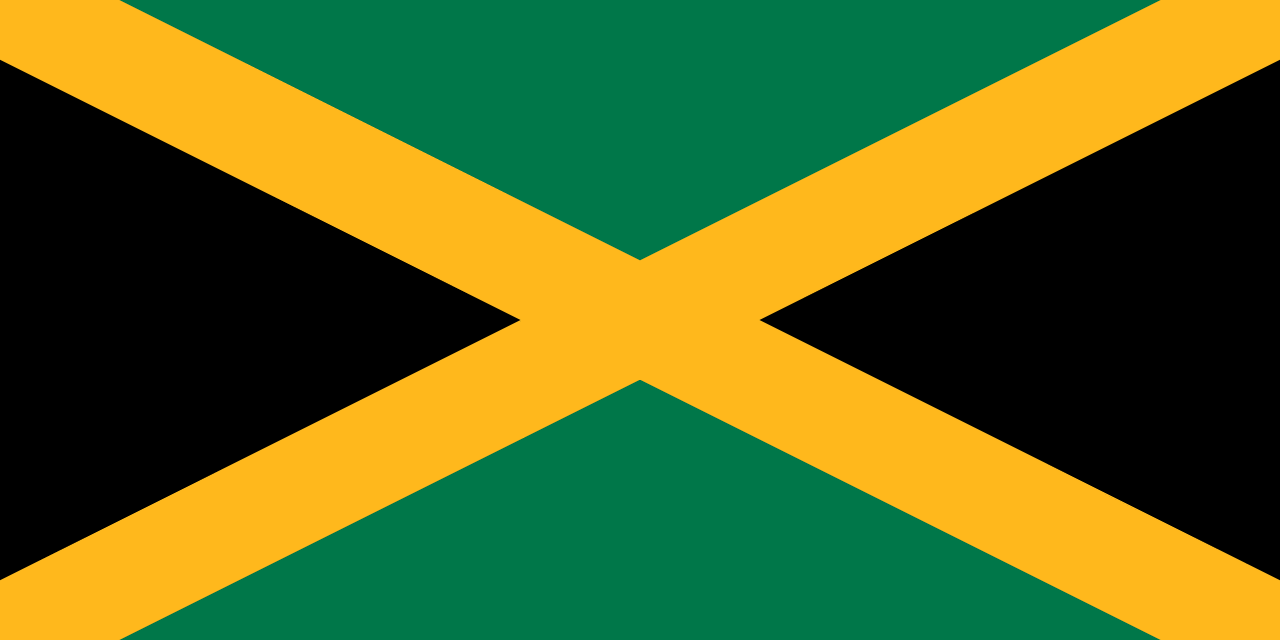

Step into any stadium where Jamaican athletes are competing and you will spot it instantly: a bold diagonal cross slicing a banner into four sharp triangles, glowing with gold, deep green, and jet black. The flag of Jamaica is one of the most recognizable national emblems in the world, and not only because of the country's outsized fame in music and track and field. It carries a distinction shared by almost no other sovereign banner on Earth, and its colors tell a story of struggle, abundance, and hard-won pride. Raised for the first time at the stroke of midnight on the country's independence in 1962, this flag has become shorthand for an entire culture.
A Flag Born at the Hour of Independence
Jamaica adopted its national flag in 1962, the same year the island gained independence from Britain after centuries of colonial rule. The flag made its debut at the official independence ceremony, replacing the British colonial ensign that had flown over the island for generations. Choosing a national flag was one of the first acts of self-definition for the new nation, and the design that emerged owed nothing to the Union Jack or the heraldic conventions of empire. Instead, it broke cleanly from the past, signaling that Jamaica intended to define itself on its own terms. The banner has flown unchanged ever since, making it one of the steady visual constants of Jamaican statehood.
Gold, Green, and Black: What the Colors Mean
The three colors of the Jamaican flag were chosen to capture both the land and the spirit of its people. Gold stands for the sunshine that bathes the island and, by extension, the natural wealth and warmth of the country. Green represents the lush vegetation that blankets Jamaica's hills, forests, and farmland, a nod to agricultural richness and hope for the future. Black speaks to the strength and creativity of the Jamaican people and, more pointedly, to the hardships they have endured and overcome.
An older official summary of the symbolism was famously phrased as "hardships there are, but the land is green and the sun shineth." Over time the interpretation of the black has been emphasized to honor the resilience and strength of the population rather than dwell on difficulty alone, but the core sentiment endures: this is a flag about overcoming, growing, and shining.
Reading the Design: The Saltire and Its Triangles
The structure of the flag is a saltire, a diagonal cross that runs corner to corner, drawn here in gold. That golden X divides the field into four triangles. The two triangles at the top and bottom are green, while the triangles on the left (hoist) and right (fly) sides are black. The result is a crisp, geometric composition with no central emblem, no coat of arms, and no lettering, just three colors arranged with striking clarity.
This simplicity is part of its power. The diagonal cross gives the flag energy and movement, drawing the eye toward the center where the gold bands meet. Because the design relies on bold shapes rather than fine detail, it reads clearly from a distance, whether on a flagpole, a lapel pin, or the screen at a packed arena. Few national flags manage to feel both dignified and dynamic at once, and the saltire layout is the reason Jamaica's does.
A Banner Unlike Any Other
Here is the fact that sets Jamaica apart from nearly every nation on the planet: at the time of its adoption, it was widely noted as one of only two national flags in the world that contained no red, white, or blue. Those three colors dominate world vexillology, appearing in the overwhelming majority of national banners thanks to centuries of European heraldic and revolutionary tradition. Jamaica's gold, green, and black palette is a deliberate departure, and it instantly distinguishes the flag from look-alikes.
The saltire shape does invite comparison to other diagonal-cross flags, such as Scotland's white-on-blue cross or the cross of Saint Patrick. But the resemblance ends with geometry. Where those banners stick to the familiar European color families, Jamaica's choice of gold, green, and black places it closer in spirit to the Pan-African color tradition, even though its exact arrangement is unique. No other country combines this palette with this diagonal layout, so confusion with another nation's flag is essentially impossible, a rare and valuable quality for a national symbol.
The Flag as a Symbol of Identity
For Jamaicans at home and across a vast global diaspora, the flag functions as an immediate marker of belonging. It appears on clothing, market stalls, restaurant signs, and festival banners far beyond the Caribbean, from London to Toronto to New York. Part of this reach comes from the island's enormous cultural footprint: reggae, dancehall, and the global influence of artists who turned the gold, green, and black into a visual signature recognized worldwide.
The colors have taken on meanings that ripple outward from the official symbolism. They evoke a way of life associated with the island, an attitude of resilience and warmth that residents and travelers alike recognize. If you want to understand the place that gave rise to this flag, its landscapes, history, and people, our jamaica country guide offers a fuller picture of the nation behind the banner.
The Flag in Modern Life
Few flags get as much airtime on the world stage as Jamaica's, and that is largely thanks to sport. On the athletics track, where Jamaican sprinters have dominated for years, the gold-green-and-black is draped over shoulders during victory laps and waved through the stands at every major championship. Those moments have broadcast the flag to billions of viewers and tied it permanently to ideas of speed, excellence, and joyful celebration.
At home, the flag is central to civic life. It is raised on Independence Day each August, flown at government buildings and schools, and honored in national ceremonies. There is even a formal etiquette around its display, including guidance that it should never touch the ground and should be treated with respect at all times. Whether at a solemn state occasion or a roaring sports final, the banner remains the single most visible expression of Jamaican nationhood. Jamaica itself sits in the Caribbean region of North America, and its flag now stands as one of the most beloved symbols to emerge from that part of the world.
Interesting Facts About the Jamaican Flag
- It was raised for the first time at independence in 1962 and has never been changed since.
- It was famously cited as one of only two national flags in the world with no red, white, or blue.
- The design is a saltire, a diagonal cross, rather than the more common horizontal or vertical bands.
- The two green triangles sit top and bottom, while the two black triangles sit at the left and right sides.
- The original symbolic motto tied the colors to sunshine, green land, and hardships overcome.
- Its colors have become a global cultural shorthand, appearing far beyond the island thanks to music and sport.
Frequently Asked Questions
When was the flag of Jamaica adopted?
The flag was adopted in 1962, the year Jamaica became independent from Britain. It was raised for the first time at the official independence ceremony and has remained unchanged ever since.
What do the colors of the Jamaican flag mean?
Gold represents the sunshine and natural wealth of the island, green represents its lush vegetation and hope, and black represents the strength of the Jamaican people and the hardships they have overcome.
What continent is Jamaica on?
Jamaica is an island nation in the Caribbean, which is part of the North American region. It lies south of Cuba in the Caribbean Sea.
How is the Jamaican flag different from other national flags?
Its standout feature is its color palette: at the time of adoption it was widely noted as one of only two national flags in the world containing no red, white, or blue. Combined with its gold diagonal saltire and green-and-black triangles, the design is unmistakable and unlike any other country's banner.