
Bahrain is a constitutional monarchy, with a hereditary king as head of state, a prime minister as head of government, and a bicameral National Assembly as its legislature. Ruled by the Al Khalifa family since the late 18th century, this small island kingdom in the Persian Gulf blends inherited royal authority with elected and appointed councils, making it one of the more institutionally developed states among its Gulf neighbours.
What type of government does Bahrain have?
Bahrain is officially a constitutional monarchy, a status formally declared in 2002 when the ruler, then titled Emir, proclaimed himself King and introduced a written constitution. In practice, the monarch retains far-reaching powers, so the system sits closer to a semi-constitutional or hybrid monarchy than to the parliamentary models of Europe.
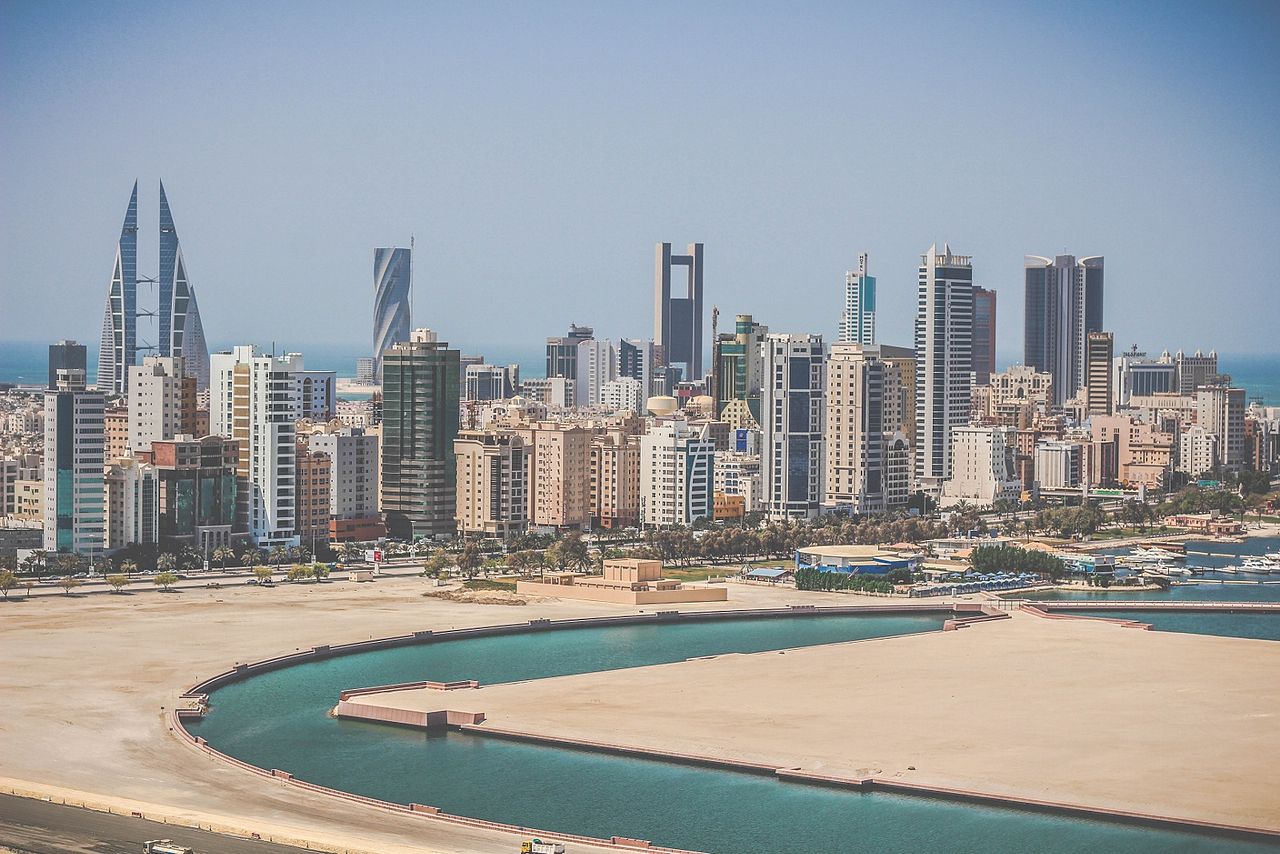
The state is governed through three branches. Executive power rests with the King and the Council of Ministers, the legislature is the National Assembly, and an independent judiciary applies a mix of civil and Islamic (Sharia) law. The capital, Manama, hosts the royal court, the cabinet, and the parliament, and serves as the centre of the country's political and financial life.
The monarch and the executive
The King is head of state and the central figure in Bahraini politics. He appoints the Prime Minister and cabinet, names the entire upper house of parliament, commands the armed forces, and can dissolve the elected chamber. The throne passes within the Al Khalifa family.
The Prime Minister leads the government and oversees the Council of Ministers, which manages the day-to-day administration of ministries covering finance, interior, foreign affairs, oil, and other portfolios. For decades the premiership was held by the same long-serving royal, but a generational change saw the office pass to the Crown Prince, who also drives economic reform and diversification efforts. Because ministers are appointed rather than drawn from an elected majority, the executive answers primarily to the King rather than to parliament.
The National Assembly and elections
Bahrain's legislature is the bicameral National Assembly, made up of two 40-member chambers:
- Council of Representatives: the lower house, directly elected by citizens for four-year terms in single-member constituencies.
- Shura Council: the upper house, whose 40 members are appointed by the King.
The two chambers are equal in size, which means the appointed Shura Council can effectively counterbalance or block measures passed by the elected Council of Representatives. This design significantly limits the independent power of the elected chamber. Citizens, both men and women, vote in parliamentary and municipal elections, and women have served as appointed and elected members. Formal political parties are banned, so politics is organised through licensed political "societies" that function as de facto parties under tight regulation.
Judiciary and legal system
Bahrain operates a layered court system. Ordinary civil and criminal disputes move through courts of first instance and appeal, with the Court of Cassation acting as the highest appellate authority. A separate Constitutional Court reviews whether laws and decrees conform to the constitution. The legal framework combines codified civil law with Islamic law, the latter applied especially in matters of family and personal status, where separate Sunni and Shia courts handle their respective communities. Judges are appointed within a framework ultimately overseen by the monarch.
History and political dynamics
The Al Khalifa family has governed Bahrain since 1783. The territory was a British protectorate for much of the 19th and 20th centuries before gaining full independence in 1971. A short-lived elected parliament was established in 1973 but dissolved just two years later, leaving the country without a legislature until reforms in the early 2000s revived elected representation under the new constitutional-monarchy framework.
Bahrain's politics are shaped by a sectarian divide: the ruling family and establishment are Sunni, while a majority of citizens are Shia. These tensions came to a head during the 2011 Arab Spring, when large protests demanding political reform were suppressed with support from neighbouring Gulf states. The largest Shia opposition society was later dissolved, and press freedom and online expression remain restricted. For a fuller picture of the country's geography, economy, and culture, see our bahrain country guide.
Frequently Asked Questions
Is Bahrain a democracy or a monarchy?
Bahrain is a constitutional monarchy. It holds elections for the lower house of parliament and for municipal councils, but the King retains decisive powers, including appointing the government and the entire upper house, so it is not a full parliamentary democracy.
Who is the head of state of Bahrain?
The head of state is the King, a hereditary monarch from the Al Khalifa family. The head of government is a separate office, the Prime Minister, who leads the Council of Ministers.
Does Bahrain have a parliament?
Yes. Bahrain has a bicameral National Assembly consisting of an elected 40-member Council of Representatives and an appointed 40-member Shura Council. The appointed chamber can offset legislation from the elected one.
What is the capital of Bahrain?
The capital is Manama, located on the main island. It is the seat of the monarchy, the cabinet, and the National Assembly, as well as the kingdom's commercial and banking hub.