
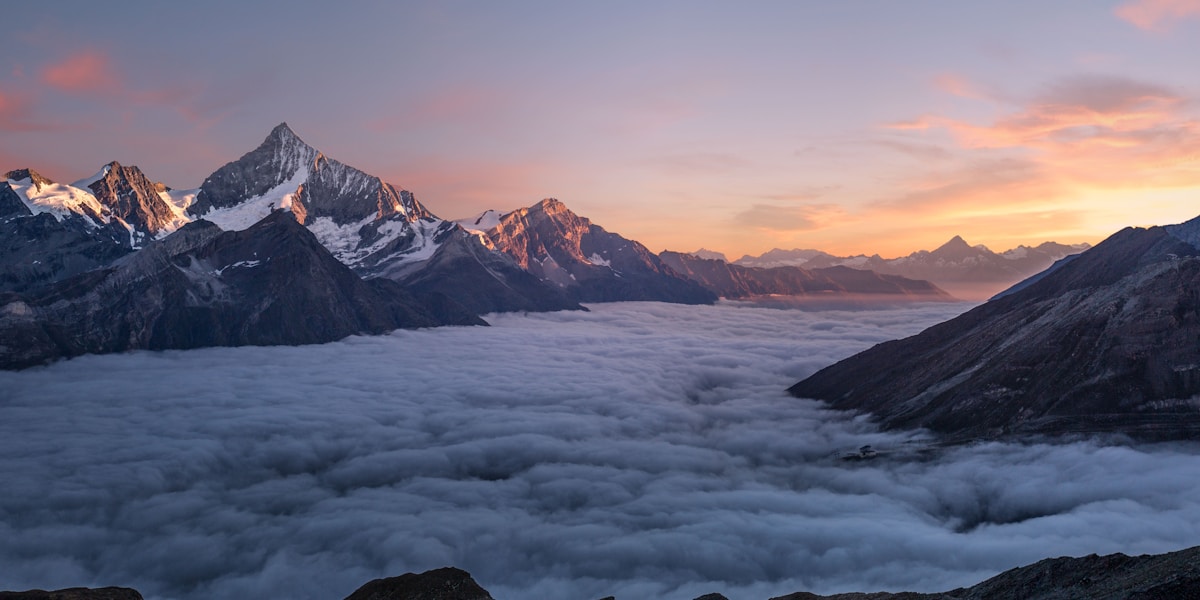
The water cycle, also called the hydrological cycle, is the continuous circulation of water between Earth's oceans, atmosphere, and land. Water evaporates from oceans, lakes, and rivers into the atmosphere, where it condenses into clouds and falls back to Earth as precipitation. It then flows over the surface as runoff, infiltrates into the ground, or is taken up by plants, eventually returning to the oceans to begin the cycle again.
Introduction
The same water molecules have been cycling through this system for billions of years. The water you drink today may have once been part of a dinosaur's breath, a medieval river, or an ancient glacier. Earth's water supply is essentially fixed; the water cycle simply moves it from place to place and changes its state between liquid, vapor, and ice.

The Short Answer
- Main Stages: Evaporation, condensation, precipitation, collection
- Energy Source: Solar energy drives evaporation
- Total Water: ~1.4 billion km³, but only 2.5% is freshwater
The water cycle has no true beginning or end, but we can enter it at evaporation. The Sun heats the surface of oceans, lakes, and rivers, converting liquid water into water vapor. This vapor rises into the atmosphere, cools at higher altitudes, and condenses around tiny particles (condensation nuclei) to form clouds.
When cloud droplets grow large enough, they fall as precipitation: rain, snow, sleet, or hail depending on atmospheric temperature. About 78 percent of precipitation falls over the oceans, and 22 percent falls over land. Water that falls on land may flow over the surface as runoff into rivers and lakes, infiltrate into the soil and groundwater, or be absorbed by plants that release it back to the atmosphere through transpiration.
The Science Behind It
- Evaporation Rate: ~502,800 km³ of water evaporates per year globally
- Residence Time: Average water molecule spends 9 days in the atmosphere
- Groundwater: Largest freshwater reservoir, residence time centuries to millennia
- Transpiration: Plants release water vapor through leaf stomata
Solar energy is the engine of the water cycle. About 86 percent of global evaporation occurs from the ocean surface, with the remaining 14 percent from land surfaces (lakes, rivers, soil, and wet vegetation). The total amount of water evaporated and transpired globally each year is approximately 502,800 cubic kilometers.
Evapotranspiration, the combined evaporation from surfaces and transpiration from plants, returns about two-thirds of all precipitation that falls on land back to the atmosphere. A single large oak tree can transpire over 150,000 liters of water per year. Tropical rainforests recycle so much water through transpiration that they generate their own rainfall: the Amazon rainforest produces roughly 50 percent of its own precipitation.
Types & Variations
- Atmospheric Water: Only 0.001% of total water, but cycles every 9 days
- Surface Water: Rivers, lakes, reservoirs (cycles in weeks to years)
- Groundwater: Soil moisture and aquifers (cycles over centuries to millennia)
- Ice/Glaciers: 69% of freshwater, cycles over thousands of years
Water moves through the cycle at dramatically different speeds depending on where it is stored. A water molecule in the atmosphere has an average residence time of only about 9 days before it precipitates. In a river, the residence time is about 2 weeks. In the ocean, it averages about 3,200 years. In glacial ice, it can be hundreds of thousands of years.
Groundwater is the largest reservoir of liquid freshwater and plays a crucial but often underappreciated role in the water cycle. Rainwater infiltrates through soil into underground aquifers, where it may reside for centuries before slowly seeping into rivers, lakes, or the ocean. Deep aquifers like the Ogallala in the US Great Plains contain fossil water deposited thousands of years ago during wetter climatic periods.
Famous Examples
- Amazon Rainforest: Generates ~50% of its own rainfall through transpiration
- Ogallala Aquifer: Massive groundwater reserve being depleted in the US Great Plains
- Lake Baikal: Holds 20% of the world's unfrozen surface freshwater
- Antarctic Ice Sheet: Stores enough water to raise sea levels by 58 meters
The Amazon rainforest is a spectacular example of the water cycle in action. Trees pump water from the soil through their roots and release it as vapor from their leaves, creating enormous clouds that produce rainfall. This "flying rivers" phenomenon transports moisture westward across the continent, with the Amazon basin recycling water 5-7 times between the Atlantic Ocean and the Andes Mountains.
The Ogallala Aquifer, underlying eight US states from South Dakota to Texas, illustrates the consequences of disrupting the water cycle. This vast underground reservoir took millions of years to fill but is being pumped for irrigation at rates far exceeding natural recharge. In some areas, the water table has dropped by over 30 meters since the 1950s, threatening the agricultural productivity of America's breadbasket.
Why It Matters
- Life Support: All life depends on the continuous cycling of freshwater
- Climate Regulation: Water vapor is the most abundant greenhouse gas
- Human Impact: Climate change, deforestation, and extraction alter the cycle
The water cycle is the foundation of all life on Earth. Every organism requires water, and the cycle's continuous redistribution ensures that freshwater reaches even the most remote terrestrial environments. Disruptions to any part of the cycle, whether through climate change, deforestation, groundwater depletion, or pollution, can have cascading effects on ecosystems and human societies.
Climate change is accelerating the water cycle. Higher temperatures increase evaporation rates, leading to more atmospheric moisture and more intense precipitation events. Paradoxically, this makes both floods and droughts more severe: wet regions tend to get wetter, dry regions get drier, and the time between rainfall events increases. Understanding and managing the water cycle is one of the most critical challenges of the 21st century.
Key Facts
- About 502,800 km³ of water evaporates globally each year.
- Only 2.5% of Earth's water is freshwater, and most of that is locked in glaciers.
- A water molecule spends an average of just 9 days in the atmosphere.
- The Amazon rainforest generates roughly 50% of its own rainfall through transpiration.
- Groundwater is the largest reservoir of liquid freshwater on Earth.
Fun Facts
- Earth has had essentially the same amount of water for 4 billion years, cycling continuously.
- A single large oak tree can transpire over 150,000 liters of water in a year.
- Clouds contain, on average, about 0.3 grams of water per cubic meter.
- If all atmospheric water vapor fell as rain at once, it would cover the Earth to a depth of only 2.5 cm.
Final Thoughts
The water cycle is the lifeblood of our planet, an elegant system powered by the Sun that has been cycling the same water molecules for billions of years. From the evaporation of ocean surfaces to the distant rumble of rainforest thunder, from the slow seepage of groundwater to the dramatic calving of glaciers, water is in constant motion. Protecting the integrity of this cycle, from safeguarding aquifers to preserving forests that drive regional rainfall, is one of humanity's most important responsibilities.
Test Your Knowledge!
Curious about geography? Test what you've learned!
Play Geography Games →