
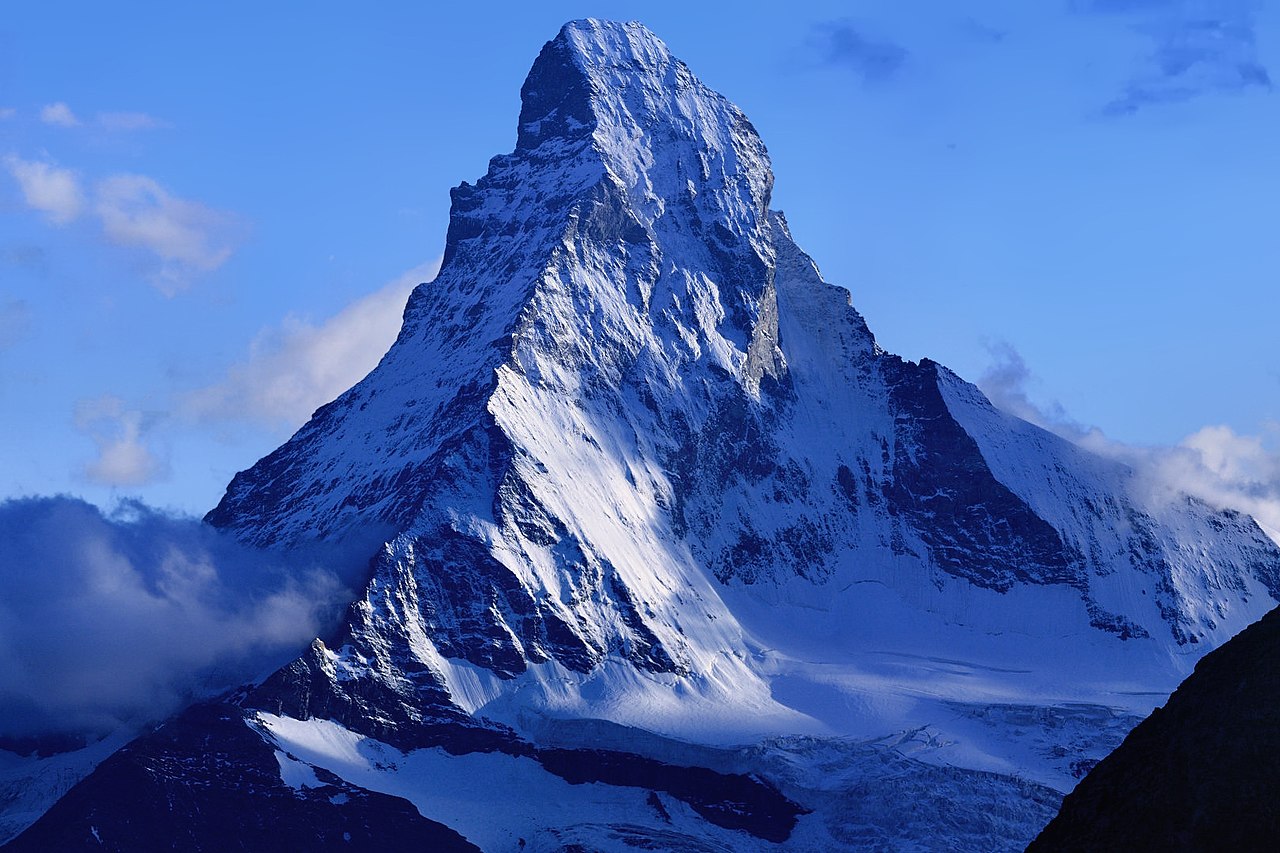
Switzerland is made up of 26 states, called cantons, which together form the Swiss Confederation. Switzerland does not use the word "state" in everyday governance — its constituent members are known as cantons (Kantone in German, cantons in French, cantoni in Italian, chantuns in Romansh). These 26 cantons are the closest equivalent to the states or provinces found in other federal countries, and each one is a self-governing member of the federation with its own constitution, parliament, and courts.
Why Switzerland Has Cantons Instead of States
The cantons are far older than the modern Swiss nation. The confederation traces its origins to 1291, when three rural communities — Uri, Schwyz, and Unterwalden — formed a defensive alliance. Over the following centuries more territories joined, and the loose league of independent statelets gradually grew. The modern federal structure was only fixed in the constitution of 1848, which transformed the alliance into a single federal state while preserving the cantons as powerful, semi-sovereign members.
Because Switzerland was built upward from independent communities rather than carved downward from a central authority, the cantons retain unusually broad powers. They set their own tax rates, run their own school systems, manage their own police forces, and decide which languages are official within their borders. Anything the federal constitution does not explicitly assign to the national government remains a cantonal responsibility.
The 26 Cantons and Their Languages
Switzerland recognises four national languages, and the cantons reflect this linguistic patchwork. The country's territory divides roughly as follows:
- German-speaking (17): Zürich, Lucerne, Uri, Schwyz, Obwalden, Nidwalden, Glarus, Zug, Solothurn, Basel-Stadt, Basel-Landschaft, Schaffhausen, Appenzell Ausserrhoden, Appenzell Innerrhoden, St. Gallen, Aargau, and Thurgau.
- French-speaking (4): Geneva, Vaud, Neuchâtel, and Jura.
- Italian-speaking (1): Ticino.
- Bilingual (3): Bern, Fribourg, and Valais all use both French and German.
- Trilingual (1): Graubünden, the only canton where German, Italian, and Romansh all hold official status.
This means a Swiss citizen can cross from one canton to another and find the street signs, schools, and official paperwork written in an entirely different language — all within a country smaller than many individual U.S. states.
Big and Small: How the Cantons Compare
The 26 cantons vary enormously in size and population. Zürich is the most populous, with roughly 1.5 million residents, while tiny Appenzell Innerrhoden has only about 16,000 — fewer people than many single neighbourhoods in a major city. By area, Graubünden is the largest at around 7,105 km², covering much of the alpine southeast, whereas Basel-Stadt is the smallest at just 37 km², essentially a single city and its immediate surroundings.
This imbalance matters politically. Six cantons are historically classed as "half-cantons" — Obwalden, Nidwalden, Basel-Stadt, Basel-Landschaft, Appenzell Ausserrhoden, and Appenzell Innerrhoden — and they cast half a vote in the Council of States and in nationwide constitutional referendums, a relic of older pairings between the territories. Tax competition between cantons is also fierce: low-tax cantons such as Zug attract corporations and wealthy individuals, while others rely on higher rates to fund generous public services.
Cantons and Swiss Direct Democracy
The cantons are central to Switzerland's famous system of direct democracy. Citizens can challenge almost any federal law through a referendum if they gather enough signatures, and they can propose changes to the constitution through popular initiatives. For a constitutional amendment to pass, it must win not only a majority of the national popular vote but also a majority of the cantons — a "double majority" that protects smaller, rural cantons from being overruled by the populous urban ones.
A few cantons preserve an even older form of democracy. In Glarus and Appenzell Innerrhoden, eligible citizens still gather once a year in an open-air assembly known as the Landsgemeinde, voting on laws and budgets by raising their hands in a public square. It is one of the oldest surviving forms of direct citizen government in the world.
A Living, Changing Map
The number 26 is recent. For most of the 20th century Switzerland had 25 cantons. The newest, Jura, broke away from the canton of Bern in 1979 after a long campaign for autonomy by its French-speaking, predominantly Catholic population, and formally joined the confederation in 1979. Cantonal boundaries can still shift today: individual municipalities occasionally vote to switch from one canton to another, a reminder that Swiss federalism remains an active, bottom-up arrangement rather than a fixed map. You can learn more in our switzerland country guide.
Frequently Asked Questions
Are Swiss cantons the same as states?
Functionally, yes. Cantons are the member units of the Swiss federation and behave much like states or provinces elsewhere, with their own governments, courts, and tax systems. Switzerland simply uses the traditional term "canton" rather than "state."
What is the capital of Switzerland?
Bern serves as the de facto capital and seat of the federal government, though Switzerland formally calls it a "federal city" rather than an official capital, in keeping with the country's reluctance to elevate one canton above the others.
Which is the largest and smallest canton?
Graubünden is the largest by area at about 7,105 km², while Basel-Stadt is the smallest at roughly 37 km². By population, Zürich is the biggest with around 1.5 million people and Appenzell Innerrhoden the smallest with about 16,000.
How many languages do the cantons use?
Switzerland has four national languages — German, French, Italian, and Romansh. Most cantons are monolingual, but three are officially bilingual and Graubünden is trilingual.