
Few countries pack as much variety into so little space as Switzerland. This compact, landlocked nation sits at the very heart of Europe, where soaring Alpine summits, mirror-still lakes, and impeccably organised cities combine to create a place that feels almost engineered for beauty and efficiency alike. Officially the Swiss Confederation, Switzerland is famous worldwide for its dramatic mountain scenery, its watchmaking and banking traditions, its centuries-old neutrality, and a quality of life that consistently ranks among the highest on Earth. Nicknamed The Roof of Europe, it manages to be both a postcard fantasy and a quietly powerful global player.
What makes Switzerland especially fascinating is its diversity. With four national languages and a federal system built from semi-autonomous cantons, it is less a single uniform culture than a remarkable patchwork held together by shared values of precision, consensus, and respect for local identity. Whether you arrive for the skiing, the chocolate, the scenic train rides, or simply the clean mountain air, the country rewards curiosity at every turn.
An Overview of the Swiss Confederation
Switzerland occupies a strategic position in Central Europe, sharing borders with Germany, France, Italy, Austria, and tiny Liechtenstein. Despite covering only about 41,285 square kilometres, it supports a population of roughly 8.7 million people, most of whom live on the relatively flat Swiss Plateau between the Jura range and the Alps. The capital is Bern, a UNESCO-listed medieval city, though larger Zurich and Geneva often draw more international attention. The official currency remains the Swiss Franc (CHF), a famously stable unit that reflects the country's reputation for financial reliability. You can learn more about its national symbol on our page about the flag of switzerland, one of only two square national flags in the world.
Geography and Landscape
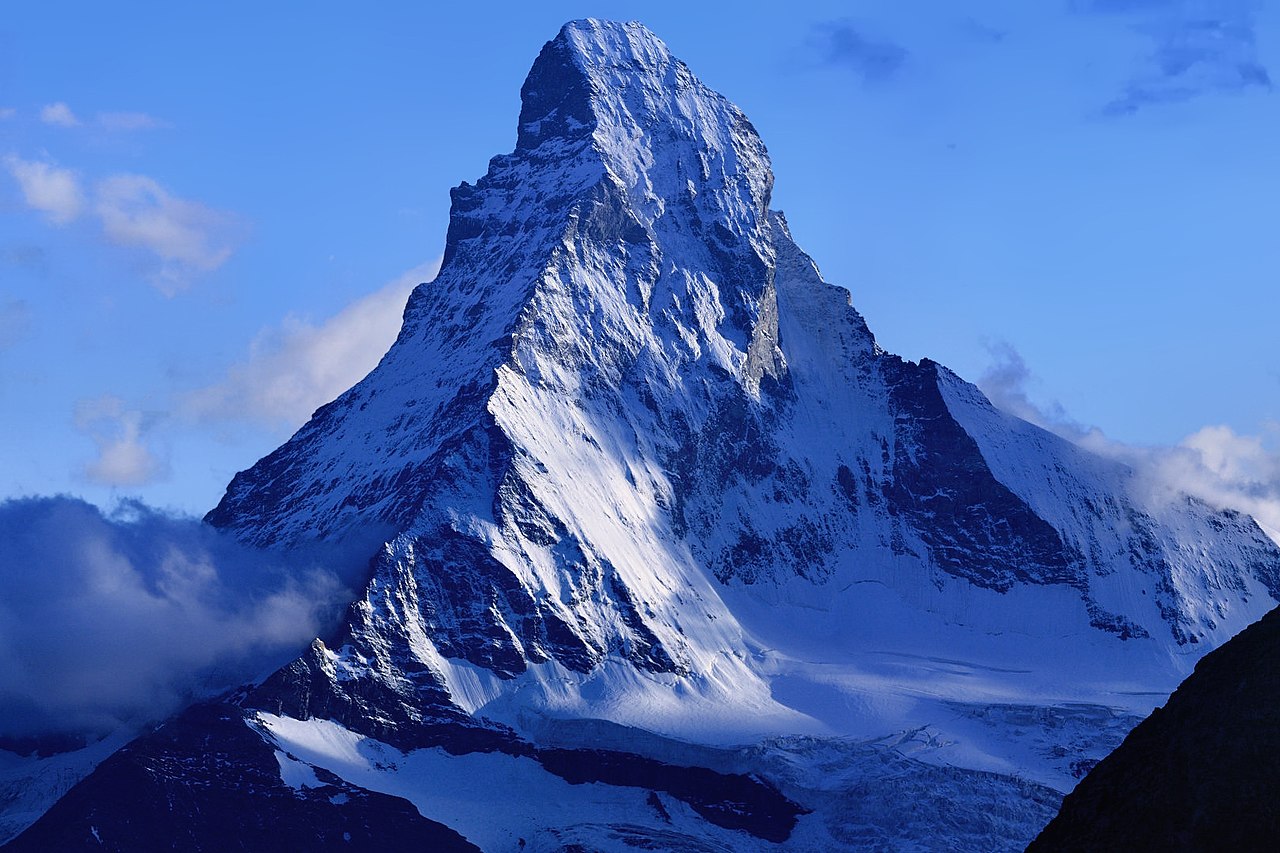
Switzerland's terrain is defined by mountains. The Alps blanket roughly 60 percent of the country, creating an awe-inspiring landscape of glaciers, deep valleys, and iconic peaks. The Matterhorn, with its instantly recognisable pyramid shape near the town of Zermatt, is perhaps the most photographed mountain on the planet, while the Eiger, Mönch, and Jungfrau form a celebrated trio in the Bernese Oberland. To the northwest lie the gentler, forested Jura Mountains, and between them stretches the populous plateau where industry, agriculture, and most major cities are concentrated.
Water is everywhere. The country is dotted with more than 7,000 lakes, including the crescent-shaped Lake Geneva, Lake Zurich, and the scenic Lake Lucerne. These bodies of water, fed by Alpine snowmelt, also feed major European rivers such as the Rhine and the Rhône, underscoring Switzerland's role as a continental watershed. The combination of high peaks and glittering lakes gives the country its distinctive visual signature.
Climate Across the Altitudes
Because elevation changes so dramatically over short distances, Switzerland's climate is best described as a collection of microclimates. The valleys and plateau enjoy a temperate continental climate, with warm, pleasant summers and cold winters. Higher up, Alpine conditions take over, bringing heavy snowfall and bitter cold that make the mountains a paradise for winter sports. Reliable snow typically blankets the high resorts from December through April. In the south, the canton of Ticino feels almost Italian, with a Mediterranean-influenced climate, palm trees, and noticeably milder, sunnier weather. This variety means that on a single day a visitor might leave a foggy, frosty valley and emerge into brilliant sunshine on a sun-soaked ridge.
A History Built on Alliances and Neutrality
Swiss history traditionally begins in 1291, when three forest cantons — Uri, Schwyz, and Unterwalden — joined together in a defensive pact against the powerful Habsburg dynasty. This early alliance gradually grew, absorbing new cantons over the following centuries and forging the loose confederation that would eventually become the modern Swiss state. The legend of William Tell, the marksman who defied a tyrannical official, captures the spirit of independence that runs through this national story.
Switzerland's defining political principle is neutrality. By staying out of the great European conflicts, including both World Wars, through a policy of armed neutrality, the country preserved its institutions and prosperity while much of the continent was devastated. It has chosen not to join the European Union, though it maintains very close economic ties through a web of bilateral agreements. Geneva, meanwhile, has become a global hub for diplomacy, hosting the European headquarters of the United Nations and the birthplace of the International Red Cross.
Culture and Society
Swiss culture mirrors the country's linguistic mosaic. German, French, Italian, and Romansh communities each preserve distinct traditions, cuisines, and ways of life, yet they share a strong sense of common citizenship. The German-speaking majority dominates the north and centre, French is spoken in the west around Geneva and Lausanne, Italian prevails in the south, and Romansh — a Latin-rooted tongue — survives in a few Alpine valleys of Graubünden.
Certain qualities are stereotypically and genuinely Swiss: precision, punctuality, cleanliness, and discretion. These values show up in everything from the famously accurate railway timetables to the meticulous craft of watchmaking. Alpine folk traditions endure too, in yodeling, the haunting sound of the alphorn, and seasonal festivals tied to the rhythms of mountain farming. And then there is the food. Switzerland gave the world melted-cheese delights such as fondue and raclette, hearty rösti, and above all its legendary chocolate, which the Swiss consume in greater quantity per person than almost anyone else.
A High-Value Economy
Switzerland boasts one of the highest GDP per capita figures in the world, and its prosperity rests on a foundation of high-value, specialised industries rather than raw materials. Precision manufacturing is central, encompassing luxury watches, advanced machinery, and a globally dominant pharmaceutical sector led by giants such as Novartis and Roche. Banking and finance have long been a pillar of the economy, with Swiss institutions historically prized for their stability and confidentiality. Food multinational Nestlé and watchmaker Rolex are household names far beyond the country's borders.
The Swiss economy also benefits from a highly skilled workforce, political stability, and a business-friendly environment that attracts the regional or global headquarters of countless multinational companies. Technology, life sciences, and tourism round out a remarkably diversified and resilient economic profile. Switzerland's neighbours, including Germany and Italy, are among its most important trading partners.
Tourism and Travel Tips
Switzerland ranks among the world's premier travel destinations, and for good reason. In winter, world-class resorts such as Zermatt, St. Moritz, and Verbier offer some of the finest skiing and snowboarding anywhere, while summer transforms the same mountains into a hiker's dream of wildflower meadows and panoramic trails. Lucerne charms visitors with its lakeside setting and covered wooden bridges, while cosmopolitan Zurich and Geneva offer museums, fine dining, and elegant waterfronts.
The country's scenic train network is an attraction in itself. The Glacier Express and Bernina Express carry passengers through tunnels, over soaring viaducts, and past glaciers in journeys that rank among the most beautiful rail trips in the world. For practical planning, remember that Switzerland is not cheap, so budgeting carefully pays off. A Swiss Travel Pass can offer excellent value for those relying on public transport, which is famously punctual and far-reaching. Pack layers regardless of season, since mountain weather shifts quickly, and bring comfortable footwear for cobbled town centres and Alpine trails alike. For mountain scenery and skiing, neighbouring Austria makes a natural extension to any Swiss itinerary.
Key Facts
- Official Name: Swiss Confederation
- Capital: Bern
- Continent/Region: Europe (Central Europe)
- Area: 41,285 km²
- Population: 8.7 million
- Currency: Swiss Franc (CHF)
- Languages: German, French, Italian, and Romansh
Interesting Facts
- Switzerland has four official languages — German, French, Italian, and Romansh — reflecting its deeply federal character.
- Swiss law has long required that nuclear fallout shelters be available for the entire population, a striking legacy of Cold War preparedness.
- The country is home to more than 7,000 lakes, from vast Lake Geneva to countless tiny Alpine tarns.
- The Swiss consume more chocolate per capita than any other nation on Earth.
- The original Swiss Army knife was invented in 1891, becoming an enduring symbol of Swiss ingenuity and practicality.
- The Swiss flag is one of only two national flags in the world that is perfectly square.
Frequently Asked Questions
What is the capital of Switzerland?
The capital of Switzerland is Bern, a medieval city whose well-preserved old town is a UNESCO World Heritage Site. While Zurich and Geneva are larger and internationally better known, Bern serves as the seat of the federal government.
What languages are spoken in Switzerland?
Switzerland has four official languages: German, French, Italian, and Romansh. German is the most widely spoken, French dominates the western regions, Italian is used in the south, and Romansh survives in parts of the Alpine canton of Graubünden. English is also widely understood in cities and tourist areas.
When is the best time to visit Switzerland?
It depends on your interests. For skiing and snow sports, the high season runs from December to April when Alpine resorts have reliable snow. For hiking, lake activities, and warm city exploration, the months from June to September are ideal, offering pleasant weather and accessible mountain trails.
What is Switzerland known for?
Switzerland is renowned for its breathtaking Alpine scenery, including the iconic Matterhorn, as well as its precision watches, world-famous chocolate, stable banking sector, political neutrality, and exceptionally high quality of life. Its scenic train journeys and ski resorts make it a top global travel destination.