
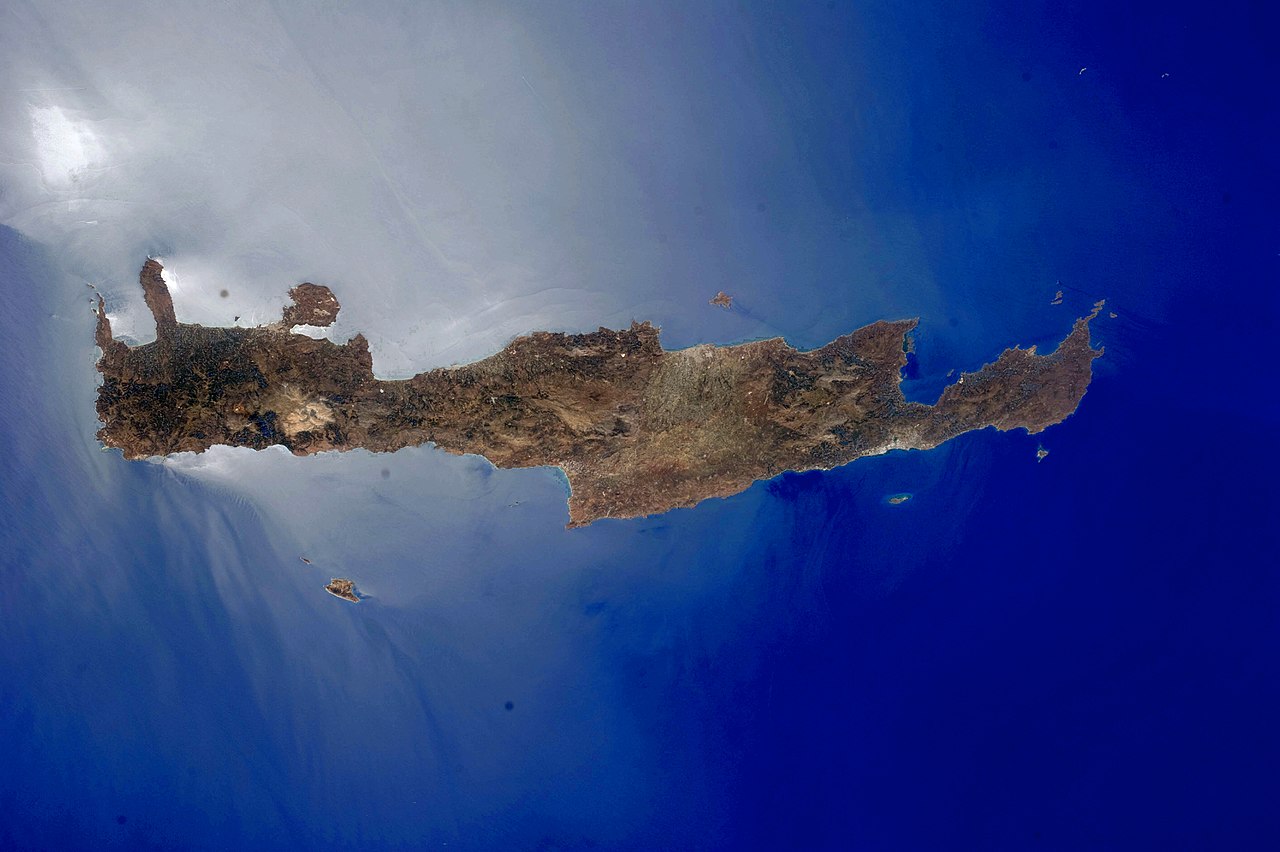
The Ionian Sea is a section of the Mediterranean Sea located between the western coast of Greece, the Ionian Islands, and southern Italy (Calabria, Basilicata, and Sicily). Covering approximately 169,000 square kilometers, it contains the Calypso Deep — at 5,267 meters the deepest point in the entire Mediterranean Sea. The sea is named after the Ionians, one of the ancient Greek tribal groups.
Introduction
The Ionian Sea has been a cradle of Western civilization, traversed by Odysseus in Homer's epic, sailed by Corinthian and Athenian triremes, and fought over by Rome, Byzantium, Venice, and the Ottoman Empire. Its Greek shore includes the Ionian Islands — Corfu, Kefalonia, Zakynthos, Lefkada, and Ithaca — whose lush green landscapes and turquoise waters make them among the most beautiful in the Mediterranean. The sea also plays a key role in Mediterranean oceanography, connecting the western and eastern basins.

Geography & Dimensions
- Area: Approximately 169,000 km²
- Maximum Depth: 5,267 m (Calypso Deep)
- Key Islands: Corfu, Kefalonia, Zakynthos, Ithaca, Lefkada
- Bordering Nations: Greece, Italy, Albania
The Ionian Sea is bounded by the Greek mainland and Peloponnese to the east, the Ionian Islands chain running along its eastern edge, southern Italy and Sicily to the west and northwest, and opens to the central Mediterranean to the south. The Strait of Otranto to the north connects it to the Adriatic Sea, while the Strait of Messina links it to the Tyrrhenian Sea.
The Calypso Deep, located in a trench southwest of the Peloponnese, plunges to 5,267 meters — making the Ionian Sea the deepest section of the entire Mediterranean. This extreme depth is related to the active subduction of the African tectonic plate beneath the Eurasian plate along the Hellenic Trench system. The same tectonic activity that creates the great depth also makes the region seismically active, with a history of devastating earthquakes.
The Ionian Islands
- Total Islands: Seven major, many smaller (Heptanese)
- Largest: Kefalonia (775 km²)
- Most Famous: Corfu (Kerkyra)
- Climate: Mediterranean, greener than Aegean islands due to higher rainfall
The Ionian Islands — historically known as the Heptanese (Seven Islands) — are Corfu, Kefalonia, Zakynthos, Lefkada, Ithaca, Paxos, and Kythira. Unlike the arid, rocky Cyclades of the Aegean, the Ionian Islands receive more rainfall, giving them a lush, green landscape with cypress forests, olive groves, and verdant hillsides. Their architecture reflects Venetian, French, and British influences rather than the typical Cycladic whitewashed style.
Corfu, the most visited, features a UNESCO-listed Old Town with Venetian fortresses and Italian-influenced architecture. Kefalonia, the largest, has dramatic coastline and the famous Myrtos Beach. Zakynthos is known for Navagio (Shipwreck) Beach, one of the most photographed beaches in the world, and for its important loggerhead sea turtle nesting sites. Ithaca, traditionally the home of Homer's Odysseus, draws literary pilgrims from around the world.
Ancient History & Mythology
- Homer's Odyssey: Much of Odysseus's voyage set in the Ionian Sea
- Battle of Actium: 31 BC — Octavian defeated Antony and Cleopatra
- Corinth: Major ancient city-state on the Ionian coast
- Venetian Rule: Over 400 years of Venetian control of the Ionian Islands
The Ionian Sea is woven into the fabric of Western civilization's foundational narratives. Homer's Odyssey, composed around the 8th century BC, sets much of Odysseus's epic journey across the Ionian Sea, with Ithaca as his destination. The Strait of Messina was identified with the monsters Scylla and Charybdis, while Corfu was traditionally associated with the land of the Phaeacians who helped Odysseus reach home.
The Battle of Actium in 31 BC, fought at the entrance to the Ambracian Gulf on the Ionian coast, was one of the most decisive battles in Western history. Octavian's victory over Mark Antony and Cleopatra ended the Roman Republic and ushered in the Roman Empire. The Ionian Islands later spent over 400 years under Venetian rule (1386-1797), which profoundly shaped their culture, architecture, and language — the islands' Italian cultural influence remains visible today.
Marine Life & Conservation
- Sea Turtles: Zakynthos hosts one of the Mediterranean's largest loggerhead nesting sites
- Monk Seals: Small populations in remote sea caves
- Cetaceans: Common dolphins, striped dolphins, sperm whales
- Protected Areas: National Marine Park of Zakynthos
The Ionian Sea supports important populations of several threatened Mediterranean species. Zakynthos (Laganas Bay) is one of the largest nesting sites for loggerhead sea turtles (Caretta caretta) in the Mediterranean, with over 1,000 nests recorded in peak years. The National Marine Park of Zakynthos, established in 1999, protects these nesting beaches and the surrounding marine environment.
The Mediterranean monk seal, one of the world's most endangered marine mammals (fewer than 700 remaining), maintains small populations in remote sea caves along the Greek Ionian coast and islands. Short-beaked common dolphins, once abundant in the Ionian, have declined dramatically — the population around Kalamos Island has been studied for decades and has become a symbol of Mediterranean marine conservation challenges. The deep waters of the Hellenic Trench support sperm whales and Cuvier's beaked whales.
Seismicity & Earthquakes
- Tectonic Setting: African plate subducting beneath Eurasian plate
- Seismic Activity: One of the most earthquake-prone regions in Europe
- Historical Events: 1953 Kefalonia earthquake (M 7.2), 1908 Messina earthquake and tsunami
- Tsunami Risk: Historically documented, potential future threat
The Ionian Sea is one of the most seismically active regions in Europe, situated along the Hellenic Trench where the African plate subducts beneath the Eurasian plate. The Ionian Islands have experienced numerous destructive earthquakes throughout history. The 1953 Kefalonia earthquake, measuring 7.2 on the Richter scale, devastated the island, destroying nearly every building and killing 476 people.
The 1908 Messina earthquake and subsequent tsunami, on the Ionian Sea's western edge at the Strait of Messina, killed an estimated 75,000-82,000 people — one of Europe's deadliest natural disasters. The combination of active faulting, deep-water trenches, and densely populated coastlines makes the Ionian Sea a region of significant seismic and tsunami risk. Monitoring and early warning systems have improved considerably but cannot eliminate the threat.
Key Facts
- The Calypso Deep in the Ionian Sea (5,267 m) is the deepest point in the entire Mediterranean.
- The Ionian Islands were under Venetian rule for over 400 years, shaping their distinctive culture.
- Zakynthos hosts one of the Mediterranean's largest loggerhead sea turtle nesting sites.
- The Battle of Actium (31 BC) in the Ionian Sea ended the Roman Republic and began the Roman Empire.
- The Ionian Sea is one of the most seismically active regions in Europe.
Fun Facts
- Homer's Odysseus spent 10 years trying to cross the Ionian Sea to reach his home island of Ithaca — a journey that should have taken a few days.
- Navagio Beach on Zakynthos, featuring a rusting shipwreck on white sand between towering cliffs, is one of the most photographed locations in the world.
- The 1953 earthquake on Kefalonia was so destructive that almost the entire island had to be rebuilt from scratch.
- The word "Ionian" may derive from the Greek word for violet (ion), possibly referring to the sea's deep purple-blue color at depth.
Final Thoughts
The Ionian Sea is where the depth of the Mediterranean meets the depth of Western civilization. From the mythological voyages of Odysseus to the decisive Roman naval battle at Actium, from the Venetian grandeur of Corfu to the endangered loggerhead turtles of Zakynthos, this body of water has been central to the Mediterranean story for over three thousand years. Its combination of natural beauty, geological drama, and cultural richness makes it one of the most compelling seas in the world.
Test Your Knowledge!
Think you know the world's oceans and seas? Try our interactive geography quiz!
Play Geography Games →