
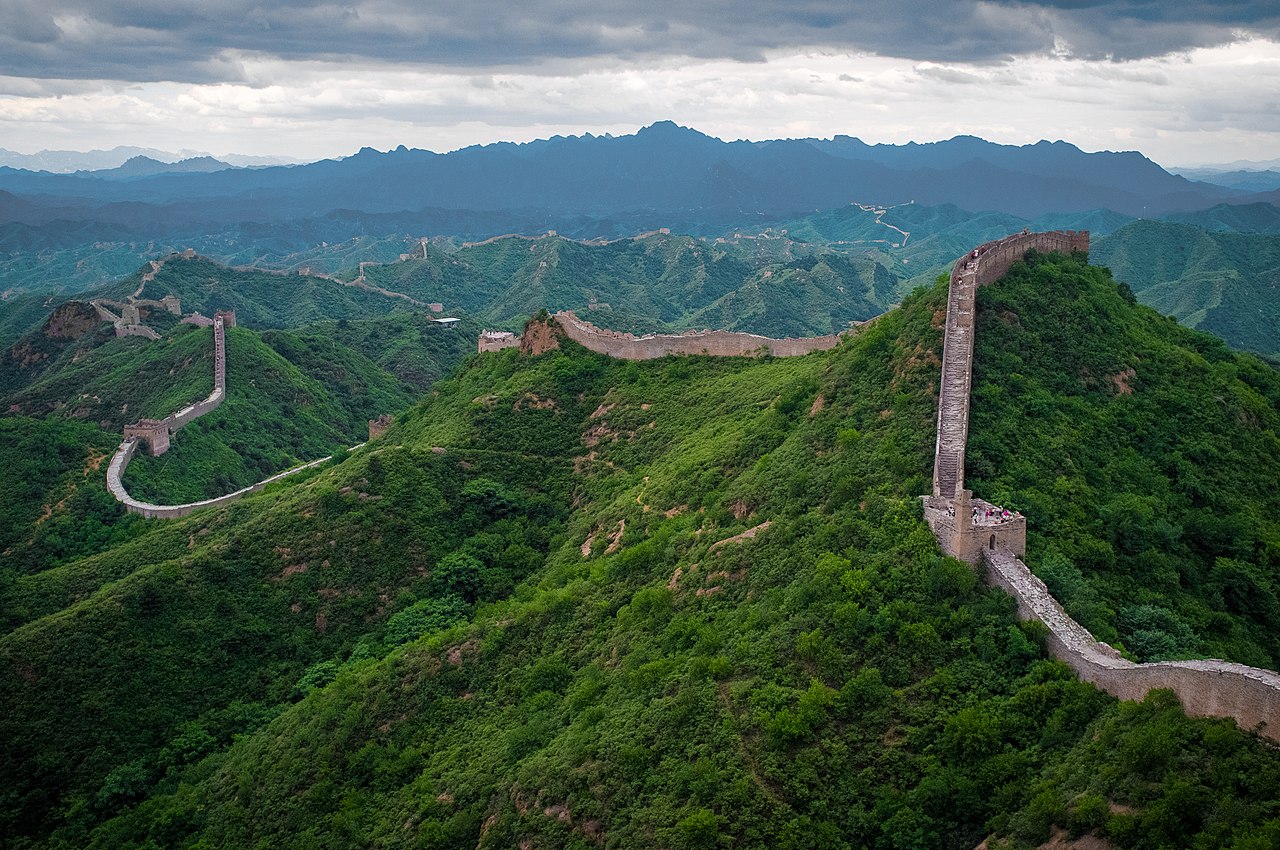
Yes. The Great Wall of China is dramatically longer than the US East Coast. The Great Wall stretches about 21,196 km (including all branches and historical sections), while the US East Coast (Maine to Florida) is about 3,500 km. The Great Wall is roughly 6 times longer than the US East Coast. It's the longest man-made structure in human history.
The Short Answer
The Great Wall of China is one of the most ambitious engineering projects in human history. Its 21,196 km total length is astonishing — that's longer than the diameter of the Earth (12,742 km) and longer than from Beijing to New York City and back. The US East Coast, while substantial, is dwarfed by the Great Wall's incredible extent.
However, comparing a defensive wall to a natural coastline involves some apples-to-oranges issues. The Great Wall was built over 2,000+ years by various Chinese dynasties; the US East Coast is a natural feature. But both represent geographic features that have profoundly shaped their respective civilizations.

The Real Numbers
- Great Wall total length: ~21,196 km (~13,171 mi)
- US East Coast length: ~3,500 km (~2,175 mi) Maine to Florida (straight measurement)
- US East Coast with all indentations: ~28,000 km (NOAA estimate including all bays, inlets)
- Difference (straight measurement): ~17,700 km
- Ratio (straight measurement): Great Wall is about 6× longer than US East Coast
Note: coastline length is famously dependent on measurement scale. Using the highest-resolution measurement (NOAA), the US East Coast with all its bays and inlets is actually longer than the Great Wall — but that's using a fractal-style measurement that may not be a fair comparison.
The Great Wall of China
The Great Wall was built over more than 2,000 years by various Chinese dynasties. The earliest sections date to the 7th century BC. The famous sections most visitors see today were built during the Ming Dynasty (1368-1644). The wall winds across northern China from the Bohai Sea coast in the east to the Gobi Desert in the west.
Important facts about the Great Wall:
- Construction period: 7th century BC to 17th century AD (over 2,000 years)
- Built by dynasties: Zhou, Qin, Han, Northern Wei, Northern Qi, Sui, Liao, Jin, Ming
- Estimated builders: Hundreds of thousands of workers; many died during construction
- Average height: 6-8 m
- Average width: 4-5 m at top, 5-9 m at base
- Materials: Tamped earth in early sections; stone and brick in Ming Dynasty sections
- Watchtowers: About 25,000 along the wall's length
- Garrison stations: Thousands of fortresses and military installations
The US East Coast
The US East Coast stretches from Maine in the north to Florida in the south, bordering the Atlantic Ocean. Major regions:
- New England: Maine, New Hampshire, Massachusetts, Connecticut, Rhode Island
- Mid-Atlantic: New York, New Jersey, Delaware, Maryland, DC
- Southeast: Virginia, North Carolina, South Carolina, Georgia, Florida
- Geographic features: Rocky coastline in Maine, sandy beaches in Mid-Atlantic and South, Florida Keys at the southern tip
- Major cities: Boston, New York, Philadelphia, Baltimore, Washington DC, Charleston, Miami
- Population: The East Coast houses about 110 million Americans — about 1/3 of the country
Different Functions and Purposes
The Great Wall served as a defensive structure to protect Chinese civilization from northern invasions (Mongols, Xiongnu, and others). It also served as a customs border for the Silk Road trade, a transportation route along its top, and a unified communication network through signal fires. The wall has been a powerful symbol of Chinese identity and engineering capability throughout history.
The US East Coast is a natural feature that has shaped American history dramatically. The coast hosted the first English colonies (Jamestown 1607, Plymouth 1620), drove the American Revolution, hosted the first US capital (Philadelphia), and has been the launching point for European immigration to America. The coast continues to be the center of American finance (New York), government (Washington DC), and many cultural institutions.
Cultural Significance
The Great Wall is one of the most recognized cultural symbols of China. It's a UNESCO World Heritage Site (since 1987) and one of the New Seven Wonders of the World. The Wall is so iconic that the Chinese proverb says "He who has not climbed the Great Wall is not a real man" (不到长城非好汉, attributed to Mao Zedong).
The US East Coast has shaped American culture profoundly. The region produced the Founding Fathers, hosted the abolition movement, gave birth to American jazz (originating in Southern coastal cities), and continues to host the country's political, financial, and intellectual centers. The East Coast has more major universities (Harvard, Yale, MIT, Princeton, Columbia, etc.) than any other region.
Tourism
The Great Wall is one of the world's most-visited tourist attractions. The Mutianyu and Badaling sections near Beijing receive millions of visitors annually. The Wall has become a symbol of Chinese tourism and is essential to understanding Chinese history and culture.
The US East Coast attracts massive tourism. New York City alone receives about 60 million visitors annually. Washington DC, Boston, Miami, and many other cities are major tourism destinations. The coast offers everything from northeastern fall foliage to Florida beaches.
Key Facts
- The Great Wall is about 6× longer than the US East Coast (straight measurement).
- The Great Wall is the longest man-made structure in human history.
- It was built over 2,000+ years by various Chinese dynasties.
- The US East Coast houses about 110 million Americans.
- Both are critical to their nations' histories and identities.
Fun Facts
- Contrary to popular belief, the Great Wall is NOT visible to the naked eye from the Moon. It's barely visible from low Earth orbit under perfect conditions.
- Much of the Great Wall has been deteriorating — only about 8% is preserved in good condition.
- The US East Coast has been dramatically reshaped by hurricanes — most recently Hurricane Sandy (2012) reshaped the New Jersey coastline.
- About 25% of all materials used to build the Great Wall came from tamped earth — making it surprisingly fragile in places.
- The Great Wall's eastern terminus at Shanhaiguan is called "First Pass Under Heaven."
Construction and Labor
The Great Wall was built using human labor on an almost unimaginable scale. During the Qin dynasty alone, an estimated 300,000–500,000 conscripts, soldiers, and prisoners worked on the wall; under the Ming, the labor force is sometimes estimated at over one million. The mortality rate was horrific. Chinese tradition holds that as many as one million workers died during construction across the centuries, and the Wall is sometimes called "the longest cemetery on Earth." Materials varied with the local geography: tamped earth in the western desert, brick and granite in the Ming-era east, stone and timber in the mountains. The US East Coast, by contrast, was shaped not by labor but by glacial retreat, sea-level rise, and centuries of sediment deposition.
Cultural Significance
The Great Wall is a UNESCO World Heritage Site and one of the most recognized human structures on Earth. It draws over 10 million visitors annually to its most-restored sections near Beijing (Badaling, Mutianyu, Jinshanling). It appears on Chinese currency, in films, and as a near-universal symbol of China itself. The US East Coast doesn't carry a single iconic identity but a constellation of them — the Statue of Liberty welcoming immigrants, the lighthouses of the Outer Banks, the boardwalks of New Jersey, the historic harbors of Charleston and Savannah. Both anchor national mythology in their own way.
Modern Threats and Preservation
The Great Wall faces serious modern threats. Decades of erosion, looting of bricks by villagers for construction material, tourism pressure on the most-visited sections, and outright vandalism have all taken a toll. China's State Administration of Cultural Heritage estimates that nearly 30% of the Ming-era Wall has already vanished, and only about 8% remains in good condition. Preservation efforts now focus on documenting unrestored sections via drone and satellite, banning unauthorized hiking on fragile portions, and prosecuting brick theft. The US East Coast's biggest threat is rising sea levels and stronger hurricanes. Norfolk, Miami, Charleston, and coastal New Jersey are already seeing routine flooding during high tides; by 2100, billions of dollars of coastal infrastructure may be submerged or require massive seawalls.
The Bottom Line
The Great Wall of China is about 6 times longer than the US East Coast — a remarkable testament to over 2,000 years of Chinese engineering. The Great Wall is a built structure; the US East Coast is a natural feature. Both have profoundly shaped their respective civilizations — China through its defense, identity, and engineering accomplishment; America through its position as gateway to the Americas, financial center, and political heart. Both will continue to be central to global cultural recognition.
Quiz World Wonders!
Test your knowledge of the Great Wall and famous landmarks.
Play Geography Games →