
Introduction
Lake Ladoga is the largest freshwater lake in Europe, covering 17,891 square kilometers in the Karelia and Leningrad regions of northwestern Russia. Located just 40 kilometers east of St. Petersburg, the lake is roughly 219 kilometers long and 138 kilometers wide, with over 660 islands scattered across its surface. Despite its proximity to one of Russia's great cities, much of the lake and its shoreline remains wild and sparsely populated.
Lake Ladoga holds a special place in Russian history and culture. During the Siege of Leningrad in World War II, the frozen lake served as the "Road of Life," the only supply route connecting the besieged city to the outside world. The lake is also home to the Valaam Archipelago and its ancient monastery, one of the most important spiritual sites in Russian Orthodoxy, drawing pilgrims and visitors for over a thousand years.
Geography & Formation
- Surface Area: 17,891 km²
- Max Depth: 230 m
- Length: 219 km
- Islands: Over 660
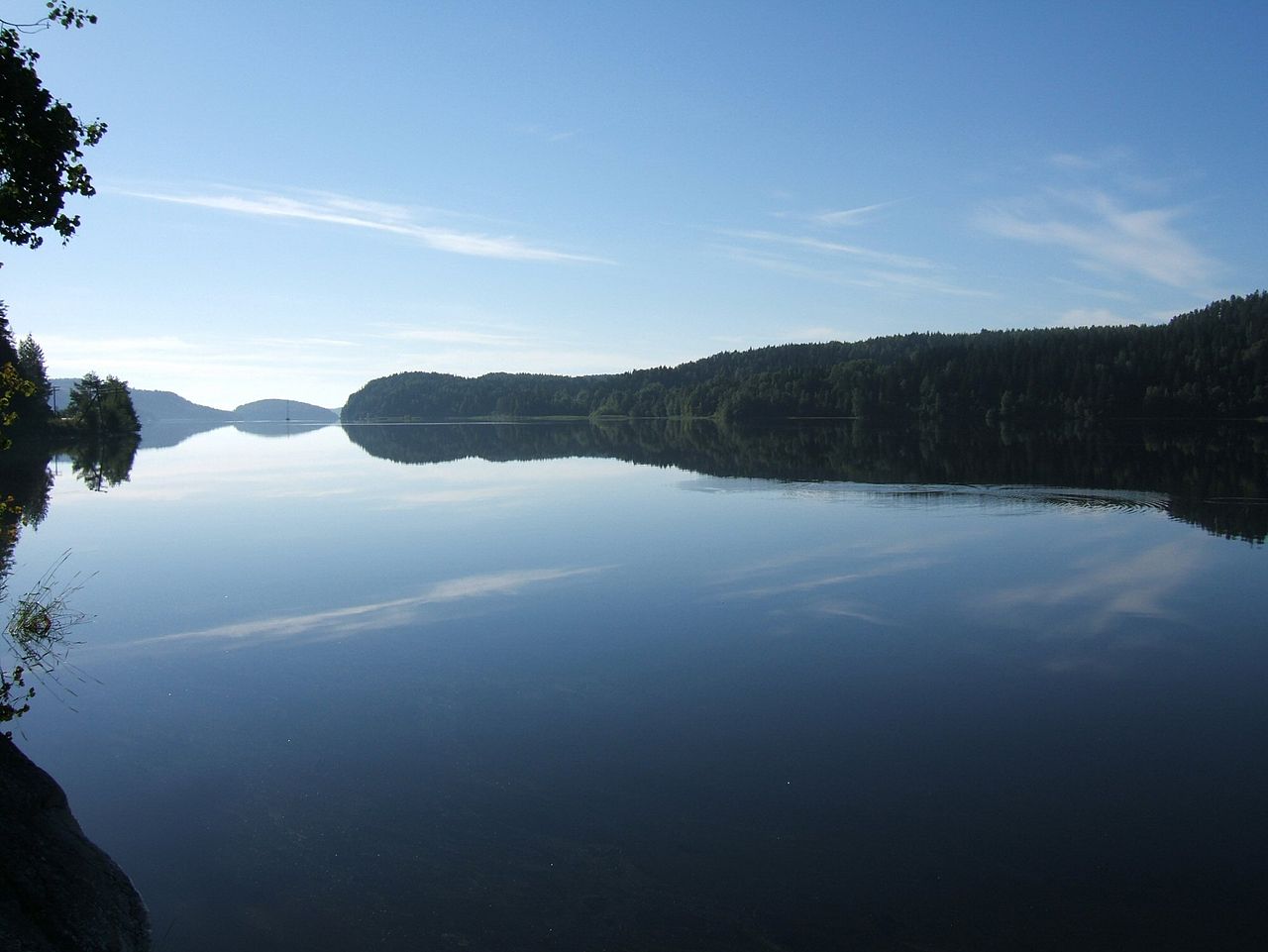
Lake Ladoga occupies a tectonic depression modified by glacial erosion during the Pleistocene. The northern portion of the lake is deeper and more rugged, with rocky shorelines, numerous skerries (small rocky islands), and depths reaching 230 meters. The southern portion is shallower, with sandy beaches and marshy shorelines. This north-south contrast reflects the underlying geology — the northern shore sits on ancient Precambrian crystalline rock, while the southern shore is underlain by younger sedimentary deposits.
The lake receives water from numerous rivers, including the Svir (from Lake Onega), the Vuoksi (from Finland via Lake Saimaa), and the Volkhov (from Lake Ilmen). Its sole outlet is the Neva River, which flows 74 kilometers westward through St. Petersburg to the Baltic Sea. The Neva is one of the shortest major rivers in Europe but carries an enormous volume of water, making St. Petersburg prone to devastating floods when strong westerly winds push Baltic water back up the river.
Water & Hydrology
- Volume: 908 km³
- Average Depth: 51 m
- Retention Time: ~2 years
- Outflow: Neva River (to Baltic Sea via St. Petersburg)
Lake Ladoga's hydrology is characterized by relatively rapid water turnover, with a retention time of only about 2 years. This means the lake is responsive to both pollution inputs and cleanup efforts. The lake freezes over each winter, typically from December through April, with ice thickness reaching 50-70 centimeters in normal winters. However, climate change has been shortening the ice season and reducing ice thickness in recent decades.
The lake is known for its sometimes violent weather, with sudden storms capable of generating waves exceeding 5 meters. The combination of the lake's large size, shallow southern basin, and channeled winds can create dangerous conditions for boats. Historically, Lake Ladoga was a major shipping route connecting the Baltic with the Russian interior via the Volga-Baltic Waterway, and storms claimed many vessels over the centuries.
Ecology & Biodiversity
- Fish Species: Over 50
- Ringed Seal: Ladoga subspecies (endangered, ~5,000)
- Bird Species: Over 250 recorded
Lake Ladoga supports a diverse freshwater ecosystem including over 50 fish species such as salmon, trout, whitefish, smelt, and pike-perch. The lake also harbors the Ladoga ringed seal, a landlocked subspecies of the Arctic ringed seal that became isolated in the lake after the last Ice Age. With a population of approximately 5,000 individuals, the Ladoga seal is classified as endangered and is one of only three freshwater seal populations in the world (the others being in Lake Baikal and Lake Saimaa).
The lake's islands and shoreline provide important habitat for migratory and breeding birds, with over 250 species recorded. White-tailed eagles, ospreys, and various species of ducks, geese, and waders are common during the breeding season. The Ladoga skerries — small rocky islands in the northern part of the lake — are particularly important for nesting seabirds and serve as hauling-out sites for the ringed seals.
Cultural Significance
- WWII Role: "Road of Life" during Siege of Leningrad
- Spiritual Site: Valaam Monastery (est. ~992 CE)
- Viking History: Part of the Varangian trade route
Lake Ladoga's most dramatic historical role was during World War II. When German forces surrounded Leningrad (now St. Petersburg) in September 1941, the city's only link to the rest of the Soviet Union was across Lake Ladoga. During winter, trucks drove across the frozen lake carrying food and supplies into the city and evacuating civilians out. This "Road of Life" operated for over two winters and is credited with saving hundreds of thousands of lives during the 872-day siege.
The Valaam Archipelago, a group of about 50 islands in the northern part of the lake, has been home to an Orthodox Christian monastery since at least the 10th century. The Valaam Monastery, with its stunning ensemble of churches, bell towers, and hermitages set amid dense forests, is one of the holiest sites in Russian Orthodoxy. After decades of decline during the Soviet period, the monastery was restored beginning in the 1990s and now draws over 100,000 pilgrims and tourists annually.
Visitor Experience
- Best Season: June to September
- Key Destinations: Valaam Monastery, Sortavala, Shlisselburg Fortress
- Activities: Monastery visits, boat tours, fishing, kayaking
The Valaam Monastery is the primary destination for visitors to Lake Ladoga. Day trips and overnight excursions depart from the town of Sortavala on the lake's northern shore, offering stunning views of the island archipelago and the monastery complex. The monastery grounds include formal gardens, a farm, and several outlying hermitages (sketes) connected by forest paths.
The Shlisselburg Fortress, located on an island at the point where the Neva River exits the lake, is a medieval Russian fortress that later served as a political prison. It played a crucial role during the Siege of Leningrad and is now a museum. The northern shore of the lake, near the Finnish border, offers wild scenery of granite islands, pine forests, and secluded bays that are popular with kayakers and fishermen during the brief northern summer.
Key Facts
- Lake Ladoga is Europe's largest freshwater lake at 17,891 km²
- The "Road of Life" across the frozen lake saved hundreds of thousands during the WWII Siege of Leningrad
- The Valaam Monastery has been a center of Russian Orthodoxy for over 1,000 years
- The Ladoga ringed seal is one of only three freshwater seal populations in the world
- The lake's sole outlet, the Neva River, flows through St. Petersburg to the Baltic Sea
Fun Facts
- The Neva River, Lake Ladoga's only outlet, is just 74 km long but carries more water than the Don or Dnieper Rivers
- During WWII, trucks crossed the frozen lake at night with headlights off to avoid German bombers
- The Ladoga ringed seal can hold its breath for up to 40 minutes while diving
- Lake Ladoga was part of the Varangian (Viking) trade route connecting Scandinavia to Constantinople over 1,000 years ago
Final Thoughts
Lake Ladoga is a lake of immense historical weight and natural grandeur. Europe's largest freshwater body has served as a lifeline during one of history's most terrible sieges, a home for ancient monastic traditions, and a refuge for one of the world's rarest seal populations. Its wild northern shores and sacred islands offer a glimpse into a Russia that has endured centuries of hardship and renewal, reflected in the deep, cold waters of this remarkable lake.
