

Mardi Gras in New Orleans is the largest annual celebration in the United States, drawing an estimated 1.4 million visitors to the Crescent City during the two-week carnival season preceding Lent. The festival generates over $1 billion in economic impact and features more than 70 parades organized by secret societies called krewes.
Introduction
New Orleans' unique geographic position — built on the low-lying Mississippi River delta at an average elevation of just 0.5 meters below sea level — gives Mardi Gras a physical setting unlike any other festival. Parade routes wind through neighborhoods built on the natural levees of the Mississippi, past antebellum mansions, through tunnel-like canopies of live oak trees, and into the dense urban grid of the French Quarter.
The term "Mardi Gras" is French for "Fat Tuesday," the day before Ash Wednesday when Christians traditionally feasted before the 40-day Lenten fast. But in New Orleans, the celebration has expanded far beyond its religious origins into a citywide expression of music, food, and cultural identity rooted in the city's unique Creole heritage.
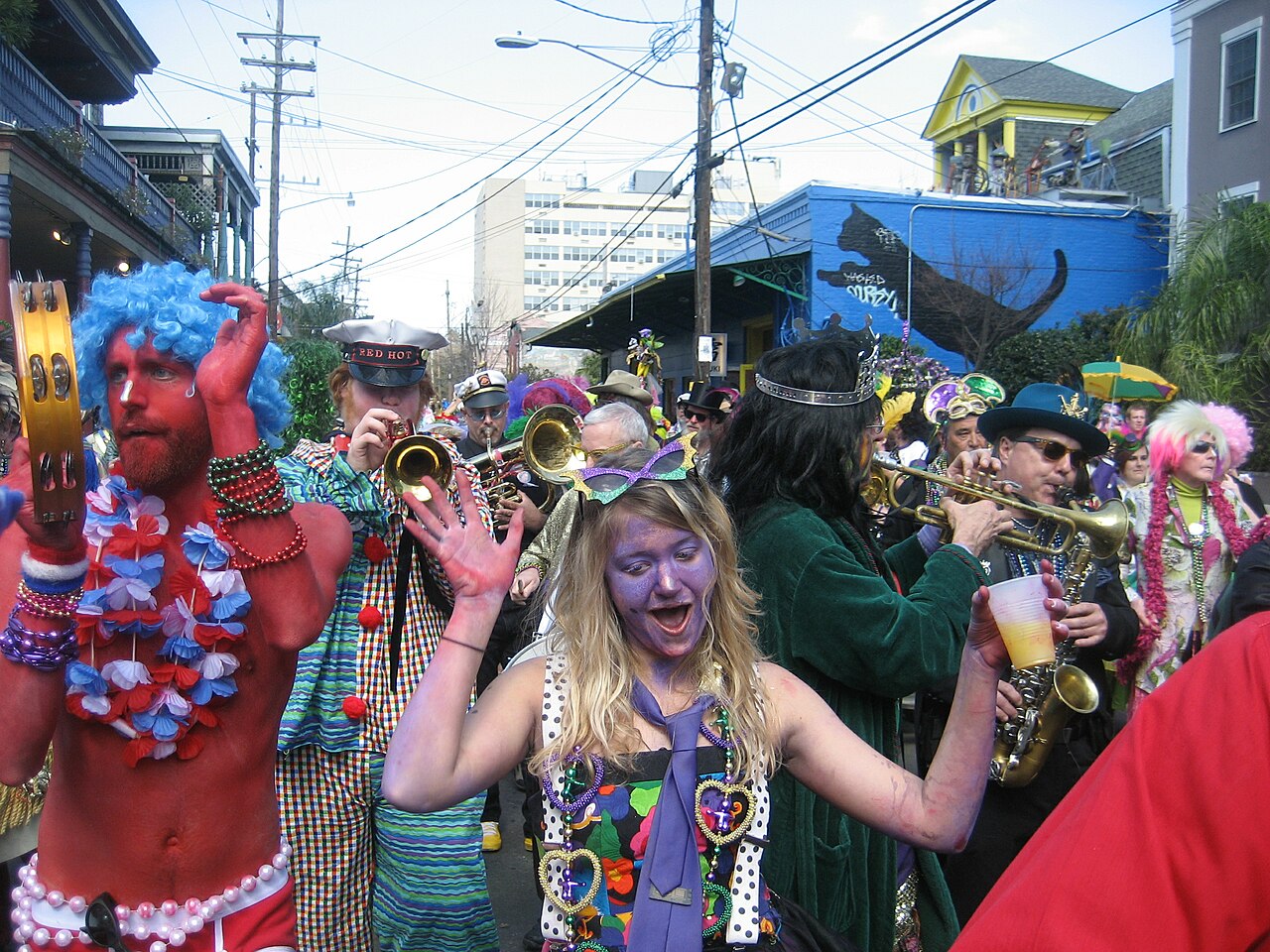
Geography & Parade Routes
- City Location: 29.95°N, 90.07°W, Mississippi River Delta
- Elevation: Avg. 0.5 m below sea level
- Main Route: St. Charles Avenue to Canal Street (10.5 km)
The primary Mardi Gras parade route follows St. Charles Avenue, one of America's most beautiful streets, from the Uptown neighborhood through the Garden District and onto Canal Street at the edge of the French Quarter. This 10.5-kilometer route runs along the natural levee of the Mississippi River — the highest ground in the city — past historic mansions, Tulane and Loyola universities, and the towering live oaks of Audubon Park.
The geography of New Orleans dictates parade logistics in ways unique among American cities. The flat terrain and below-sea-level elevation mean that heavy rain can flood streets within minutes, occasionally disrupting parades. The narrow streets of the French Quarter (the original colonial grid laid out in 1722) cannot accommodate the massive floats of modern super-krewes, so most parades terminate at Canal Street.
History & Origins
- First Mardi Gras: March 3, 1699 (French explorers)
- First Krewe: Mistick Krewe of Comus (1857)
- Rex Krewe: Founded 1872, introduced purple/gold/green colors
Mardi Gras arrived in Louisiana with French-Canadian explorer Pierre Le Moyne d'Iberville, who camped along the Mississippi River on March 3, 1699, and named the site "Point du Mardi Gras." Early celebrations were informal street affairs, but the modern krewe system began in 1857 when the Mistick Krewe of Comus organized the first structured parade with floats and torchbearers.
The krewe of Rex, founded in 1872 to welcome Grand Duke Alexei Romanov of Russia, established the iconic Mardi Gras colors: purple for justice, gold for power, and green for faith. Rex also introduced the tradition of the King of Carnival and the iconic anthem "If Ever I Cease to Love." Today, over 80 krewes participate in the carnival season, ranging from the exclusive old-line krewes to the massive super-krewes like Endymion (3,000+ riders).
Krewes & Parades
- Total Parades: 70+ during the season
- Largest Krewe: Endymion (3,000+ riders, 36+ floats)
- Throws: 25+ million doubloons, beads, cups annually
Mardi Gras krewes are the organizational backbone of the carnival. Each krewe designs its own floats, selects a theme, chooses a monarch, and hosts a private ball. The oldest krewes — Comus, Rex, Proteus — maintain strict membership secrecy and social exclusivity. In contrast, super-krewes like Bacchus (founded by bar owner Owen Brennan in 1968) and Endymion deliberately opened membership to create larger, more inclusive parades.
The economics of krewe membership are significant: riders in major krewes spend $1,500 to $5,000 annually on dues, costumes, and "throws" — the beads, doubloons, stuffed animals, and specialty items tossed to crowds from floats. Collectively, krewes distribute an estimated 25 million strands of beads and millions of other items during the season.
Music & Cultural Identity
- Musical Traditions: Brass bands, second lines, Mardi Gras Indians
- Mardi Gras Indians: 40+ tribes, centuries-old tradition
- Signature Foods: King cake, gumbo, crawfish, beignets
Mardi Gras music reflects New Orleans' unique cultural blend. Brass bands — descendants of the African-American musical tradition that gave birth to jazz — lead second line parades through neighborhoods, with spontaneous dancing erupting in their wake. The Mardi Gras Indian tradition, maintained by over 40 tribes of African-American men, involves elaborate hand-beaded and feathered costumes (suits) that take a full year to create and can weigh over 100 pounds.
King cake, a ring-shaped pastry decorated in purple, green, and gold, is ubiquitous from Epiphany (January 6) through Fat Tuesday. A tiny plastic baby is hidden inside each cake; the person who finds it must host the next king cake party or, in some traditions, buy the next cake. Bakeries across New Orleans sell an estimated 750,000 king cakes during each carnival season.
Dates & Visitor Information
- Season: Epiphany (Jan 6) through Fat Tuesday
- Peak Period: Final 10 days before Ash Wednesday
- Attendance: 1.4 million visitors (2024)
The Mardi Gras season begins on Twelfth Night (January 6) with private krewe balls and builds gradually over six to eight weeks, with the intensity of parades increasing dramatically in the final two weekends. Fat Tuesday itself sees multiple parades rolling simultaneously across the city, culminating in the Rex and Comus parades that officially close the carnival at midnight.
Visitors should know that Mardi Gras is a citywide event, not confined to the French Quarter (Bourbon Street). The most family-friendly viewing is along St. Charles Avenue in the Garden District, where residents host front-yard barbecues and children climb ladders for better access to throws. The French Quarter celebrations are more adult-oriented and significantly more crowded.
Key Facts
- Mardi Gras draws 1.4 million visitors and generates over $1 billion in economic impact annually.
- Over 70 parades roll through New Orleans during the two-week carnival season.
- The main parade route follows St. Charles Avenue for 10.5 kilometers along the Mississippi River levee.
- The tradition dates to 1699, with the modern krewe system starting in 1857.
- Krewes distribute an estimated 25 million strands of beads during the season.
Fun Facts
- New Orleans bakeries sell approximately 750,000 king cakes during each Mardi Gras season.
- Mardi Gras Indian suits can cost over $10,000 and take an entire year to bead by hand.
- The krewe of Rex once invited a Russian grand duke to be their guest of honor, establishing the festival's iconic color scheme.
- Louisiana is the only U.S. state where Mardi Gras (Fat Tuesday) is a legal state holiday.
Final Thoughts
Mardi Gras is inseparable from the geography of New Orleans — a city built on river silt below sea level, where French, Spanish, African, and American cultures merged to create something entirely unique. The parade routes, the music, the food, and the social traditions all reflect this extraordinary geographic and cultural convergence.
Test Your Knowledge!
Think you know your world festivals and cultural geography? Try our interactive quiz!
Play Geography Games →