
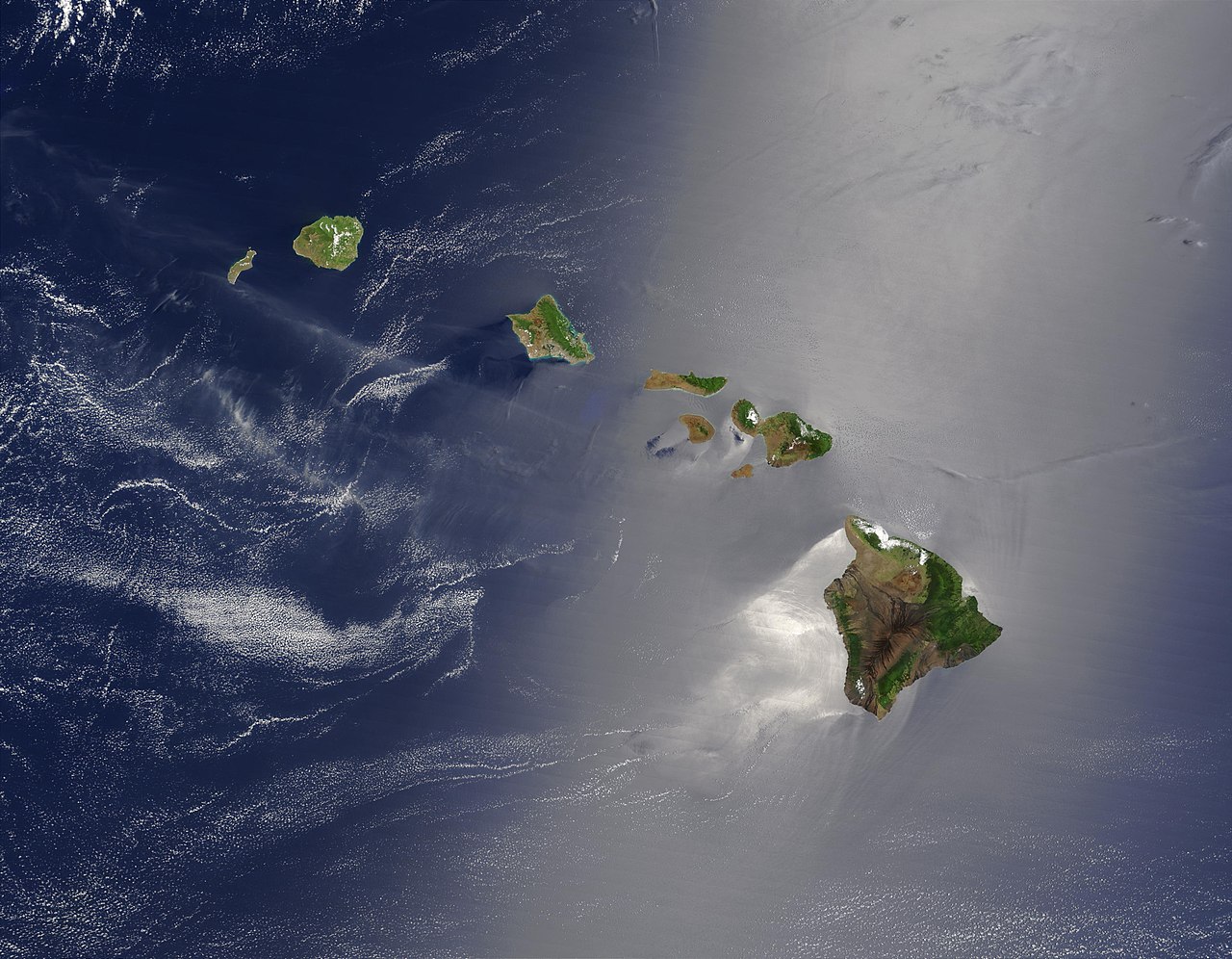
Open a world map and your eye is drawn to the continents, the dense clusters of cities, the busy shipping lanes. But scattered across the vast blue emptiness of the oceans are a handful of specks so far from everything else that reaching them can take longer than flying around the planet. These are the world's most remote islands, places where the nearest neighbour might be a thousand kilometres of open water away. They are home to extraordinary wildlife, stubborn human communities, and stories of isolation that feel almost impossible in an age of satellites and same-day delivery.
What Makes an Island "Remote"?
Remoteness sounds simple, but it can be measured in different ways, and the answer changes depending on what you count. The most common yardstick is the straight-line distance to the nearest other piece of land, inhabited or not. By that measure, the loneliest places are often barren rocks far from any continent. A second, more human measure is the distance to the nearest inhabited land, which is what matters if you actually live there and need supplies, medical care, or simply a neighbour to talk to.
A third factor is accessibility, which is not the same as raw distance. An island a few hundred kilometres offshore but with no airstrip, no safe harbour, and only a couple of ship visits a year can feel far more cut off than one twice as distant but served by regular flights. True remoteness is a blend of geography, transport, and the simple frequency with which the outside world bothers to arrive.
Tristan da Cunha: The Most Remote Inhabited Island
If you want to meet people at the very edge of the map, you go to Tristan da Cunha. This volcanic island in the South Atlantic is widely regarded as the most remote permanently inhabited place on Earth. Its tiny population lives in a single settlement with the wonderfully evocative name Edinburgh of the Seven Seas, huddled on the only stretch of relatively flat land beneath a steep volcanic cone.
The numbers explain the loneliness. The nearest inhabited land is the island of Saint Helena, roughly 2,400 kilometres away, and the nearest continent, South Africa, lies more than 2,700 kilometres distant across open ocean. There is no airport. The only way in or out is by sea, a voyage of several days from Cape Town on one of the small number of ships that call each year. In 1961 a volcanic eruption forced the entire community to evacuate to England, yet within a couple of years most residents chose to sail back home, preferring their windswept isolation to crowded modern life.
Bouvet Island: The Loneliest Spot of All
For sheer distance from anything else, nothing beats Bouvet Island. This uninhabited Norwegian dependency in the South Atlantic is frequently named the most remote island on the planet. It sits far from the Antarctic coast and is thousands of kilometres from the nearest inhabited place, surrounded in every direction by some of the roughest seas on Earth.
Bouvet is not a welcoming destination. Almost the entire island is buried under glacial ice, its coastline is ringed by cliffs, and it lacks any natural harbour, which makes landing dangerous and rare. It hosts no permanent population, only seabirds, seals, and the occasional scientific expedition. For most of human history it was so hard to find that it was repeatedly "lost" and rediscovered, its position misrecorded on charts for decades.
Other Islands at the Edge of the World
Beyond these two record-holders, a small fellowship of islands shares the same extreme isolation. Each tells its own story of how distance shapes life.
- Easter Island (Rapa Nui): Lying roughly 3,500 kilometres off the coast of Chile in the southeastern Pacific, this is one of the most isolated inhabited islands on Earth. That its giant stone moai were carved by Polynesian voyagers who crossed thousands of kilometres of open ocean to settle here is one of the great feats of human navigation.
- Pitcairn Island: Home to only a few dozen people, many descended from the HMS Bounty mutineers and their Tahitian companions, Pitcairn is one of the least populous jurisdictions in the world. It lies far from any major land in the South Pacific and is reachable only by a long sea journey.
- Kerguelen Islands: Nicknamed the "Desolation Islands," this French sub-Antarctic territory sits in the southern Indian Ocean, far from any inhabited land. It has no permanent population, only rotating teams of scientists and support staff.
- Saint Helena: Famous as the place of Napoleon's final exile, this South Atlantic island was chosen precisely because escape was nearly impossible. For centuries it was reachable only by ship until an airport finally opened in the 2010s.
How Isolation Shapes Life and Wildlife
Distance does more than make travel difficult; it transforms the living world. Remote islands act as natural laboratories of evolution. When a few seeds, insects, or birds happen to reach a far-off island, their descendants evolve in isolation, often producing endemic species found nowhere else on Earth. Free from many mainland predators and competitors, island species can develop unusual sizes, lose the ability to fly, or fill ecological roles that elsewhere belong to entirely different animals.
That same isolation makes these ecosystems extraordinarily fragile. A single introduced rat, cat, or goat can devastate ground-nesting birds and native plants that never evolved defences. For the people who live in such places, isolation imposes a fierce self-reliance. Food, fuel, medicine, and building materials must be stockpiled or grown locally, and an emergency can mean waiting days for the next ship. Communities tend to be tight-knit, governed by cooperation, because there is simply no one else nearby to depend on.
Why Remote Islands Still Matter
In a connected world, these far-flung outposts remain quietly important. Their isolation makes them ideal sentinel stations for monitoring the health of the oceans and the atmosphere, far from the pollution and noise of populated regions. Scientists use them to track climate change, study seabird and marine mammal populations, and observe evolution still in progress. They are also living reminders that the planet is not yet fully tamed, that there are places where weather, ocean, and distance still dictate the terms of human life. Exploring how far apart the world's places really are can be surprisingly fun, and you can test your own sense of global geography with our interactive geography games.
Frequently Asked Questions
What is the most remote inhabited island on Earth?
Tristan da Cunha in the South Atlantic is generally considered the most remote permanently inhabited island. Its nearest inhabited neighbour, Saint Helena, lies roughly 2,400 kilometres away, and the nearest continent is more than 2,700 kilometres distant. There is no airport, so the only way to reach it is a multi-day voyage by ship.
What is the most remote island overall?
Bouvet Island, an uninhabited Norwegian territory in the South Atlantic, is widely regarded as the most remote island of any kind. It lies thousands of kilometres from the nearest inhabited land and is almost entirely covered by glacial ice, with no harbour and no permanent residents.
How do people on remote islands get supplies?
Most remote inhabited islands rely on a small number of supply ships each year. Residents stockpile non-perishable goods, fish, and often grow their own vegetables and raise livestock to bridge the long gaps between deliveries. A few islands have gained airstrips in recent decades, but many still depend entirely on the sea.
Why are remote islands important for science?
Their isolation makes them clean, undisturbed places to study evolution, endemic wildlife, and ocean and climate conditions. Species that evolved without mainland predators offer unique insight into how life adapts, and the islands' distance from pollution makes them valuable monitoring posts for environmental change.
Conclusion
The most remote islands on Earth are far more than dots of trivia at the bottom of a map. They are places where geography still rules, where reaching a neighbour can take a week at sea, and where wildlife has evolved into forms found nowhere else. From the tenacious community of Tristan da Cunha to the frozen silence of Bouvet Island, these isolated specks remind us how vast and varied our planet truly remains, and how much of it still lies far beyond the easy reach of the modern world.
