
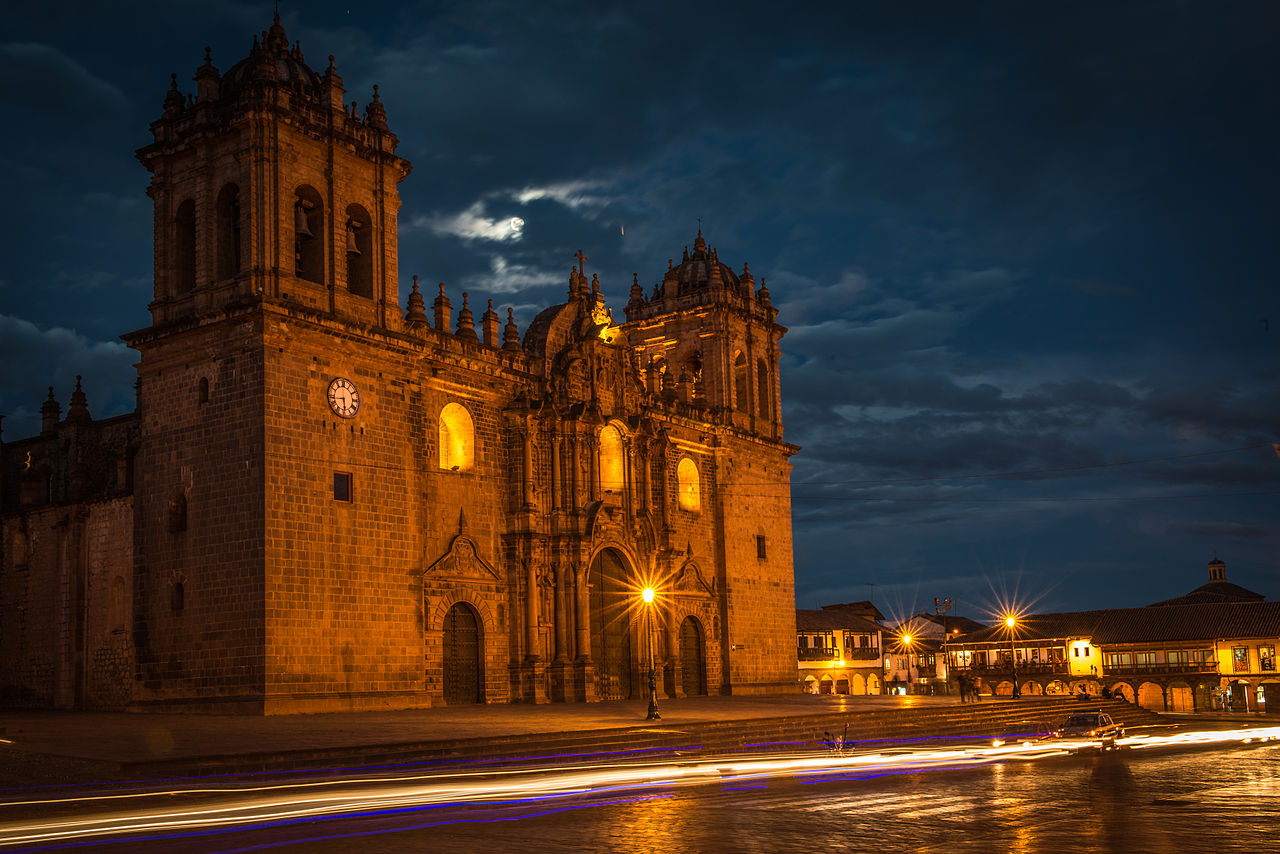
The dominant religion in Peru is Roman Catholic Christianity, practiced by roughly 76% of the population, followed by Protestant and Evangelical churches at about 14%. What makes Peruvian faith distinctive, however, is not the headline percentages but the deep syncretism beneath them — a centuries-old blending of pre-Columbian Andean spirituality with imported Catholic devotion that you can still see in festivals, churches, and mountain offerings today.
The Religious Breakdown of Peru
Peru's religious demographics reflect both its colonial inheritance and the rapid changes of recent decades. Catholicism remains the cultural default, but Protestant movements have surged, and a growing minority claims no formal affiliation. Approximate shares look like this:
- Roman Catholic: ~76% of the population
- Protestant and Evangelical: ~14%
- Unaffiliated or no religion: ~5%
- Indigenous and traditional beliefs: ~2%
- Other faiths (including small Jewish, Muslim, Buddhist and Baha'i communities): ~3%
Even among self-identified Catholics, practice varies widely — from regular Mass attendance in Lima parishes to Andean villagers who treat Catholic saints and pre-Inca spirits as part of one continuous spiritual world. For broader context on the country, see our peru country guide.
How Religion in Peru Developed
Before the Spanish arrived, the Inca state centered on Inti, the sun god, and Pachamama, the earth mother, alongside countless local huacas (sacred places and objects). When Spanish conquistadors reached Peru in the 1530s, the Catholic Church launched an aggressive campaign of conversion, building churches directly on top of Inca temples to assert dominance.
Rather than disappearing, indigenous belief adapted. Communities quietly mapped Andean deities onto Catholic figures — the Virgin Mary onto Pachamama, mountain spirits (apus) onto Christian saints. Colonial Lima became a powerhouse of Catholic devotion, producing the Americas' first canonized saints. In the late twentieth century, liberation theology drew Peruvian clergy toward work with the poor, while the Shining Path insurgency of the 1980s and 1990s targeted religious figures. Since the 1990s, Evangelical Protestantism has expanded sharply, reshaping the religious map.
Syncretism: Where Andean and Catholic Faith Meet
Peru offers some of the clearest examples of religious blending anywhere in the world. In Cusco, the Convent of Santo Domingo sits literally atop the Coricancha, the Inca Temple of the Sun — colonial walls resting on perfectly cut Inca stone. The famous Last Supper painting in Cusco Cathedral by Marcos Zapata shows Jesus and the apostles dining on cuy (guinea pig), the traditional Andean dish standing in for the biblical lamb.
This blending is living practice, not museum history. Andean communities still prepare despachos — careful offerings of coca leaves, seeds, and other items — to Pachamama and the apus, often at elevations above 4,000 meters. In cities, a revival sometimes called Pachamamismo has spread among urban professionals, who commission earth-offering ceremonies (pagos a la tierra) before construction projects.
Festivals, Processions, and Sacred Sites
Religious life in Peru is intensely public and celebratory. The most striking expressions include:
- Senor de los Milagros (Lord of Miracles): Held each October in Lima, this is one of the largest religious processions in the world, drawing millions of purple-clad devotees through the streets.
- Corpus Christi in Cusco: Statues of saints are paraded through the city in elaborate processions that fuse Catholic ritual with Andean pageantry.
- Q'oyllur Rit'i: A pilgrimage to a glacier sanctuary at around 4,700 meters, where dancers in mythical costume blend ice worship with Catholic devotion.
- Inti Raymi: The reenacted Inca Festival of the Sun, staged each June at Sacsayhuaman above Cusco, celebrating the winter solstice.
Key sites reinforce the same theme. The Basilica Cathedral of Lima on the Plaza de Armas holds the tomb of conquistador Francisco Pizarro, while the Church of San Pedro houses relics tied to Saint Martin de Porres. Even ancient ritual landscapes like the Nazca Lines hint at the long spiritual history that predates Christianity in the region.
Notable Facts About Faith in Peru
A few details capture how unusual Peru's religious story is:
- Peru produced Latin America's first Catholic saints: Rose of Lima, canonized in 1671, and Martin de Porres, canonized in 1962.
- The Lord of Miracles procession can draw an estimated three million participants in a single October season.
- Protestant and Evangelical membership has roughly tripled since the early 1990s, growing from a small minority to around 14%.
- Coca leaves, often associated with controversy abroad, remain central to traditional Andean offerings and divination.
Frequently Asked Questions
What is the main religion in Peru?
The main religion is Roman Catholic Christianity, claimed by about 76% of Peruvians. It functions as both a faith and a cultural framework, often woven together with older Andean beliefs.
Is Peru a religious country?
Yes. Religion remains highly visible in Peruvian daily life, from massive urban processions to mountain offerings. While the religiously unaffiliated share is rising, most Peruvians still identify with a Christian tradition and participate in major festivals.
What religion did the Incas practice?
The Inca worshipped Inti, the sun god, and Pachamama, the earth mother, alongside local sacred sites called huacas. Many of these beliefs survived the conquest by blending with Catholic practice.
How much of Peru is Protestant?
Roughly 14% of Peruvians belong to Protestant or Evangelical churches, a figure that has grown rapidly since the 1990s, especially in urban and Amazonian regions.