

Shenandoah National Park, established on December 26, 1935, protects 199,173 acres of the Blue Ridge Mountains in Virginia, stretching 105 miles from Front Royal in the north to Waynesboro in the south. The park is bisected by Skyline Drive, a 105-mile scenic road that follows the mountain crest, offering 75 overlooks with views of the Shenandoah Valley to the west and the Virginia Piedmont to the east.
Introduction
Approximately 1.6 million visitors annually come to drive Skyline Drive, hike 500+ miles of trails (including 101 miles of the Appalachian Trail), and witness one of the most spectacular fall foliage displays in the eastern United States. Shenandoah is also a remarkable story of ecological recovery — much of what is now dense forest was cleared farmland and logged hillsides just 90 years ago, demonstrating nature's resilience when given the chance to heal.
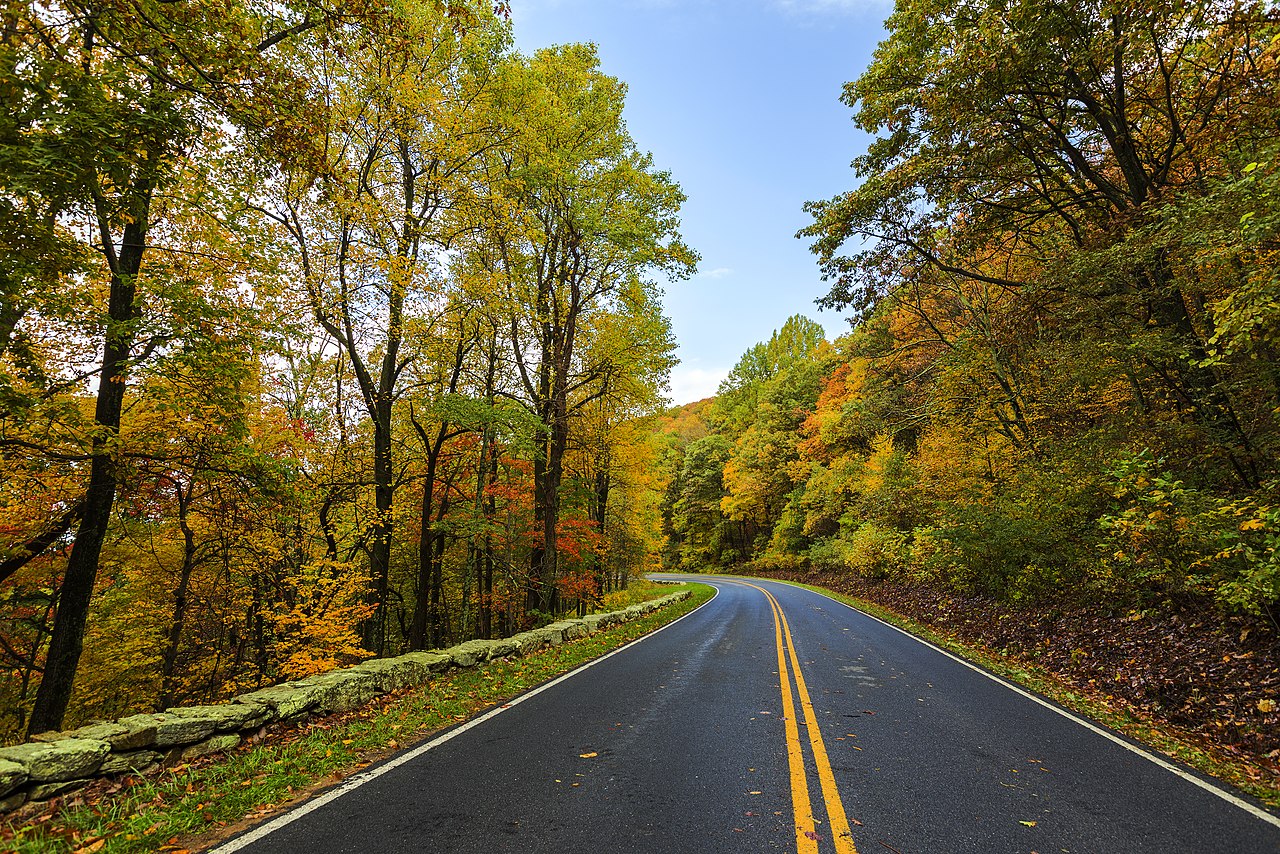
Skyline Drive
- Total Length: 105 miles along the Blue Ridge crest
- Overlooks: 75 scenic viewpoints
- Speed Limit: 35 mph throughout
- Highest Point: 3,680 feet at Skyland
Skyline Drive is one of the most scenic roads in the eastern United States, running the entire length of Shenandoah National Park along the crest of the Blue Ridge Mountains. The road's 75 overlooks offer sweeping views of the Shenandoah Valley, the Virginia Piedmont, and the mountain ridges stretching to the horizon. The drive typically takes about 3 hours without stops, though most visitors spend a full day exploring overlooks, trailheads, and facilities along the way.
The drive is particularly spectacular during fall foliage season (typically mid-October to early November), when the park's hardwood forests blaze in shades of red, orange, gold, and amber. The color change progresses from the highest elevations downward over several weeks, extending the peak viewing window. Spring offers a different palette of wildflowers and emerging green canopy, while summer provides lush green vistas and escape from the heat of the lowlands.
Trails & Waterfalls
- Total Trail Miles: Over 500
- Appalachian Trail: 101 miles through the park
- Waterfalls: Over 25 accessible by trail
- Popular Waterfall Hikes: Dark Hollow Falls, Overall Run Falls, Whiteoak Canyon
Shenandoah's 500+ miles of trails include 101 miles of the Appalachian Trail, which runs through the park roughly parallel to Skyline Drive. The AT within Shenandoah is considered one of the most scenic and accessible sections of the entire 2,190-mile trail, with frequent road crossings making day hikes along it easy. Through-hikers typically spend 4-6 days traversing the park.
The park contains over 25 waterfalls accessible by trail, with Dark Hollow Falls (1.4 miles round trip) being the closest waterfall to a paved road in the park. Overall Run Falls, at 93 feet, is the tallest waterfall in the park. The Whiteoak Canyon Trail passes six waterfalls along a strenuous 9.1-mile loop when combined with the Cedar Run Trail. Old Rag Mountain (9.2 miles round trip), though technically just outside the park's main boundary, is the most popular hike in the region and requires a granite scramble along a knife-edge ridge.
Ecological Recovery
- Pre-Park Condition: Nearly all land had been logged or farmed
- Forest Recovery: 90+ years of regrowth since the 1930s
- Tree Species: Over 100 species of trees
- Wildflower Species: Over 862 plant species documented
Shenandoah is one of the best examples of ecological recovery in the national park system. Before the park was established in 1935, nearly every acre had been logged, farmed, or grazed. Mountainside fields, apple orchards, and chestnut-log cabins dotted the landscape. Over 450 families were displaced to create the park — a controversial chapter in its history. Stone walls, old chimneys, and abandoned apple trees throughout the forest serve as reminders of this human past.
In the nine decades since establishment, the forest has made a remarkable recovery. What was once cleared land is now dense hardwood forest dominated by oak, hickory, tulip poplar, and maple. Over 862 plant species have been documented, including spectacular displays of trillium, mountain laurel, and azalea in spring. The recovery, however, is not complete — the chestnut blight eliminated the American chestnut that once dominated, and current threats include the hemlock woolly adelgid, gypsy moth, and the emerald ash borer.
Wildlife & Visiting
- Black Bears: Estimated 350-600 in the park
- White-Tailed Deer: Abundant throughout
- Bird Species: Over 190 documented
- Best Time to Visit: October for fall foliage; May-June for wildflowers
- Annual Visitors: Approximately 1.6 million
Shenandoah supports a healthy population of 350-600 black bears — one of the densest black bear populations in the eastern United States. Bears are frequently spotted from Skyline Drive, especially in summer when they forage on berries along the road margins. White-tailed deer are abundant, and sightings of wild turkey, barred owls, and the occasional bobcat reward patient visitors. Over 190 bird species have been documented, with warblers particularly abundant during spring migration.
The park offers four developed areas with facilities: Dickey Ridge, Skyland, Big Meadows, and Loft Mountain. Big Meadows, a rare high-elevation meadow at 3,510 feet, is the park's most popular camping and hiking area. The meadow supports plant species typically found much farther north and provides exceptional stargazing and wildlife viewing. Lodging is available at Skyland Resort and Big Meadows Lodge, both with stunning mountain views.
Key Facts
- Skyline Drive runs 105 miles along the Blue Ridge crest with 75 scenic overlooks.
- The park contains 101 miles of the Appalachian Trail and over 500 miles of total trails.
- Nearly all parkland was previously logged or farmed — the forest has recovered in just 90 years.
- Shenandoah supports 350-600 black bears, one of the densest populations in the eastern US.
- Over 25 waterfalls are accessible by trail, with Overall Run Falls being the tallest at 93 feet.
Fun Facts
- Shenandoah was one of the first national parks where land had to be purchased from private owners — Congress required Virginia to buy the land and donate it to the federal government.
- The park's blue haze, which gives the Blue Ridge Mountains their name, is caused by isoprene released by trees — a natural phenomenon that has been intensified by air pollution.
- Over 450 mountain families were relocated to create the park, many of whom had lived in the mountains for generations.
- The park's stone walls, built by Depression-era CCC workers, contain over 10 million hand-placed stones.
Final Thoughts
Shenandoah National Park is a testament to nature's power to heal. Where farms and clear-cuts once scarred the mountainsides, dense forest now harbors black bears, bobcats, and hundreds of species of wildflowers. Skyline Drive offers a window into this recovered wilderness that is accessible to millions, while the park's 500+ miles of trails invite deeper exploration of a landscape that proves it is never too late for renewal.
Test Your Knowledge!
Think you know America's national parks? Try our interactive geography quiz!
Play Geography Games →