
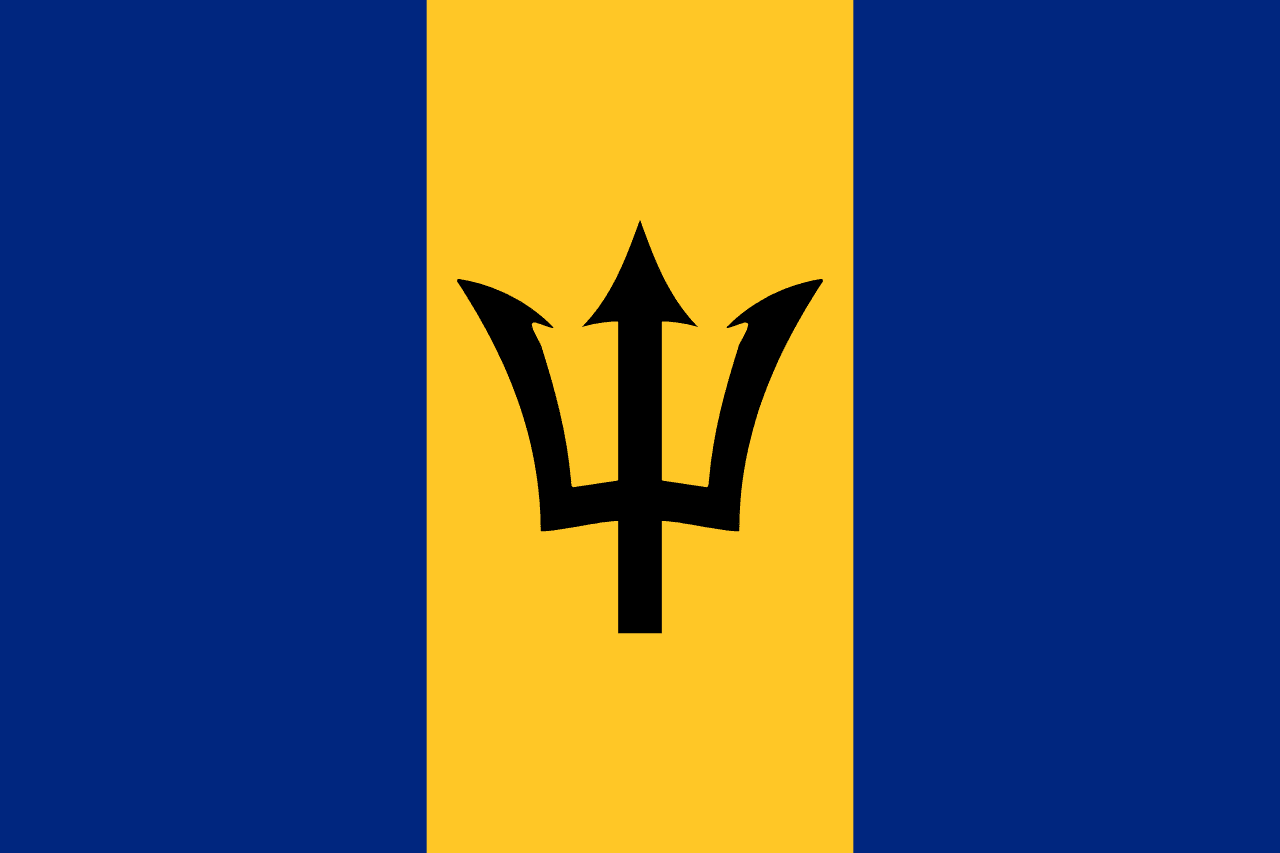
Tucked away on the eastern edge of the Caribbean, Barbados is the island that gave the world rum, raised pop superstar Rihanna, and quietly became one of the planet's newest republics. It is small enough to drive across in under an hour, yet packed with coral cliffs, flying fish, and a 17th-century capital that earned UNESCO World Heritage status. Here are ten facts that reveal why this 166-square-mile nation punches far above its weight.
1. It Sits Alone in the Atlantic, East of the Caribbean Chain
Unlike most of its Caribbean neighbours, which form the volcanic arc of the Lesser Antilles, Barbados sits roughly 100 miles to the east, isolated out in the open Atlantic. This is no accident of geology. While the surrounding islands are volcanic, Barbados is built almost entirely of coral limestone, formed as an ancient coral reef was pushed up out of the sea by colliding tectonic plates over millions of years.
The result is a relatively flat, gently rolling island with no volcano in sight. Its highest point, Mount Hillaby, rises to just 1,115 feet. The porous limestone also acts like a giant natural filter, giving Barbados some of the cleanest, purest groundwater in the world. You can learn more in our country guide.
2. Bridgetown Is a UNESCO World Heritage Site
The capital, Bridgetown, is home to roughly 110,000 people in its greater area and is one of the oldest towns in the English-speaking Caribbean, founded in 1628. In 2011, "Historic Bridgetown and its Garrison" was inscribed as a UNESCO World Heritage Site for its outstanding example of British colonial architecture and town planning.
Wander its streets and you will find National Heroes Square, a statue of Lord Nelson that actually predates London's Nelson's Column by several decades, and the Garrison Savannah, once the largest British military headquarters in the Caribbean. The city's name comes from a simple bridge built by Indigenous peoples over the Careenage, the inlet that still threads through the heart of town.
3. Around 283,000 Bajans Call It Home
Barbados has a population of approximately 283,000, and the people are known as Bajans, a nickname derived from the dialect pronunciation of "Barbadian." It is one of the most densely populated countries in the Americas, yet it consistently ranks among the most developed and stable nations in the region.
Most Bajans are descended from enslaved West Africans brought to work the sugar plantations, woven together with British, Scottish, and other influences. This heritage produced a warm, proud, and famously polite culture. Barbados has a high literacy rate, free education, and a long democratic tradition, with a parliament that has met continuously since 1639, making it one of the oldest in the world.
4. English Is Official, But Bajan Creole Rules the Street
English is the official language, used in government, schools, and business. In everyday life, however, most Barbadians speak Bajan Creole, a lively English-based dialect flavoured with West African grammar and vocabulary.
Bajan is full of expressive turns of phrase. A friend might be a "wunna," good food is "sweet," and "lewwe go" simply means "let us go." The dialect is rarely written down and is passed on by ear, giving conversations on the island a musical, rhythmic quality. For visitors, listening to Bajan banter at a rum shop or fish market is half the fun, and locals are usually delighted to translate.
5. It Is Widely Considered the Birthplace of Rum
Barbados has a serious claim to being the birthplace of rum. Mount Gay Rum, with documented origins dating to 1703, is recognised as the world's oldest commercial rum brand. The island's sugar plantations produced molasses, and somewhere in the 1600s someone discovered that fermenting and distilling it created a potent spirit early colonists colourfully called "kill-devil."
Rum is woven into Bajan life. The island is dotted with hundreds of "rum shops," small neighbourhood bars that double as community hubs where people debate cricket, play dominoes, and share gossip. A visit to a distillery for a tasting is one of the island's signature experiences.
6. The Flying Fish Is a National Symbol
Barbados is nicknamed "the land of the flying fish," and the creature appears on coins, the coat of arms, and countless menus. These remarkable fish use wing-like fins to glide above the waves to escape predators, and they once gathered in such huge numbers in Bajan waters that they became central to the island's identity.
The national dish, cou-cou and flying fish, pairs the delicate fried or steamed fish with a polenta-like mash of cornmeal and okra. Other beloved foods include macaroni pie, savoury fish cakes, and "pudding and souse" on Saturdays. Food here is a social ritual, best enjoyed at a weekend "fish fry" in the village of Oistins, where the whole island seems to gather to eat, dance, and lime.
7. It Became the World's Newest Republic in 2021
For most of its modern history Barbados was a British colony, settled by the English in 1627 and remaining under the crown for over 300 years before gaining independence in 1966. Even then, Queen Elizabeth II remained the ceremonial head of state.
That changed dramatically on 30 November 2021, when Barbados removed the British monarch and became a parliamentary republic, with Dame Sandra Mason as its first president. The ceremony, attended by Prince Charles, marked a powerful moment of self-determination. Pop star Rihanna, a national hero born on the island, was present and declared a National Hero that very night. You can see the island's symbols in our look at the Barbados flag.
8. Harrison's Cave Hides an Underground Wonderland
Beneath the green hills of the island's interior lies Harrison's Cave, a spectacular crystallised limestone cavern carved by flowing water over millennia. Visitors ride an electric tram deep underground past towering stalactites and stalagmites, glittering flowstone formations, cascading waterfalls, and crystal-clear pools.
The cave is one of the Caribbean's most popular natural attractions and a perfect example of how Barbados's coral-limestone foundation shaped its landscape. Above ground, that same porous rock creates dramatic gullies, sea caves, and the rugged Atlantic-battered cliffs of the east coast, a striking contrast to the calm, turquoise beaches of the sheltered west.
9. Cricket Is Practically a Religion
If rum is the national drink, cricket is the national passion. Barbados has produced a staggering number of world-class players for the West Indies team, including the legendary Sir Garfield "Garry" Sobers, widely regarded as one of the greatest all-rounders the sport has ever seen.
The historic Kensington Oval in Bridgetown is a hallowed venue that hosted the 2007 Cricket World Cup final. On match days the island comes alive with music, food stalls, and raucous, joyful crowds. Beyond cricket, Barbados gave the world the energetic music and dance of Crop Over, a summer festival rooted in the end of the sugar-cane harvest that culminates in the dazzling costumes of Grand Kadooment Day.
10. Green Monkeys Roam the Island, Imported Centuries Ago
One of the most surprising residents of Barbados is the green monkey, an agile primate originally from West Africa that arrived on slave ships some 350 years ago. Today thousands of them live wild across the island, often raiding gardens and fruit trees, and they are a star attraction at the Barbados Wildlife Reserve.
The island's nature also includes the endangered hawksbill sea turtle, which nests on Bajan beaches, and the tiny, bold Barbados bullfinch, a bird famous for hopping onto café tables to snatch crumbs. With marine reserves protecting coral reefs and shipwrecks teeming with fish, the island is a haven for snorkellers and divers as well as wildlife lovers.
Frequently Asked Questions
What is the capital of Barbados?
The capital is Bridgetown, located on the southwestern coast. Founded in 1628, it is the island's commercial and political centre, and its historic core, along with the nearby Garrison, is a UNESCO World Heritage Site.
What is Barbados famous for?
Barbados is famous as the birthplace of rum, home of Mount Gay (the world's oldest rum brand), and the birthplace of superstar Rihanna. It is also renowned for its beautiful beaches, world-class cricket, flying fish, and for becoming a republic in 2021.
Why is Barbados called "Little England"?
The nickname stems from its long British colonial history and the way it absorbed English customs, from parliamentary democracy and Anglican churches to afternoon tea and a deep love of cricket. The landscape's rolling green fields also reminded early settlers of the English countryside.
Conclusion
Barbados is proof that a small island can hold an enormous story. From coral cliffs and underground caverns to the world's oldest rum, a UNESCO-listed capital, and a proud new republic shaped by centuries of resilience, this Atlantic outpost rewards every visitor and curious learner. These ten facts barely scratch the surface, so keep exploring and let Barbados surprise you.