
Tucked into the southern reaches of Africa's Great Rift Valley, Malawi is a slender, landlocked nation that punches far above its size when it comes to natural beauty and human warmth. Nicknamed the "Warm Heart of Africa," it wraps itself around one of the planet's most extraordinary lakes and shelters a culture as colorful as its sunsets. Here are ten genuinely fascinating facts that reveal why this often-overlooked country deserves a place on every geography lover's radar.
1. Lake Malawi Covers Roughly a Fifth of the Country
The single most defining feature of Malawi is its namesake lake. Lake Malawi stretches around 580 kilometers from north to south, making it the third-largest lake in Africa and one of the deepest in the world, plunging to depths of about 700 meters. It occupies nearly a fifth of the country's total area, dominating the eastern border. Early explorer David Livingstone called it the "Lake of Stars" because the lanterns of night fishermen and the shimmer of starlight on the water gave the impression of a sky fallen to earth. Beyond its beauty, the lake is a lifeline, providing fish, water, and transport to millions of Malawians who live along its shores.
2. It Has More Fish Species Than Any Lake on Earth
Lake Malawi is a biological marvel. It is home to more species of fish than any other lake in the world, with estimates ranging from 700 to over 1,000 species, the vast majority of which are small, brilliantly colored cichlids found nowhere else. These fish are a textbook example of evolutionary radiation, having diversified from a handful of ancestors into a dazzling array of forms. Locally, many are known collectively as mbuna. The lake's southern end is protected as Lake Malawi National Park, the world's first freshwater national park and a UNESCO World Heritage Site, recognized precisely because of this astonishing aquatic biodiversity.
3. The "Warm Heart of Africa" Earns Its Nickname
Malawi's tourism slogan, the "Warm Heart of Africa," is not just marketing. The country is consistently described by travelers as one of the friendliest on the continent, where strangers greet one another and hospitality is a genuine point of cultural pride. This warmth coexists with one of Africa's denser populations relative to its modest size. With roughly 21 million people packed into a country smaller than many neighbors, communities are tight-knit, and rural village life remains the heartbeat of the nation. You can learn more in our country guide.
4. Lilongwe Became the Capital Only in 1975
Lilongwe is Malawi's capital and largest city, but it is a relatively recent choice. For decades the colonial and early independence capital was Zomba, a leafy town in the south. The seat of government was moved to the more central Lilongwe in 1975 under President Hastings Banda, partly to spur development in the country's interior. Today Lilongwe is split into the historic Old Town and a planned Capital City district full of government offices and embassies. Blantyre, in the south, remains the commercial and financial hub, named after the Scottish birthplace of David Livingstone.
5. Chichewa and English Share Official Status
Malawi is multilingual, but two languages dominate public life. English is an official language, a legacy of British colonial rule, and is used in government, business, and education. Chichewa (also called Chinyanja) is the most widely spoken national language and serves as a unifying tongue across ethnic groups. Other languages such as Chiyao, Chitumbuka, and Chilomwe flourish in different regions. This linguistic blend reflects the country's diverse ethnic makeup, which includes the Chewa, Yao, Tumbuka, Lomwe, and Ngoni peoples, each with their own customs and oral traditions.
6. Nsima Is the Heart of Every Meal
Ask a Malawian what they ate today, and the answer almost always involves nsima. This thick porridge made from finely ground maize flour is the national staple, eaten by hand and rolled into small balls used to scoop up accompanying dishes. It is typically served with ndiwo, a relish that might be leafy greens, beans, groundnuts, or fish from the lake. Chambo, a type of tilapia native to Lake Malawi, is especially prized and considered a national delicacy. Meals are communal, often shared from common bowls, reinforcing the strong sense of family and community that defines daily life.
7. It Was Once Called Nyasaland
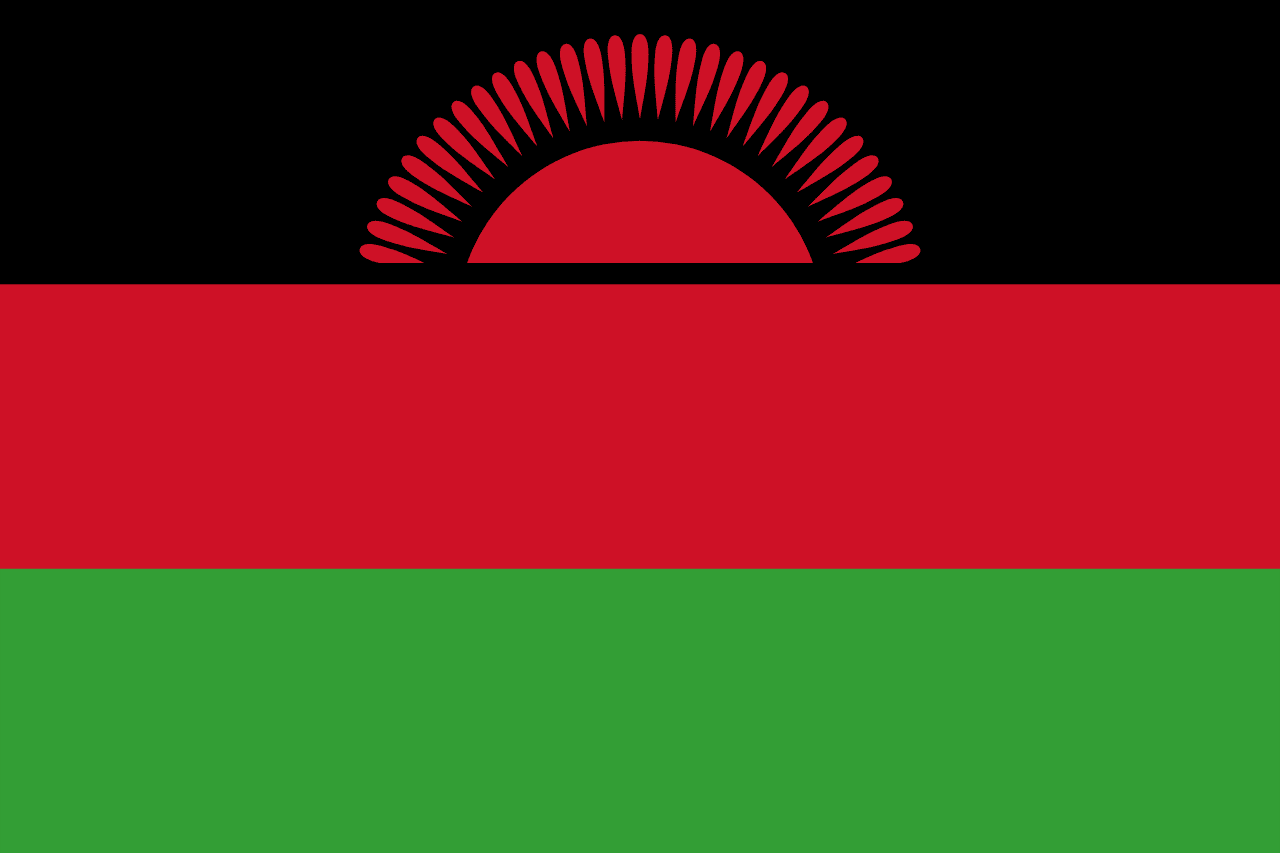
Before independence, Malawi was a British protectorate known as Nyasaland, a name derived from "Nyasa," a local word for lake. From 1953 to 1963 it was part of the Federation of Rhodesia and Nyasaland, an arrangement opposed by many Malawians. Independence arrived in 1964 under Hastings Banda, who renamed the country Malawi and ruled as an authoritarian one-party president for three decades. The country transitioned to multiparty democracy in 1994, and today peaceful elections and a free press are sources of national pride. This deep history is woven into the symbolism of the national flag, whose rising sun represents the dawn of hope and freedom across the African continent.
8. Agriculture Drives the Economy, and Tobacco Is King
Malawi is one of the world's most agriculture-dependent economies, with farming employing the large majority of the workforce. Tobacco has long been the country's leading export and a major source of foreign exchange, supplemented by tea, sugar, coffee, and cotton. Malawi is in fact one of the largest producers of burley tobacco in the world. The flip side is vulnerability: heavy reliance on rain-fed crops makes the economy sensitive to droughts and floods. Efforts to diversify into tourism, mining, and other crops are ongoing, but the rhythm of the planting and harvest seasons still governs life for most families.
9. The Highlands Hide Dramatic Plateaus and Peaks
Malawi is far more than its lake. The country rises into spectacular highlands, including the Nyika Plateau in the north, a rolling expanse of montane grassland famous for its wildflowers, antelope, and roaming zebra. In the south, the Zomba Plateau and the towering Mulanje Massif dominate the landscape. Mount Mulanje, often called the "Island in the Sky," soars to Sapitwa Peak at around 3,000 meters, the highest point in Central Africa, and is shrouded in local legend as the home of spirits. These cool, misty highlands offer a startling contrast to the warm lakeshore below and draw hikers from across the region.
10. Conservation Comebacks and Big-Game Translocations
Malawi has become a quiet conservation success story. Decades of poaching had emptied many parks, but ambitious restoration projects have reversed the decline. Majete Wildlife Reserve was restocked from near-empty to a thriving "Big Five" destination, complete with lions, elephants, and rhinos. In one of the largest wildlife translocations ever attempted, hundreds of elephants were moved between Malawian parks such as Liwonde and Nkhotakota to relieve pressure and repopulate depleted areas. These efforts have transformed the country into an increasingly attractive safari destination, all within a few hours' drive of the iconic lake.
Frequently Asked Questions
What is the capital of Malawi?
The capital of Malawi is Lilongwe, which became the seat of government in 1975, replacing the former capital of Zomba. Lilongwe is also the country's largest city, while Blantyre remains the main commercial center.
What is Malawi most famous for?
Malawi is most famous for Lake Malawi, an enormous, crystal-clear lake home to more fish species than any other lake on Earth. The country is also celebrated for its friendly people, earning it the affectionate nickname the "Warm Heart of Africa."
Why is Lake Malawi called the "Lake of Stars"?
The explorer David Livingstone coined the phrase after seeing the lanterns of fishermen scattered across the dark water at night, which looked like stars reflected on the surface. The shimmering effect of starlight on the vast lake reinforced the magical name, which is still widely used today.
Conclusion
From the glittering depths of its star-lit lake to the misty heights of Mount Mulanje, Malawi blends extraordinary natural diversity with a culture defined by warmth and resilience. It is a country where a single lake can hold a thousand species of fish, where ancient legends cling to mountain peaks, and where strangers are welcomed like old friends. These ten facts only begin to capture its charm, so let your curiosity carry you further into the Warm Heart of Africa.