
Few countries pack as much variety into a single passport stamp as Morocco. In one journey you can surf Atlantic waves at dawn, wander a labyrinthine medieval city by afternoon, and watch the sun set over Saharan dunes the same evening. Sitting at the meeting point of Africa, Europe, and the Arab world, this kingdom of around 38.8 million people has spent over a thousand years blending influences into something entirely its own.
1. Africa and Europe Almost Touch Here
Morocco occupies the far northwestern corner of Africa, separated from Spain by the Strait of Gibraltar, which narrows to just about 14 kilometres at its tightest point. On a clear day you can stand on the Moroccan coast and see the mountains of Europe across the water. This crossroads location has shaped the country's entire identity, making it a bridge between continents for traders, armies, and pilgrims for millennia. Morocco is also one of only three countries with coastlines on both the Atlantic Ocean and the Mediterranean Sea. To dive deeper into its physical makeup, see our full country guide, which maps out how geography has steered Moroccan history.
2. Rabat Is the Capital, but Casablanca Steals the Spotlight
While the political heart of Morocco beats in Rabat, the elegant coastal capital that houses the royal palace, parliament, and foreign embassies, the country's largest and most famous city is Casablanca. Rabat is calm, green, and administrative; Casablanca is a sprawling economic engine, home to the towering Hassan II Mosque, whose minaret rises some 210 metres and ranks among the tallest religious structures on Earth. Part of the mosque is built out over the Atlantic, and its floor includes glass sections through which worshippers can glimpse the sea. The two cities together capture Morocco's split personality: dignified statecraft beside roaring commerce.
3. Four Mountain Ranges and a Desert
Morocco's landscape is astonishingly diverse for a single country. The Atlas Mountains slice diagonally across it in several ranges, with Toubkal in the High Atlas reaching 4,167 metres, the highest peak in North Africa, capped with snow in winter. Beyond the mountains the land falls away into the Sahara, where wind-sculpted dunes near Merzouga and Zagora can climb hundreds of metres. Between the peaks and the sands lie fertile river valleys, palm-filled oases, cedar forests, and a long string of beaches. This range of terrain means a Moroccan can ski in the morning and reach desert sands within the same day.
4. A Land of Three Languages (and More)
Morocco recognises two official languages: Arabic and Amazigh (Berber), the latter formally constitutionalised in 2011 after centuries as the tongue of the country's indigenous peoples. Most Moroccans speak Darija, a distinctive Moroccan Arabic dialect laced with Berber, French, and Spanish words. French remains widely used in business, government, and higher education, a legacy of the colonial era, while Spanish lingers in the north. This layered linguistic landscape means menus, road signs, and conversations often flow between scripts and tongues in a single breath, reflecting the nation's tangled and cosmopolitan history.
5. The Berbers Were Here First
Long before Arabs arrived in the 7th century, North Africa was home to the Amazigh, or Berber, peoples, whose roots in the region stretch back thousands of years. The word "Amazigh" means "free people," and Berber communities still thrive across the Atlas Mountains and southern valleys, maintaining their own languages, music, carpets, and customs. Berber dynasties such as the Almoravids and Almohads once ruled empires that stretched from Spain to West Africa. Today their distinctive culture, from intricate silver jewellery to the flat-bread and tagine traditions, remains woven into everyday Moroccan life and is a source of growing national pride.
6. Home to the World's Oldest University
In the ancient city of Fez stands the University of al-Qarawiyyin, founded in 859 CE by Fatima al-Fihri, a woman of remarkable vision. It is recognised by UNESCO and the Guinness Book of Records as the oldest existing, continually operating institution of higher learning in the world, older than Bologna or Oxford. The associated library still preserves manuscripts more than a thousand years old. Fez itself is home to one of the largest car-free urban zones on the planet, a medieval medina of some 9,000 winding alleys where goods still move by donkey and craftsmen work in centuries-old tanneries and workshops.
7. Mint Tea, Tagine, and the Ritual of Hospitality
Moroccan cuisine is one of the most celebrated in the world, built on slow-cooked tagines, fluffy couscous traditionally served on Fridays, and pastilla, a sweet-savoury pie dusted with cinnamon and sugar. Spices like saffron, cumin, and ras el hanout perfume the kitchen. But the true national drink is sweet mint tea, poured theatrically from a height to create a frothy top. Offering tea to guests is a sacred ritual of hospitality; refusing it can be seen as impolite. Meals are often communal, eaten from a shared dish with bread instead of cutlery, turning every dinner into a social occasion.
8. The Blue City and Other Painted Towns
Tucked into the Rif Mountains, the town of Chefchaouen is famous worldwide for its buildings washed in dozens of shades of blue, from powder to deep indigo. The origins of the colour are debated, attributed variously to Jewish refugees, cooling effects, or insect repellent, but the result is one of the most photographed streetscapes on Earth. Morocco's palette extends beyond blue: the "red city" of Marrakech glows in earthy ochre, while coastal Essaouira gleams in blue and white. These colour-coded cities give Morocco an instantly recognisable visual character that has made it a magnet for photographers, artists, and filmmakers alike.
9. Barbary Macaques and Argan-Climbing Goats
Morocco's wildlife is as surprising as its scenery. The cedar forests of the Middle Atlas shelter Barbary macaques, the only macaque species found outside Asia and the last wild monkeys in Africa north of the Sahara. In the southwest, the famous tree-climbing goats of the argan groves scramble high into branches to nibble the fruit, a sight that draws curious travellers. The country also hosts flamingos, desert foxes, and migrating birds funnelling between Europe and Africa. Conservation projects work to protect dwindling cedar forests and the endangered creatures that depend on Morocco's strikingly varied habitats.
10. A Flag Rich With Meaning
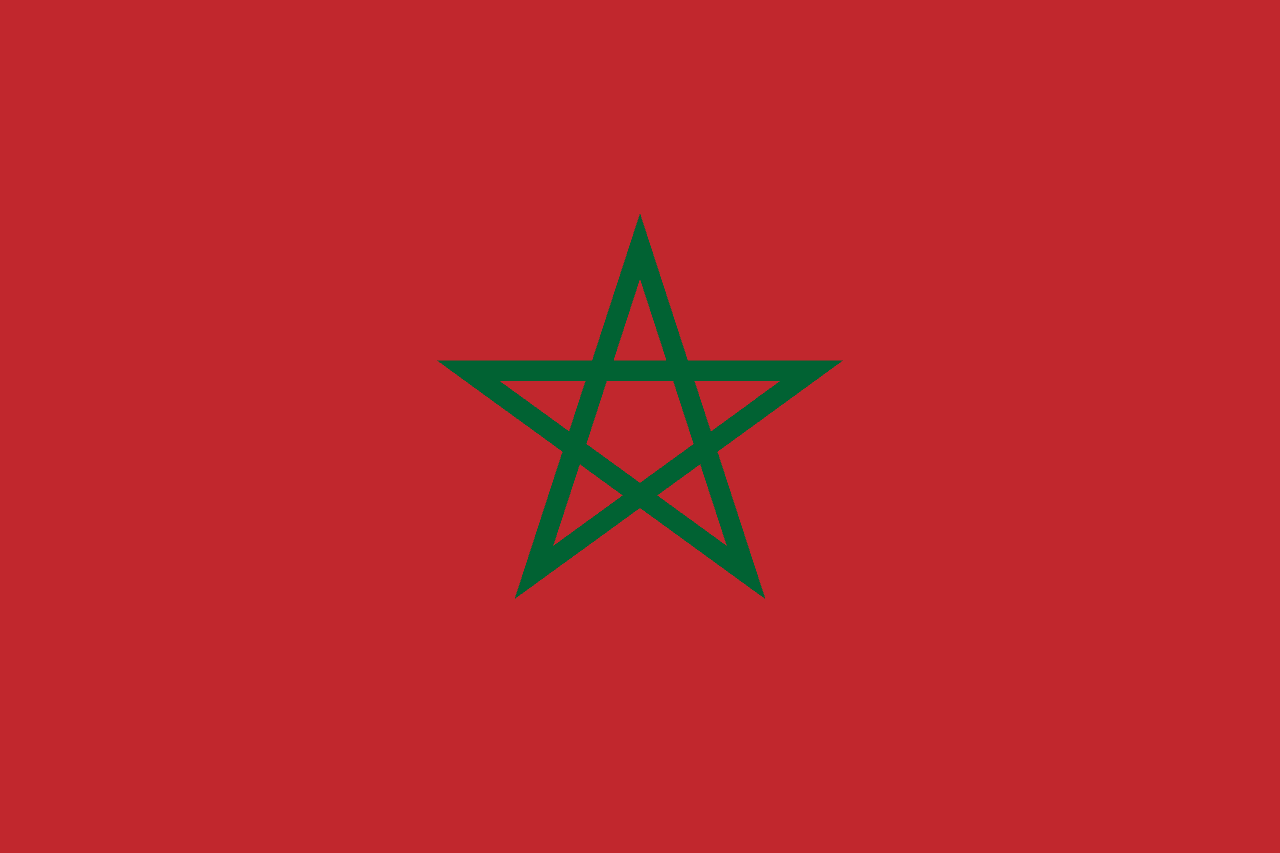
Morocco's striking red banner carries a green five-pointed star at its centre, known as the Seal of Solomon. Red has long been associated with the ruling Alaouite dynasty and Moroccan sharifs, while the green star, added in 1915, symbolises hope, life, and the five pillars of Islam. The design is one of the most distinctive in the Arab world, instantly recognisable in international sport, where Morocco made history in 2022 by becoming the first African and first Arab nation to reach a FIFA World Cup semi-final. You can learn more about its symbolism in our dedicated guide to the Moroccan flag.
Frequently Asked Questions
What is the capital of Morocco?
The capital of Morocco is Rabat, located on the Atlantic coast. It is the seat of the monarchy and government, home to the royal palace, parliament, and embassies, though Casablanca is the country's largest city and economic hub.
What is Morocco most famous for?
Morocco is famous for its imperial cities like Marrakech and Fez, the Sahara Desert and Atlas Mountains, bustling souks and medinas, mint tea and tagine cuisine, vibrant handicrafts, and the photogenic blue town of Chefchaouen.
Can you really ski and visit the desert in the same trip?
Yes. Morocco has ski resorts such as Oukaimeden in the High Atlas, where snow falls in winter, while the Sahara's dunes lie a few hours away. This dramatic contrast is one of the country's most remarkable geographic features.
Conclusion
Morocco is a country that refuses to be summed up in a single image. It is mountains and desert, ancient universities and modern skyscrapers, Berber heritage and Arab influence, all stitched together by warm hospitality and a love of colour, food, and storytelling. These ten facts only open the door, behind every alley in Fez and every dune near Merzouga lies another story waiting to be discovered.