
Scatter more than seven thousand islands across a turquoise stretch of the western Pacific, season them with three centuries of Spanish rule, half a century of American influence, and a deep Malay heart, and you get the Philippines, a nation that defies any single description. It is a place where karaoke is practically a national sport, where jeepneys roar down the streets in chrome and rainbow paint, and where the world's smallest primate clings to forest branches. Here are ten facts that capture just how singular this archipelago really is.
1. An Archipelago of More Than 7,600 Islands
The Philippines is made up of over 7,600 islands, sprawled across the South China Sea, the Philippine Sea, and the Celebes Sea. Only around 2,000 of them are inhabited, and nearly a thousand remain officially unnamed. The country is conventionally divided into three island groups: Luzon in the north, the Visayas in the center, and Mindanao in the south. With more than 36,000 kilometers of coastline, the Philippines has one of the longest discontinuous coastlines on Earth, longer than that of the United States. This watery geography shapes everything from the cuisine to the economy, and it means that ferries and inter-island flights are as ordinary to Filipinos as commuter trains are elsewhere.
2. Manila Sits Inside the World's Densest City
Manila is the capital, but the true urban giant is Metro Manila, a sprawling region of 16 cities that together hold over 13 million people. The City of Manila proper is one of the most densely populated cities on the planet, packing tens of thousands of residents into every square kilometer. Within it lies Intramuros, the walled colonial core built by the Spanish in the 16th century, complete with cobblestone streets, Fort Santiago, and the baroque San Agustin Church. Nearby Quezon City, not Manila, is actually the most populous individual city in the metro. The result is a layered, chaotic, endlessly energetic capital where centuries of history press up against gleaming skyscrapers and tangled traffic.
3. Around 117 Million People and Millions More Abroad
With roughly 117 million people, the Philippines is one of the most populous countries in the world and among the youngest in Asia, with a median age in the mid-twenties. But the Filipino story does not stop at the water's edge. More than 10 million Filipinos live and work overseas, from nurses in the United States and Britain to seafarers crewing a large share of the world's merchant ships. These Overseas Filipino Workers, affectionately called OFWs and hailed at home as bagong bayani ("modern heroes"), send back tens of billions of dollars in remittances each year, a flow of money that helps power the entire national economy.
4. Over 180 Languages Are Spoken
Filipino, based largely on Tagalog, and English are the official languages, and English is widely spoken in business, government, and schools, making the Philippines one of the largest English-speaking nations on Earth. Yet beneath those two official tongues lies astonishing diversity: more than 180 living languages are spoken across the islands, including Cebuano, Ilocano, Hiligaynon, Bikol, and Waray. Everyday Filipino speech often blends Tagalog and English into a playful hybrid known as "Taglish." Spanish loanwords linger everywhere, from mesa (table) to kumusta (how are you, from "como esta"), a lasting echo of colonial centuries.
5. Three Hundred Years of Spain, Fifty of America
Ferdinand Magellan landed in 1521, and Spain went on to rule the islands for more than three centuries, naming them after King Philip II and converting most of the population to Catholicism. In 1898, after the Spanish-American War, the islands passed to the United States, which introduced a public school system, the English language, and eventually a path to independence granted in 1946. This double colonial inheritance is visible everywhere, in surnames, fiestas, basketball courts, and the world's longest Christmas season. To dig deeper into this layered past, see our country guide.
6. The Catholic Heart of Asia
The Philippines is the largest predominantly Christian nation in Asia, with around 80 percent of the population identifying as Roman Catholic. Faith here is loud, public, and joyful. The Christmas season unofficially begins in September, ushered in by the so-called "ber months," and stretches well into January. The annual Feast of the Black Nazarene in Manila draws millions of devotees into the streets, while in the south the island of Mindanao is home to a significant Muslim population whose history predates Spanish arrival. This religious blend, layered over indigenous beliefs, gives Filipino culture its distinctive warmth and ceremony.
7. Adobo, Lechon, and the Sour Soul of Sinigang
Filipino food is a delicious crossroads of Malay, Spanish, Chinese, and American influences. Adobo, meat braised in vinegar, soy sauce, garlic, and bay leaf, is the unofficial national dish, with countless regional variations. Lechon, a whole spit-roasted pig with shatteringly crisp skin, is the centerpiece of any serious celebration. Sinigang delivers a uniquely Filipino sourness from tamarind, while halo-halo, a riot of shaved ice, sweet beans, fruit, jelly, and ice cream, cools the tropical heat. Street stalls tempt the brave with balut, a fertilized duck egg, proof that Filipino cuisine rewards the adventurous palate.
8. Home to the Tarsier and the Mighty Philippine Eagle
Isolation has made the Philippines a biodiversity hotspot brimming with creatures found nowhere else. The Philippine tarsier, one of the world's smallest primates, fits in the palm of a hand and has enormous unblinking eyes adapted for nocturnal hunting. Soaring above the forests is the critically endangered Philippine eagle, one of the largest and most powerful eagles on Earth and the national bird. Offshore, the Tubbataha Reefs and the waters around the islands form part of the Coral Triangle, the most biodiverse marine region on the planet. From whale sharks off Donsol to the tiny goby, these waters teem with life.
9. Rice Terraces Carved by Hand Over 2,000 Years
High in the mountains of Luzon, the Banaue and Ifugao Rice Terraces climb the slopes like enormous green staircases. Carved by the Ifugao people roughly two thousand years ago using only hand tools and an ingenious irrigation system fed by rainforest above, they are sometimes called the "Eighth Wonder of the World." Recognized by UNESCO, they remain working farms tended by descendants of their builders. Elsewhere, the Chocolate Hills of Bohol present another natural marvel: more than 1,200 near-symmetrical mounds that turn cocoa-brown in the dry season, scattered across the landscape like giant chocolate drops.
10. The Texting and Karaoke Capital of the World
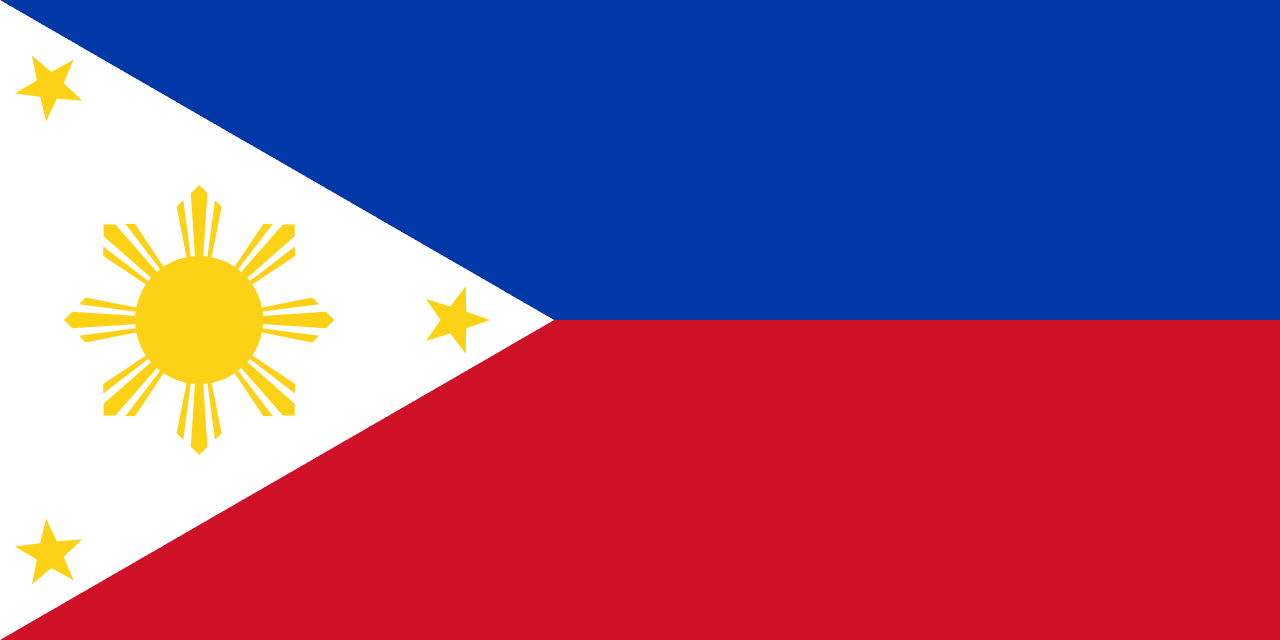
Filipinos are famously social, and that spirit shows up in surprising statistics. In the early 2000s the country earned the nickname "texting capital of the world" for the sheer volume of SMS messages sent, and today Filipinos consistently rank among the heaviest users of social media on the planet. Equally beloved is karaoke: the singing machine is a fixture in homes, bars, and gatherings nationwide. Basketball, introduced during the American era, is a near-religion, played on makeshift hoops in every barangay. The national flag, meanwhile, is unique in that it can be flown upside down to signal a state of war, a detail you can explore in our piece on the flag.
Frequently Asked Questions
What is the capital of the Philippines?
The capital is Manila, located on the island of Luzon along the shores of Manila Bay. It anchors the much larger Metro Manila region, a cluster of 16 cities and one municipality that together form the political, cultural, and economic heart of the nation. The historic walled district of Intramuros within Manila preserves the country's Spanish colonial heritage.
What is the Philippines famous for?
The Philippines is famous for its dazzling beaches and islands such as Palawan and Boracay, its warm and hospitable people, and its world-renowned cuisine, including adobo and lechon. It is also known as a major source of overseas workers, seafarers, and nurses, and for being one of the largest English-speaking and Catholic nations in Asia.
Why is the Philippines called the texting capital of the world?
In the early 2000s, Filipinos sent more text messages per day than people in any other country, driven by affordable prepaid SIM cards and a deeply social culture. That mobile-first enthusiasm has carried into the smartphone era, where Filipinos remain among the world's most active users of social media and messaging apps.
Conclusion
From hand-carved rice terraces and palm-sized primates to a Christmas season that lasts a third of the year, the Philippines is a country of joyful contradictions and genuine wonders. Its 7,600 islands hold centuries of history, hundreds of languages, and a people whose hospitality is legendary. These ten facts are only an invitation, the islands always have one more surprise waiting just over the horizon.