
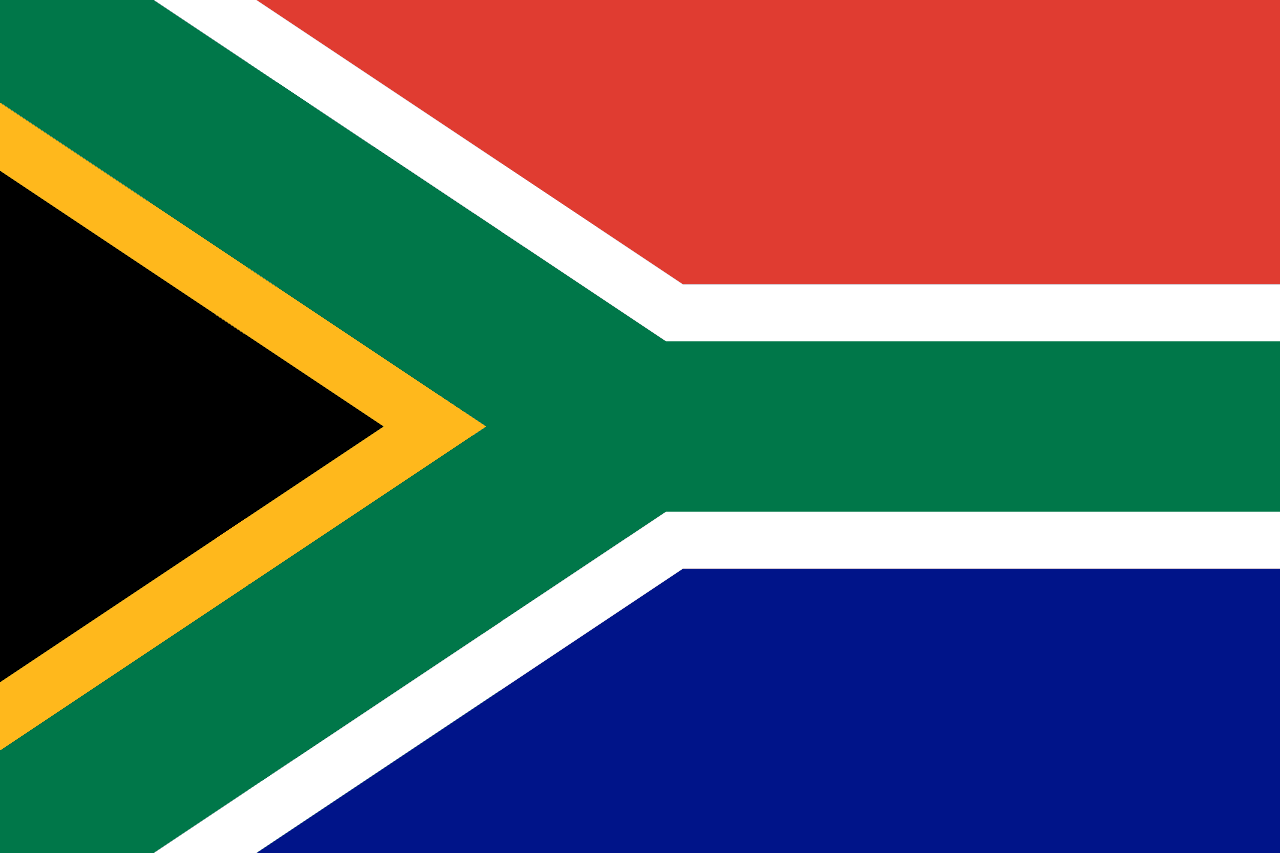
South Africa sits at the very tip of a continent, a place where two oceans collide, penguins waddle on white-sand beaches, and three different cities share the job of being the capital. It is a nation forged by extraordinary upheaval and remarkable reconciliation, packed into a land of mountains, deserts, vineyards, and savanna. These ten facts go well beyond the textbook to reveal why South Africa is one of the most endlessly surprising countries on Earth.
1. It Has Three Capital Cities — Not One
Most countries make do with a single capital. South Africa runs on three. Pretoria is the administrative capital, home to the president and the executive branch. Cape Town hosts Parliament and serves as the legislative capital, while Bloemfontein is the judicial capital, seat of the Supreme Court of Appeal. This unusual arrangement was a deliberate compromise struck in 1910, when four formerly separate colonies and republics merged into the Union of South Africa. To keep the peace, each region was handed a slice of national power. The result is a government literally spread across the map — and a favorite trivia trap for geography quizzes everywhere. Learn more in our country guide.
2. Eleven (Now Twelve) Official Languages
South Africa recognises more official languages than almost any other nation. The original eleven — Zulu, Xhosa, Afrikaans, English, Pedi, Tswana, Sotho, Tsonga, Swati, Venda, and Ndebele — reflect the country's deep ethnic diversity. In 2023, South African Sign Language was added as the twelfth, a world-first acknowledgement of the Deaf community at constitutional level. Zulu is the most widely spoken first language, while English dominates business, media, and government despite being a mother tongue for only a small minority. Walk through Johannesburg and you may hear several languages blended into a single sentence — a linguistic agility that locals wear with pride and that gives the country its famous "Rainbow Nation" character.
3. The Birthplace of Humankind
Some of the oldest evidence of human ancestry on the planet lies just outside Johannesburg. The Cradle of Humankind, a UNESCO World Heritage Site, has yielded an astonishing trove of hominin fossils, including the famous "Mrs Ples" and "Little Foot" skeletons, both millions of years old. In 2015, scientists announced an entirely new species, Homo naledi, discovered in the nearby Rising Star cave system. These finds have reshaped our understanding of how and where humans evolved. For a country often described in headlines about its recent politics, South Africa's true story stretches back further than almost anywhere else inhabited by our species.
4. From Apartheid to Democracy in 1994
For nearly five decades, South Africa was governed by apartheid, a brutal system of legalised racial segregation that stripped the Black majority of basic rights. The struggle against it produced one of the 20th century's defining moral icons: Nelson Mandela, who spent 27 years in prison before walking free in 1990. In 1994, South Africa held its first fully democratic election, and Mandela became the nation's first Black president. The peaceful transition — guided by a Truth and Reconciliation Commission rather than revenge — stunned the world and remains a landmark in modern history. Freedom Day, celebrated every April 27th, marks that first vote.
5. The World's Gold and Diamond Powerhouse
South Africa built much of its modern wealth underground. The discovery of diamonds at Kimberley in 1867 and gold in the Witwatersrand in 1886 transformed a rural backwater into an industrial giant practically overnight, drawing fortune-seekers from across the globe. For most of the 20th century, the country was the world's largest gold producer, and its mines remain among the deepest ever dug, plunging nearly four kilometres into the earth. Today South Africa also leads global production of platinum and chromium. The legacy is double-edged: immense mineral riches funded great cities like Johannesburg, but mining also entrenched the migrant-labour systems that shaped the nation's social fabric for generations.
6. Home to the Big Five and World-Class Safaris
South Africa is one of the best places on Earth to see the "Big Five" — lion, leopard, rhinoceros, elephant, and African buffalo. The term originally came from hunters describing the most dangerous animals to pursue on foot; today it draws photographers instead. Kruger National Park, roughly the size of a small country itself, is the flagship reserve, hosting thousands of species across its vast bushveld. The nation is also a global leader in rhino conservation, though poaching remains a fierce battle. Beyond the famous five, South Africa shelters cheetahs, wild dogs, hippos, and an extraordinary variety of birds, making it a bucket-list destination for wildlife lovers worldwide.
7. One of the World's Botanical Wonders
The Cape region is so botanically rich it forms its own plant kingdom — the smallest of the world's six floral kingdoms, yet astonishingly dense in unique species. The fynbos shrubland surrounding Cape Town contains thousands of plants found nowhere else, including the protea, South Africa's national flower. Table Mountain alone hosts more plant species than the entire United Kingdom. This makes the Cape Floristic Region a global biodiversity hotspot and a UNESCO World Heritage Site. It is a striking reminder that South Africa's natural treasures are not only the charismatic megafauna of the savanna but also the delicate, fire-adapted flowers clinging to its mountainsides.
8. A Braai Is a National Institution
Food in South Africa is communal, smoky, and joyful. The braai — far more than a simple barbecue — is a cultural ritual, with its own national holiday on September 24th. Friends and family gather around the coals to grill boerewors (a spiced farmer's sausage), steaks, and lamb chops for hours. Other beloved dishes include bobotie, a fragrant baked mince topped with savoury custard reflecting Cape Malay influences, and biltong, air-dried spiced meat that puts ordinary jerky to shame. Street-food fans queue for bunny chow, a hollowed-out loaf of bread filled with curry, born in the Indian communities of Durban. Every plate tells the story of the country's many cultures colliding.
9. Where Two Oceans Meet
South Africa occupies the southern tip of Africa, where the cold Atlantic and warm Indian oceans meet near the rocky promontory of Cape Agulhas — the continent's true southernmost point. The more famous Cape of Good Hope, just south of Cape Town, was long feared by sailors for its violent storms and was originally named the "Cape of Storms." The landscape ranges wildly: the arid Karoo and Kalahari in the interior, the dramatic Drakensberg mountains rising over 3,000 metres, lush winelands around Stellenbosch, and golden coastlines stretching for thousands of kilometres. Few countries pack such geographic variety into a single border. Even the national flag, adopted in 1994, reflects this convergence of peoples and paths.
10. Penguins, Sunshine, and Sporting Glory
It surprises many visitors that South Africa is home to a colony of African penguins, who sunbathe on Boulders Beach near Cape Town in full view of swimmers. The country is equally famous for its sporting passion. South Africa hosted the 2010 FIFA World Cup — the first held on African soil — and the buzzing vuvuzela became its unforgettable soundtrack. The national rugby team, the Springboks, are multiple-time World Cup champions, and their 1995 victory, embraced by Mandela in a Springbok jersey, became a powerful symbol of a healing nation. Cricket, too, commands huge followings, uniting fans across every community in the Rainbow Nation.
Frequently Asked Questions
What is the capital of South Africa?
South Africa famously has three capitals. Pretoria is the administrative capital and seat of the president, Cape Town is the legislative capital where Parliament sits, and Bloemfontein is the judicial capital. This split dates back to the 1910 union of four separate territories.
What is South Africa best known for?
South Africa is best known for its incredible wildlife and safaris, the end of apartheid and Nelson Mandela, its gold and diamond mining heritage, Table Mountain and Cape Town, and its remarkable cultural and linguistic diversity as the "Rainbow Nation."
Why is South Africa called the Rainbow Nation?
The phrase was coined by Archbishop Desmond Tutu to describe the country's emergence from apartheid as a unified, multi-ethnic democracy. With twelve official languages and a blend of African, European, and Asian heritage, it celebrates unity in extraordinary diversity.
Conclusion
South Africa is a country of dazzling contrasts — ancient fossils and cutting-edge cities, painful history and inspiring reconciliation, desert plains and ocean cliffs, lions and penguins. These ten facts only begin to capture its richness. Whether you are drawn by its wildlife, its cuisine, or its remarkable journey to democracy, South Africa rewards every traveller and learner who takes the time to explore it.