
Few flags are as instantly recognizable as the Union Jack. Its busy lattice of red, white, and blue crosses adorns everything from royal balconies and Olympic podiums to electric guitars and London souvenir mugs. Yet behind that familiar tangle of lines lies a carefully engineered piece of political diplomacy: a banner stitched together over two centuries to represent the union of separate nations under a single crown. To read the flag of the United Kingdom is to read a compressed history of the British Isles, with every diagonal and offset telling a story of partnership, compromise, and identity.
What the Crosses Actually Mean
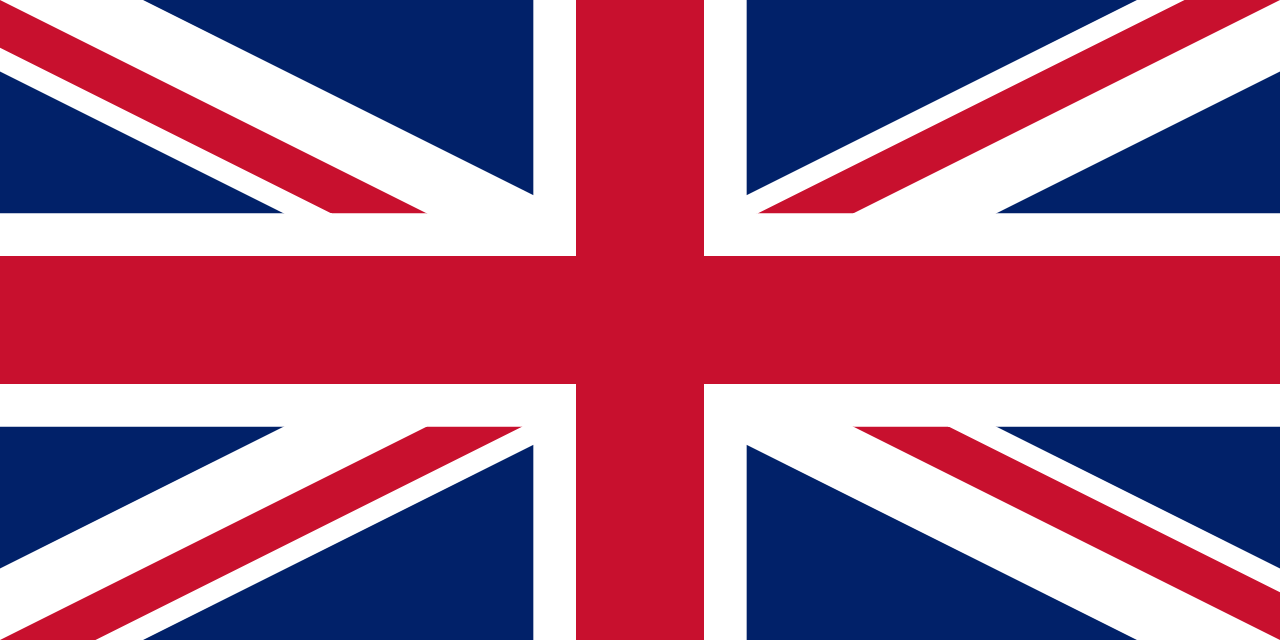
The Union Jack is fundamentally a layering of three older flags, each one the emblem of a patron saint. The upright red cross belongs to St George, patron of England, and sits in the center on a white border. The white diagonal cross, or saltire, is that of St Andrew, patron of Scotland, set against the blue field that gives the flag its background. The red diagonal saltire belongs to St Patrick, associated with Ireland. Together these three crosses symbolize the political union of England, Scotland, and Ireland, with the modern flag now representing England, Scotland, and Northern Ireland.
The colors themselves, red, white, and blue, carry no single fixed meaning in the way some national flags assign abstract virtues to their hues. Instead they are inherited directly from the constituent saints' crosses. The combination has nonetheless become so closely tied to British identity that the palette alone now reads as shorthand for the nation, long before any observer counts the crosses.
A Design Built to Keep the Peace
What makes the Union Jack genuinely clever is its geometry. The flag uses a 1:2 ratio, wider than it is tall, with a blue background carrying the red St George's Cross outlined in white, superimposed over the combined diagonal crosses of St Patrick and St Andrew. The trickiest part of the design lies in how those two diagonal saltires share the same space.
Rather than simply overlapping the red Irish saltire on top of the white Scottish one, the designers split each diagonal so that neither nation appears to sit unambiguously above the other. The St Patrick's Cross is offset in a counter-clockwise direction, leaving a sliver of white on one side of each red diagonal arm. This "counterchanging" was a deliberate act of even-handedness, ensuring that no one nation's symbol fully dominates another. It is also why the flag is famously asymmetric: it has a correct way up. The broader white diagonal of St Andrew should sit uppermost in the corner nearest the flagpole.
How the Flag Came Together Over Two Centuries
The flag did not arrive fully formed. The first Union Flag was created in 1606, three years after James VI of Scotland also became James I of England, uniting the two crowns in a single monarch. That early version combined just the St George's Cross of England with the St Andrew's Saltire of Scotland, an emblem of the shared royal household rather than a merged state.
The version flown today dates from January 1, 1801, when the Acts of Union brought Ireland into the United Kingdom and the St Patrick's Saltire was woven into the design. One nation is conspicuously missing from the whole arrangement: Wales. Because Wales had already been incorporated with England long before the first flag was drawn up in 1606, it was treated as part of England and never received its own element. This is why the Welsh dragon, for all its popularity, has no place on the Union Jack. For more on the country's regions and travel, see our united kingdom country guide.
The Flag That Launched a Thousand Others
The Union Jack is one of the most influential flag designs in the world, and its fingerprints appear across the globe. During the era of the British Empire, colonies and dominions routinely placed the Union Jack in the canton, the upper corner nearest the staff, of their own ensigns. That convention survived into independence for several nations.
Today you can still spot the Union Jack tucked into the cantons of Australia, New Zealand, Fiji, and Tuvalu, among others. These "look-alikes" share the British emblem but distinguish themselves through what surrounds it: Australia and New Zealand both feature the stars of the Southern Cross, with Australia adding the large Commonwealth Star, while Fiji places a shield on a lighter, sky-blue field. What sets the Union Jack itself apart from these descendants is that it is the original whole rather than a component. It is also frequently confused with the red, white, and blue tricolors of nations like France, the Netherlands, or the United States, but the diagonal crosses make it unmistakable once you know to look for them.
A Symbol Stitched Into National Life
Beyond officialdom, the Union Jack has crossed over into culture in a way few flags manage. It has been a recurring motif in British fashion, music, and pop art for decades, appearing on everything from mod-era scooters to the wardrobes of rock stars, lending it an irreverent, youthful energy alongside its formal role.
In civic and ceremonial life it flies over government buildings and is raised for royal occasions, state celebrations, and moments of national mourning. At international sporting events it becomes a unifying banner for athletes competing under "Team GB," wrapped around shoulders on the medal stand. Interestingly, the flag has no formal status enshrined in law; its use rests almost entirely on long-standing convention rather than statute, which is unusual for so prominent a national emblem.
Curious Facts Worth Knowing
- The name "Union Jack" is used universally, though purists argue it should strictly be called the "Union Jack" only when flown from the jackstaff of a ship at sea, and the "Union Flag" elsewhere.
- Because the flag is asymmetric, it can be flown upside down, and doing so deliberately has historically been used as a signal of distress.
- As a national symbol, the flag cannot be copyrighted, leaving it free for anyone to reproduce.
- Calling it "the British flag" is technically imprecise; it is properly the flag of the United Kingdom.
- Wales is the only home nation with no representation on the design, a quirk that still sparks occasional calls for redesign.
Frequently Asked Questions
When was the Union Jack adopted?
The current design was adopted on January 1, 1801, when Ireland joined the United Kingdom and the St Patrick's Saltire was added. An earlier two-cross version had existed since 1606, after the crowns of England and Scotland were united under James I.
What do the colors of the flag mean?
The red, white, and blue are inherited from the three patron saints' crosses rather than assigned abstract meanings. Red and white come from St George (England) and St Patrick (Ireland), while the white saltire and blue field come from St Andrew (Scotland).
Who designed the Union Jack?
The flag was not the work of a single named designer but evolved through royal proclamation and heraldic convention. The 1606 combination followed the union of the English and Scottish crowns, and the 1801 update was formalized when Ireland joined the union, blending the existing crosses into one official banner.
What continent is the United Kingdom on, and how does its flag compare to similar ones?
The United Kingdom is in Europe. Its flag stands out from other European red-white-blue tricolors because of its distinctive overlapping crosses, and it differs from look-alikes such as Australia, New Zealand, Fiji, and Tuvalu, which carry the Union Jack only in their cantons alongside their own unique emblems.