
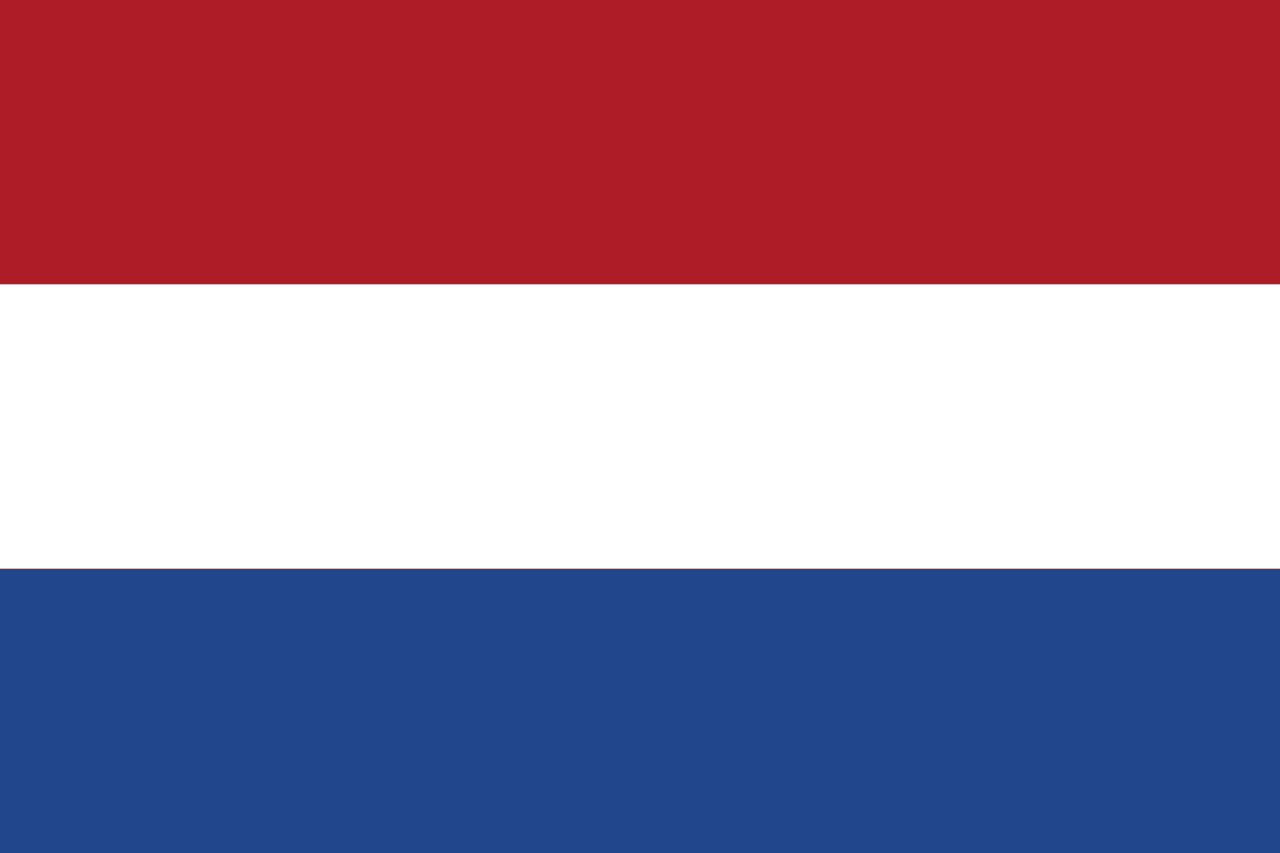
Three plain horizontal bands of red, white, and blue sound almost too simple to carry much weight. Yet the flag of the Netherlands is one of the most historically consequential pieces of cloth in the world. It is often credited as the first horizontal tricolor ever flown by a nation, and its layout rippled outward across centuries and continents, shaping banners as far apart as Paris and Moscow. Behind those clean stripes sits a story of rebellion, a prince named William of Orange, unreliable dyes, and a color swap that quietly rewrote European design conventions. This article unpacks what the Dutch flag means, how it came to look the way it does, and why orange still sneaks back into the picture on the country's most festive days.
A Tricolor of Red, White, and Blue
The design itself is disarmingly direct: three horizontal bands of equal height, stacked red over white over blue, in a 2:3 ratio. The official shades are specific—vermillion red on top, a clean white in the middle, and cobalt blue along the bottom. There is no crest, no canton, no emblem. The whole identity rests on proportion and color alone, which is part of why the flag has aged so gracefully. Where many national banners crowd in heraldic detail, the Dutch tricolor trusts three stripes to do all the work, and they have done it for centuries.
What the Colors Stand For
The colors carry meaning on two levels: where they came from, and what they have come to represent. Originally they derived from the coat of arms of Prince William of Orange, the central figure of the Dutch revolt against Spanish rule. Over time, as the palette settled into its modern form, each band picked up its own symbolic reading. Red is associated with valor—the courage of a people who fought for independence. White stands for peace and honesty, the moral plainness the Dutch have long prized. Blue speaks to vigilance and justice, qualities a trading and seafaring nation depended on. Together they translate a turbulent founding story into three quiet, enduring ideas.
From Orange to Red: How the Flag Evolved
The Dutch tricolor is among the oldest national flags still in use, with roots reaching back to the sixteenth-century struggle against Spain. Its earliest version was not red-white-blue at all but orange-white-blue, a banner known as the Prinsenvlag, or "Prince's Flag," in direct homage to William of Orange. That orange top stripe was a literal nod to his name and house.
So why is the modern flag red instead? Two forces nudged the change along. The first was chemistry: orange dye of the era was notoriously unstable and tended to fade, often weathering toward red after exposure to sun and salt air—a real problem for a maritime nation whose flags spent their lives at sea. The second was politics, as shifting allegiances made a deep, reliable red the more practical and accepted choice. By the middle of the seventeenth century, red had largely supplanted orange in everyday use. The red-white-blue arrangement was then used informally for generations before the government finally made it official, confirming the current design in 1937.
The Flag That Inspired a Family of Flags
Few flags can claim as much downstream influence as the Dutch tricolor. As the first horizontal tricolor of its kind, it became a template that other nations adapted to their own purposes. The connection to Russia's white-blue-red flag is frequently traced back to Dutch maritime influence, and the broader tricolor concept fed into the lineage that includes France's vertical bands. Even Luxembourg's flag shares the same red-white-blue family resemblance, distinguished mainly by a lighter blue and different proportions. Former Dutch colonies left their mark too: Indonesia's striking red-and-white banner echoes that heritage.
So how do you tell these relatives apart? Orientation is the first clue—France stacks its colors vertically, while the Netherlands and Luxembourg run them horizontally. After that it comes down to shade and proportion: Luxembourg's blue is noticeably paler and its flag a touch more elongated, while the Dutch cobalt sits deeper and its 2:3 ratio gives it a slightly more compact look. Side by side, the small differences become surprisingly easy to spot.
Orange, Identity, and the National Mood
Here is the twist that surprises many visitors: even though orange disappeared from the flag itself, it never left Dutch national identity. The House of Orange remains woven into the country's sense of self, and the color resurfaces wherever national pride runs high. On royal occasions an orange pennant is traditionally flown above the red-white-blue tricolor, a small flourish that reunites the flag with its original princely hue. The arrangement is a neat piece of symbolism: the official flag honors the nation, and the pennant tips its hat to the dynasty that helped found it.
This is why a country with a red-white-blue flag turns spectacularly orange on its biggest days. The tricolor represents the state; orange represents the people's affection for their monarchy and heritage. Both can fly together without contradiction. To understand how this blend of tradition and modern life plays out across the country, the netherlands country guide offers a fuller picture of Dutch culture and travel.
The Flag in Everyday and Festive Life
Day to day, the tricolor flies over government buildings and appears at official ceremonies throughout the year, a steady presence rather than a loud one. But it truly comes alive during national celebrations. King's Day on April 27 transforms streets, canals, and crowds into a sea of orange, with flags and pennants everywhere and the whole nation leaning into its signature color.
Sport is the other great amplifier. During the FIFA World Cup and the European Championships, the red-white-blue flag and the famous orange of the national teams become genuinely ubiquitous—draped from windows, painted on faces, and waved in stadiums. For a nation often described as understated, these are the moments when the flag and its orange companion turn the entire country into a single, vivid display of belonging.
Interesting Facts About the Dutch Flag
- It is widely considered the oldest tricolor in the world, inspiring numerous later flags including those of Russia and France.
- The original flag was orange-white-blue, named the Prinsenvlag after William of Orange.
- Unstable orange dye that faded toward red helped push the color change centuries ago.
- The current red was only made official in 1937, after generations of informal use.
- An orange pennant is traditionally flown above the flag on King's Day and royal occasions.
- Dutch design influence reached former colonies, with flags like Indonesia's reflecting that legacy.
Frequently Asked Questions
When was the flag of the Netherlands adopted?
The red-white-blue tricolor was used informally for centuries, but the current design was officially confirmed in 1937. Its origins, however, stretch all the way back to the sixteenth-century Dutch revolt against Spain, making it one of the oldest national flags in continuous use.
What do the colors of the Dutch flag mean?
The colors originally came from the coat of arms of Prince William of Orange. Over time they took on broader meanings: red represents valor, white represents peace and honesty, and blue represents vigilance and justice. The original orange stripe was gradually replaced by red, partly due to unstable dye and partly for political reasons.
Why is there so much orange if the flag is red, white, and blue?
Orange is tied to the House of Orange, the royal family at the heart of the country's founding story. Although orange was replaced by red on the flag itself, it remains the color of national identity. An orange pennant is often added above the flag on King's Day and royal occasions, and orange dominates during major sporting events.
What continent is the Netherlands on, and which flags is its flag related to?
The Netherlands is in Europe. Its tricolor is closely related to the flags of Luxembourg, France, and Russia, all of which share its red-white-blue palette or its influential tricolor format. The flags differ mainly in orientation, the exact shades of blue, and their proportions.