
South Sudan is the youngest country on the planet, born in 2011 after decades of war, and it remains one of the least-explored corners of Africa. Behind the headlines lies a land of vast swamps, towering cattle-herders, ancient migrations, and a culture stubbornly proud of its independence. Here are ten facts that reveal a nation far more fascinating than most maps suggest.
1. It Is the World's Newest Internationally Recognized Country
On 9 July 2011, South Sudan officially seceded from Sudan after an overwhelming referendum in which nearly 99% of voters chose independence. This made it the newest sovereign state recognized by the United Nations, ending Africa's longest-running civil conflicts that had simmered for the better part of half a century. The split was the culmination of two devastating north-south civil wars rooted in deep religious, ethnic, and economic divides. Independence Day, celebrated every July, is the country's most important national holiday. For a young nation, South Sudan carries an extraordinarily long and complicated history, which you can explore further in our country guide.
2. Juba Sits on the Banks of the White Nile
The capital, Juba, is a fast-growing river port on the White Nile, one of the two great tributaries that feed the world's longest river system. Juba grew rapidly after independence, transforming from a modest garrison town into a bustling administrative hub crowded with markets, aid organizations, and a young, energetic population. The Nile is the city's lifeline, used for transport, fishing, and trade. Despite ongoing challenges, Juba pulses with entrepreneurial spirit, music, and a youthful demographic eager to build something new from one of the most challenging starting points any capital has ever faced.
3. Home to the Sudd, One of the World's Largest Wetlands
South Sudan contains the Sudd, a colossal swamp formed by the White Nile that can swell to cover an area larger than England during the rainy season. The name comes from an Arabic word meaning "barrier," because its dense floating vegetation historically blocked river navigation and frustrated explorers searching for the Nile's source. The Sudd is a globally important wetland and a Ramsar-listed site, supporting vast populations of birds and aquatic life. Its papyrus reeds, shifting channels, and seasonal floods make it both a natural wonder and a formidable obstacle, shaping the lives of the communities who fish and herd along its edges.
4. It Hosts One of Earth's Greatest Animal Migrations
Few people realize that South Sudan's Boma and Bandingilo landscapes host a migration of antelope rivaling the famous wildebeest crossings of the Serengeti. Surveys have counted well over a million white-eared kob, tiang, and other antelope moving across the grasslands in search of fresh pasture and water. Remarkably, this spectacle survived decades of war, hidden away from the world. The country also shelters elephants, giraffes, lions, and the rare shoebill stork in the Sudd. Conservationists regard South Sudan as one of Africa's last great frontiers for wildlife, where vast, intact ecosystems still operate much as they have for millennia.
5. The Dinka and Nuer Are Among the Tallest People on Earth
South Sudan is famous for the striking height of many of its people, particularly the Dinka and Nuer, who are frequently cited among the tallest populations in the world. This stature has made South Sudanese athletes especially prominent in basketball; the legendary Manute Bol, who stood around 7 feet 7 inches, became an NBA star and one of the tallest players in league history. Cattle hold deep cultural value among these groups, serving as currency, dowry, and a symbol of status. Songs, names, and entire rituals revolve around prized bulls, reflecting a pastoral way of life thousands of years old.
6. English Is Official, but Hundreds of Languages Are Spoken
When South Sudan became independent, it adopted English as its official language, partly to distinguish itself from Arabic-dominated Sudan to the north. Yet the country is extraordinarily multilingual, with more than 60 indigenous languages spoken across its many ethnic groups, including Dinka, Nuer, Bari, Zande, and Shilluk. A local creole called Juba Arabic serves as a widely used lingua franca in markets and cities, bridging communities who otherwise share no common tongue. This linguistic richness reflects the nation's diversity, though it also poses real challenges for education and unity in a country still forging a shared national identity.
7. Oil Dominates the Economy
South Sudan inherited the lion's share of the former Sudan's oil reserves at independence, and petroleum now accounts for the overwhelming majority of government revenue and exports. However, the country is landlocked, so its crude must be pumped through pipelines crossing into Sudan to reach Red Sea ports, creating a complicated and sometimes tense economic dependence on its northern neighbor. Beyond oil, most South Sudanese rely on subsistence agriculture and cattle herding. The economy remains fragile, buffeted by conflict and fluctuating oil prices, but the nation's fertile land and water resources hold enormous untapped agricultural potential for the future.
8. Cattle Are at the Center of Daily Life
For millions of South Sudanese, cattle are far more than livestock; they are the foundation of social and economic life. Wealth is often measured in herds rather than money, and cattle are central to marriage dowries, dispute settlements, and community standing. Pastoralist groups build elaborate cattle camps, decorate their favorite oxen, and compose praise songs in their honor. This profound attachment shapes everything from migration patterns to local politics. The traditional emphasis on cattle stretches back thousands of years and continues to define rural identity, even as modern pressures and conflict reshape the country around it.
9. Its Flag Carries the Story of the Nation
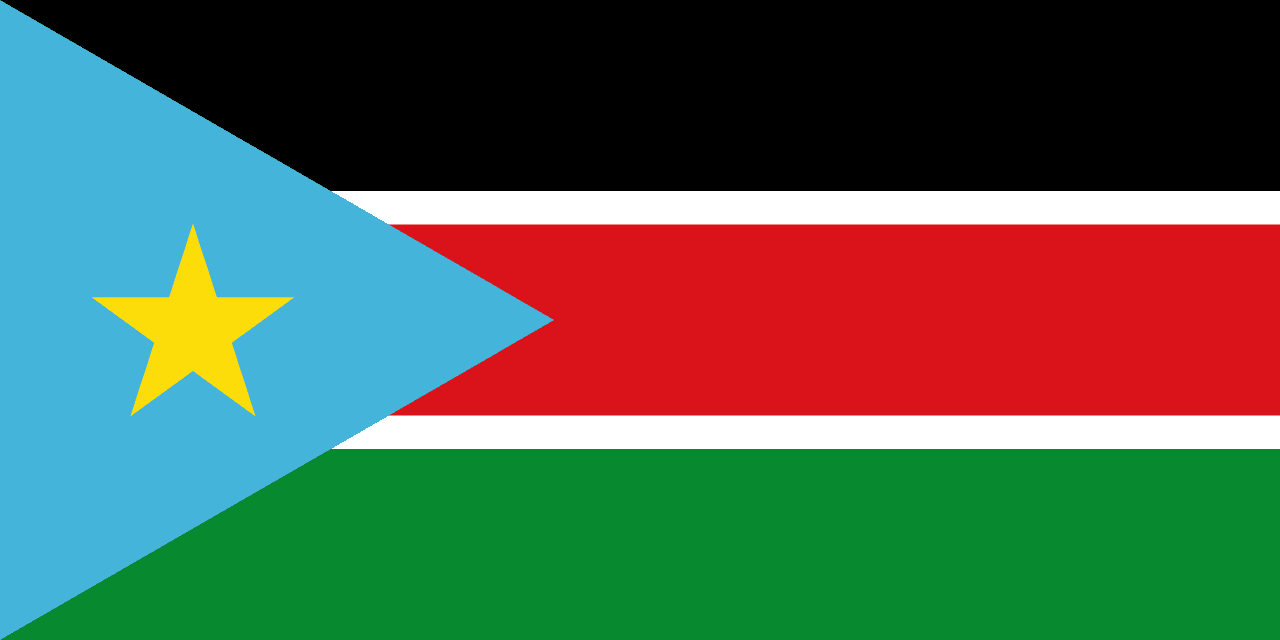
The South Sudanese flag is one of the most symbolic in Africa, with each color representing a piece of the country's story. Black stands for the people, red for the blood shed during the long struggle for freedom, green for the land and agriculture, and white for peace. A blue triangle represents the waters of the Nile, while a gold star symbolizes unity among the country's diverse states and peoples. Adopted during the independence movement, the design predates the 2011 secession itself. You can learn more about its meaning and history in our dedicated guide to the South Sudanese flag.
10. A Land of Ancient Kingdoms and Trade Routes
Long before modern borders, the region that is now South Sudan was home to powerful societies and crisscrossed by trade routes. The Shilluk Kingdom, for instance, developed a sophisticated monarchy along the Nile centuries ago, with a sacred king known as the reth who held both political and spiritual authority. Ivory, cattle, and other goods moved through these lands, linking communities across vast distances. This deep heritage of organized kingdoms and far-reaching commerce shows that South Sudan's history is anything but blank, even if much of it was overshadowed by later colonial accounts and decades of conflict.
Frequently Asked Questions
What is the capital of South Sudan?
The capital is Juba, a river port on the White Nile in the south of the country. It is the largest city and the political and commercial center, having grown rapidly since independence in 2011.
What is South Sudan famous for?
South Sudan is best known for being the world's newest country, gaining independence in 2011. It is also famous for the vast Sudd wetland, one of Africa's greatest wildlife migrations, its oil reserves, and the remarkable height of peoples such as the Dinka and Nuer.
Why are South Sudanese people so tall?
The Dinka and Nuer are often ranked among the tallest populations on Earth, a trait linked to genetics and traditional pastoral lifestyles. This has translated into success in basketball, with players like Manute Bol becoming international icons of the sport.
Conclusion
South Sudan may be the world's youngest nation, but it is layered with ancient kingdoms, extraordinary wildlife, and proud cultures shaped by the Nile and its cattle. For all its challenges, it remains a place of immense natural wealth and human resilience. These ten facts are only an introduction to a country that rewards anyone curious enough to look beyond the headlines.