
The United Kingdom packs an extraordinary amount of history, invention, and eccentricity into a group of islands smaller than the state of Oregon. It gave the world the steam engine, the World Wide Web, association football, and the concept of standardised time, all while clinging to traditions that can seem gloriously baffling to outsiders. Here are ten genuinely surprising facts about a nation that has shaped the modern world far out of proportion to its size.
1. It Is Actually Four Countries Wearing One Trench Coat
The "United Kingdom" is a single sovereign state made up of four constituent nations: England, Scotland, Wales, and Northern Ireland. Each has its own distinct identity, patron saint, and in several cases its own national football team, parliament, or assembly. Scotland and Wales have devolved governments with real legislative powers over areas like health and education, while Northern Ireland sits on the island of Ireland rather than the island of Great Britain. This is why "British," "English," and "UK" are not interchangeable, and why calling a Scot "English" is a swift way to lose a friend. You can explore the wider picture in our country guide.
2. London Has Been a Major City for Nearly 2,000 Years
The capital, London, was founded by the Romans as Londinium around AD 47, making it one of the oldest continuously important cities in Europe. Today it is home to roughly nine million people and is one of the planet's leading financial centres, rivalling New York. London is also astonishingly green: nearly half of Greater London is open space, parks, or water, and it was officially declared a National Park City in 2019. Beneath the streets runs the London Underground, opened in 1863 as the world's first underground passenger railway, affectionately known as "the Tube."
3. Around 69 Million People Speak Hundreds of Languages
The UK is home to approximately 69 million people, making it one of Europe's most populous nations. While English is the dominant language, the UK is profoundly multilingual. Welsh is an official language in Wales, where road signs are bilingual, and Scottish Gaelic and Irish are also recognised. Beyond these, London alone is one of the most linguistically diverse cities on Earth, with over 300 languages spoken in its schools. This diversity reflects centuries of migration, from Huguenot weavers and Jewish communities to large populations with roots in South Asia, the Caribbean, and Africa.
4. The Monarchy Stretches Back Over a Thousand Years
The British monarchy is among the oldest continuous institutions in the world, with a line of kings and queens traceable back to the 9th century and Anglo-Saxon rulers like Alfred the Great. The monarch today is a constitutional head of state with largely ceremonial powers, while real authority rests with an elected Parliament at Westminster. The Crown Jewels, kept in the Tower of London, include the Imperial State Crown set with thousands of gems. Curiously, the UK has no single written constitution; its system is built from statutes, court rulings, and centuries of unwritten convention.
5. It Once Ruled a Quarter of the Planet
At its height in the early 20th century, the British Empire was the largest empire in history, covering roughly a quarter of the world's land area and population. It was famously described as the empire "on which the sun never sets," because it always held territory in daylight somewhere. This legacy explains why English is a global language and why the UK still maintains close ties through the Commonwealth, a voluntary association of 56 member states. The empire's history is complex and contested, encompassing extraordinary global exchange alongside conquest, colonialism, and profound human cost.
6. The British Invented Modern Sport
An astonishing number of the world's most popular sports were codified in Britain. The rules of association football (soccer) were standardised in London in 1863, while rugby, cricket, tennis, golf (in nearby Scotland), boxing, and even table tennis owe their modern forms to British clubs and schools. Football is a near-religious passion, with the English Premier League watched in over 200 countries. The Wimbledon Championships, founded in 1877, remain the oldest tennis tournament in the world and the only Grand Slam still played on grass.
7. The Food Is Better Than Its Reputation Suggests
British cuisine is the butt of endless jokes, yet it is far richer than its critics allow. Classics include fish and chips, the hearty full English breakfast, the Sunday roast with Yorkshire pudding, and the ritual of afternoon tea with scones, clotted cream, and jam. The UK also gave the world the sandwich, named after the Earl of Sandwich, who supposedly wanted to eat without leaving the gambling table. Thanks to its diverse population, chicken tikka masala is often cited as a national dish, and curry houses are a beloved fixture of nearly every British high street.
8. Its Landscapes Range From Beaches to Highlands
For a relatively small territory, the UK's geography is remarkably varied. Scotland is home to the rugged Highlands and Ben Nevis, the highest peak in the British Isles at 1,345 metres. Wales boasts the dramatic mountains of Eryri (Snowdonia), while England has the rolling Lake District, the white chalk cliffs of Dover, and the moors of Devon and Yorkshire. No point in the UK is more than about 113 kilometres from the sea. The climate is famously mild, wet, and unpredictable, which is precisely why the weather is the nation's favourite topic of conversation.
9. It Is a Surprising Haven for Wildlife
Despite being densely populated, the UK supports a charismatic range of wildlife. Atlantic puffins nest in vast colonies on coastal cliffs, red squirrels cling on in Scotland and northern England, and the elusive Scottish wildcat prowls the Highlands. Red deer are Britain's largest land mammal, and the country is a globally important stronghold for migrating seabirds. Conservation runs deep here: the UK is home to the world's oldest national wildlife protection charity, the RSPB, founded in 1889 partly to campaign against the killing of birds for feathered hats.
10. Britain Built the Modern World, One Invention at a Time
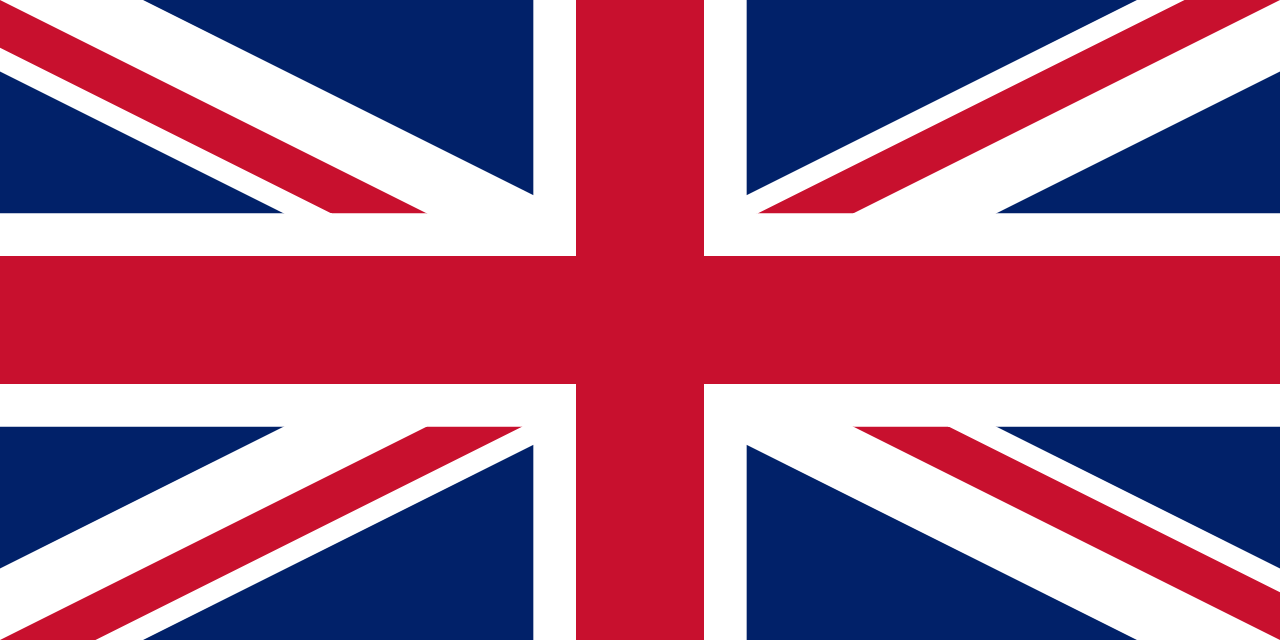
The Industrial Revolution began in Britain in the 18th century, transforming the planet through steam power, factories, and railways. British minds gave the world the telephone groundwork, the jet engine, the television, the first programmable computer concepts via Charles Babbage and Alan Turing, and the structure of DNA, partly decoded in Cambridge. Perhaps most influential of all, Sir Tim Berners-Lee invented the World Wide Web in 1989. The UK's national flag, the Union Jack, has even influenced the design of dozens of other flags; learn more in our piece on the flag of the UK.
Frequently Asked Questions
What is the capital of the United Kingdom?
The capital is London, located in the southeast of England on the River Thames. It is the UK's largest city, its political and financial heart, and one of the most visited destinations on Earth, home to landmarks such as the Houses of Parliament, Buckingham Palace, and the Tower of London.
What is the United Kingdom famous for?
The UK is famous for its monarchy, the Beatles and a legendary music scene, the global reach of the English language, iconic literature from Shakespeare to J.K. Rowling, and inventing sports like football and cricket. It is also known for double-decker buses, red telephone boxes, afternoon tea, and a dry sense of humour.
Why do the British talk about the weather so much?
The UK sits where several weather systems collide, producing famously changeable conditions where sunshine, rain, and wind can all appear in a single afternoon. Because the weather is so unpredictable yet rarely extreme, it has become the perfect neutral, ever-relevant topic for polite small talk among strangers.
Conclusion
From four nations sharing one passport to an empire that reshaped the globe and a tiny island that handed the world the steam engine and the Web, the United Kingdom is a place of remarkable contradictions and outsized influence. Its blend of ancient tradition and restless innovation makes it endlessly fascinating, and these ten facts are only the beginning of the story.