
The most essential traditional foods of Jamaica are jerk chicken, ackee and saltfish (the national dish), curry goat, Jamaican patties, rice and peas, brown stew chicken, escovitch fish, festival, bammy, oxtail stew, mannish water, run down, sweet potato pudding, gizzada, and sorrel. These fifteen dishes capture a cuisine built on bold spice, smoke, and a remarkable blend of African, Indian, Chinese, British, and Indigenous Taino influences.
The Big Three: Jamaica's Signature Dishes
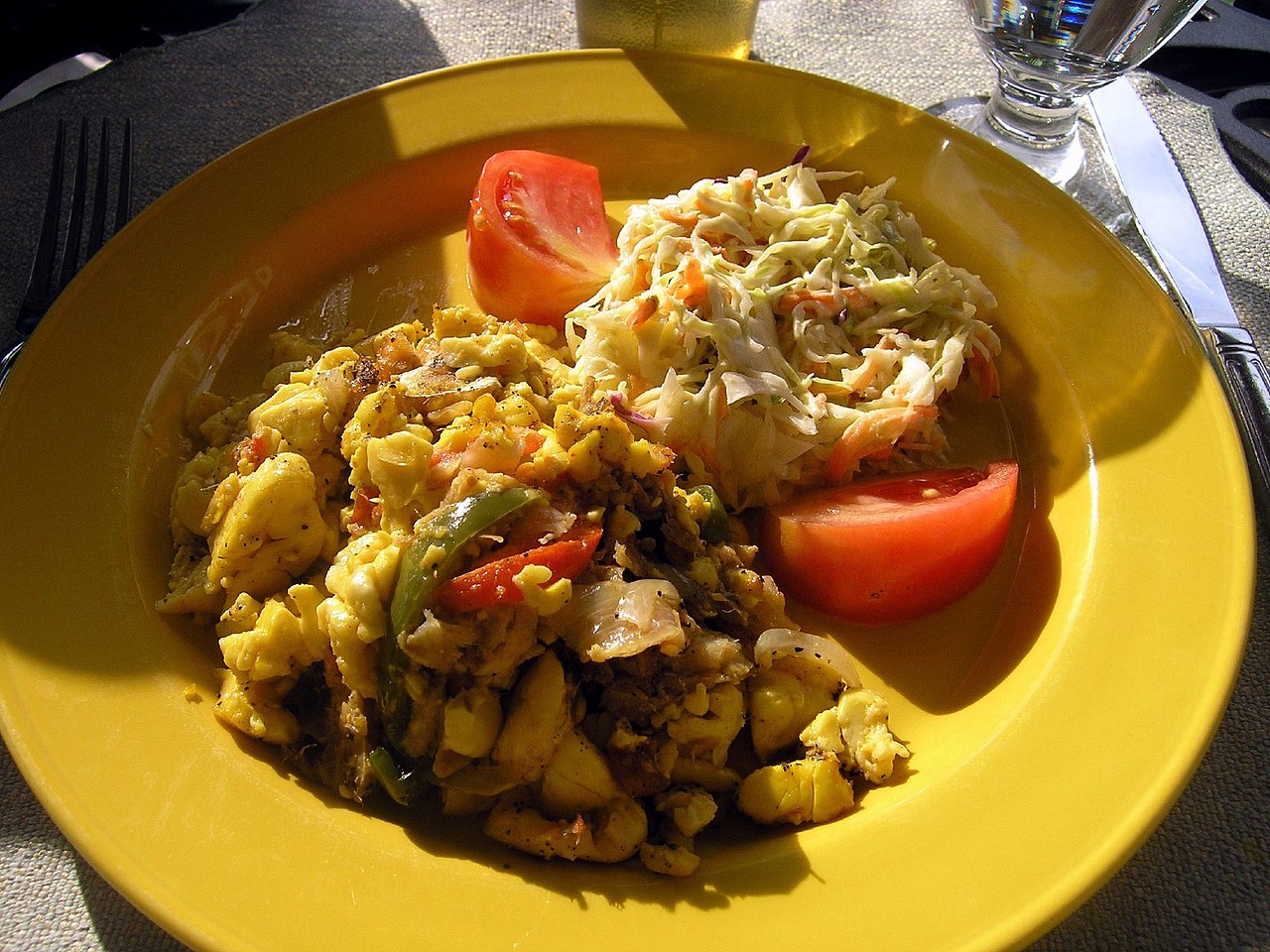
No Jamaican table is complete without its three most celebrated plates. Ackee and saltfish is the official national dish — soft, golden ackee fruit sauteed with flaked salted cod, onions, scotch bonnet, and tomatoes until it resembles scrambled eggs. Ackee arrived from West Africa and is so central to identity that it appears on the country's coat of arms.
Jerk chicken is Jamaica's most famous culinary export. Chicken is marinated in a fiery paste of allspice (called pimento locally), scotch bonnet, thyme, and scallion, then slow-smoked over pimento wood. The technique traces to the Maroons, escaped enslaved people who perfected the slow-smoking method in the Blue Mountains during the 17th century. Curry goat rounds out the trio — tender goat braised in Indian-influenced curry, an indispensable centerpiece at weddings, funerals, and Sunday gatherings.
Street Food, Sides, and Staples
Everyday eating in Jamaica revolves around portable, affordable favorites. The Jamaican patty — a flaky, turmeric-yellow pastry stuffed with spiced beef, chicken, or vegetables — is the island's grab-and-go icon, descended from the British Cornish pasty. Festival, a slightly sweet fried cornmeal dumpling, is the classic partner to fried fish and jerk. Bammy, a flatbread pressed from grated cassava, is one of the oldest foods on the island, a direct inheritance from the Indigenous Taino people who lived here before Columbus arrived.
- Rice and peas: Rice simmered with coconut milk and kidney beans (the "peas"), the obligatory accompaniment to almost every Sunday dinner.
- Escovitch fish: Fried whole snapper topped with a tangy pickle of vinegar, onions, carrots, and scotch bonnet — a coastal favorite.
- Oxtail stew: Slow-braised oxtail in rich brown gravy, often cooked with butter beans until the meat falls from the bone.
Soups, Stews, and One-Pot Comfort
Jamaican comfort food leans on hearty one-pot dishes designed to stretch and satisfy. Brown stew chicken is a weeknight staple — chicken browned in caramelized sugar, then stewed with peppers and aromatics in a deep, savory gravy. Mannish water, a spicy goat-head soup loaded with green bananas, yam, and dumplings, is traditionally served at celebrations and reputed to be both an aphrodisiac and a hangover cure. Run down (or "rondon") sees mackerel or other fish simmered in seasoned coconut milk until the liquid reduces, or "runs down," into a thick, creamy sauce. These dishes show how cooks turn modest ingredients into deeply flavored meals, almost always anchored by scotch bonnet and fresh thyme.
Sweets and Traditional Drinks
Jamaican desserts are dense, rich, and frequently laced with rum. Sweet potato pudding is the ultimate comfort sweet — baked low and slow with coconut milk, vanilla, and nutmeg, earning the nickname "hell a top, hell a bottom" from its old wood-fire cooking method. Gizzada, a Portuguese-influenced tart with a pinched pastry shell and a sweet grated-coconut filling, is a beloved bakery treat. At Christmas, rum-soaked black cake takes center stage.
On the drinks side, Jamaica is world-renowned for its rum, with Appleton Estate and the potent Wray & Nephew White Overproof (63% ABV) leading the way. Sorrel — a deep-red drink steeped from hibiscus sepals with ginger, cinnamon, and sometimes a splash of rum — is the festive holiday beverage. The island is also home to prized Blue Mountain Coffee, grown at high altitude and famous for its smooth, low-bitterness flavor.
Why Jamaican Cuisine Tastes the Way It Does
The flavor of Jamaican food is the story of its history on a plate. African cooks brought slow-smoking, one-pot stewing, and ingredients like ackee and callaloo. Indentured laborers from India introduced curry and roti. Chinese immigrants added stir-fry techniques and soy-based seasonings. British colonizers contributed salted cod, baked puddings, and pastry. The Taino gave the island cassava and the very word "barbecue." Tying it all together are two defining flavors: fiery scotch bonnet peppers and warm, aromatic allspice. To explore the country behind these dishes, see our jamaica country guide.
Frequently Asked Questions
What is the national dish of Jamaica?
Ackee and saltfish is the official national dish of Jamaica. It pairs the buttery, scrambled-egg-like ackee fruit with flaked salted cod, sauteed with onions, peppers, and tomatoes. It is most often eaten at breakfast, served alongside fried dumplings, bammy, or boiled green bananas.
Is Jamaican food very spicy?
Jamaican food is flavorful and aromatic, and many dishes carry real heat from the scotch bonnet pepper, one of the world's hottest chilies. However, the cuisine balances that spice with thyme, allspice, ginger, and coconut milk, so the heat is layered rather than overwhelming. Diners can usually request milder versions.
What is jerk seasoning made of?
Authentic jerk seasoning is built around allspice (pimento) and scotch bonnet peppers, combined with thyme, scallion, garlic, ginger, and spices like cinnamon and nutmeg. The meat is marinated in this blend and traditionally smoked over pimento wood, which imparts jerk's distinctive smoky aroma.
What do Jamaicans eat for breakfast?
A traditional Jamaican breakfast often features ackee and saltfish, fried or boiled dumplings, callaloo (a leafy green similar to spinach), and provisions such as green bananas, yam, and breadfruit. Liver, mackerel run down, and a cup of Blue Mountain coffee are common as well.