
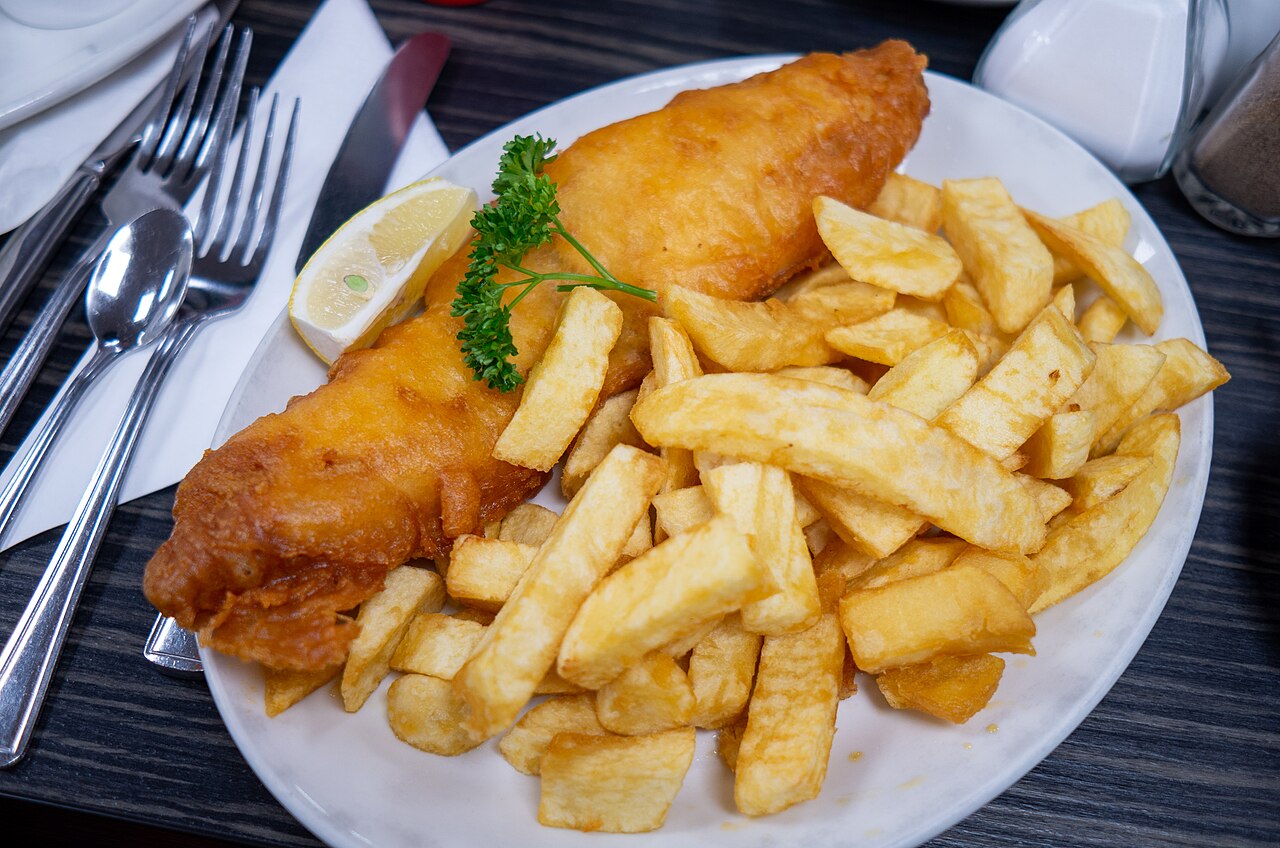
The most famous traditional foods of the UK are fish and chips, the Sunday roast, and the full English breakfast, alongside iconic dishes like the Cornish pasty, shepherd's pie, sticky toffee pudding, and a cup of strong tea. British cuisine is built on hearty, comforting cooking shaped by the country's cool climate, rich farming traditions, and centuries of global trade. Below are 15 must-try dishes that define the nation's table.
The Big Three: Britain's Most Iconic Dishes
If you try only three traditional British foods, make them these. Each is woven deeply into everyday life across England, Scotland, Wales, and Northern Ireland.
- Fish and chips — Battered cod or haddock fried until golden, served with thick-cut chips, mushy peas, and a splash of malt vinegar. It became Britain's defining takeaway during the Industrial Revolution, and by the 1930s the country had more than 35,000 chip shops.
- Sunday roast — A weekly ritual of roasted beef, lamb, chicken, or pork served with roast potatoes, Yorkshire pudding, seasonal vegetables, and rich gravy. The tradition stretches back to medieval times, when families gathered after church.
- Full English breakfast — A generous fry-up of bacon, eggs, sausages, baked beans, grilled tomatoes, mushrooms, toast, and often black pudding. Scotland, Wales, and Ulster each have their own regional variations.
Savoury Pies, Pastries and Street Food
Britain's love of pastry runs deep, producing portable, filling snacks that powered miners, farmers, and factory workers for generations.
- Cornish pasty — Crimped pastry filled with beef, potato, swede, and onion. Originally a tin miner's lunch, its thick crimped edge served as a disposable handle. It now holds EU Protected Geographical Indication status, so only pasties made in Cornwall may use the name.
- Sausage roll — Seasoned pork sausage meat baked in flaky puff pastry, a staple of every British bakery and railway station counter.
- Scotch egg — A hard-boiled egg wrapped in sausage meat, coated in breadcrumbs, and deep-fried; a picnic and pub favourite.
- Steak and ale pie — Tender chunks of beef slow-cooked in dark ale beneath a buttery pastry lid, a centrepiece of traditional pub menus.
Comfort Food and Hearty Mains
Warming, filling, and made for grey weather, these dishes are the heart of British home cooking.
- Shepherd's pie and cottage pie — Minced lamb (shepherd's) or beef (cottage) in gravy, topped with mashed potato and baked until golden and bubbling at the edges.
- Bangers and mash — Pork sausages served over creamy mashed potato and smothered in onion gravy; the definitive pub plate.
- Chicken tikka masala — Tandoori chicken in a creamy, spiced tomato sauce. Invented in Britain by South Asian chefs adapting Indian flavours to local tastes, it is so beloved that a former Foreign Secretary called it "a true British national dish."
- Toad in the hole — Sausages baked into a fluffy Yorkshire pudding batter, served with gravy and vegetables.
Puddings, Cakes and Sweet Treats
The British call most desserts "pudding," and the country has perfected the art of rich, warming sweets ideal for its temperate climate.
- Sticky toffee pudding — A dense date sponge drenched in toffee sauce, served with custard or ice cream. It became popular in the Lake District in the 20th century.
- Victoria sponge — A light sponge cake layered with jam and cream, named after Queen Victoria, who enjoyed a slice with her afternoon tea.
- Eton mess — Crushed meringue folded through whipped cream and fresh strawberries, traditionally linked to Eton College and English summer.
- Trifle — Layers of sponge, fruit, custard, and cream, a festive favourite especially at Christmas.
Tea, Pubs and the British Drinking Tradition
No survey of British food is complete without its drinks, which sit at the centre of social life from morning to evening.
- English breakfast tea — Strong black tea with milk; the nation drinks an estimated 100 million cups a day, roughly 36 billion a year.
- Real ale and cider — Traditional bitters, milds, and IPAs alongside West Country ciders form the backbone of pub culture, with tens of thousands of pubs still serving as community hubs.
Afternoon tea, with its scones, clotted cream, jam, and dainty sandwiches, was popularised in the 1840s by Anna, Duchess of Bedford, and remains a celebrated British institution. The UK also produces more than 700 named cheeses, from Cheddar and Stilton to Wensleydale. For more on the country itself, see our uk country guide.
Frequently Asked Questions
What is the national dish of the UK?
Fish and chips is the most traditional national dish, but chicken tikka masala is often described as Britain's true national dish thanks to its enormous popularity and its origins in British-Asian kitchens.
What do British people eat for breakfast?
The classic full English breakfast features bacon, eggs, sausages, baked beans, tomatoes, mushrooms, and toast, though many Britons eat lighter everyday breakfasts of cereal, porridge, or toast on weekdays.
What is a Sunday roast?
A Sunday roast is a weekend meal of roasted meat served with roast potatoes, Yorkshire pudding, vegetables, and gravy, traditionally eaten with family after church on Sundays.
Is afternoon tea a real British tradition?
Yes. Afternoon tea dates to the 1840s and typically includes tea served with scones, clotted cream, jam, finger sandwiches, and small cakes, often enjoyed in hotels and tea rooms today.
