

For most of human history, a city without walls was a city waiting to be destroyed. Fortifications shaped urban geography by constraining growth, concentrating population, and determining which neighborhoods held power and which were left exposed outside the gates.
Introduction
While most city walls were demolished during industrialization to allow expansion, some of the world's greatest fortified cities survive intact. These walled cities offer a physical record of how geography, warfare, and urban planning intersected for thousands of years.
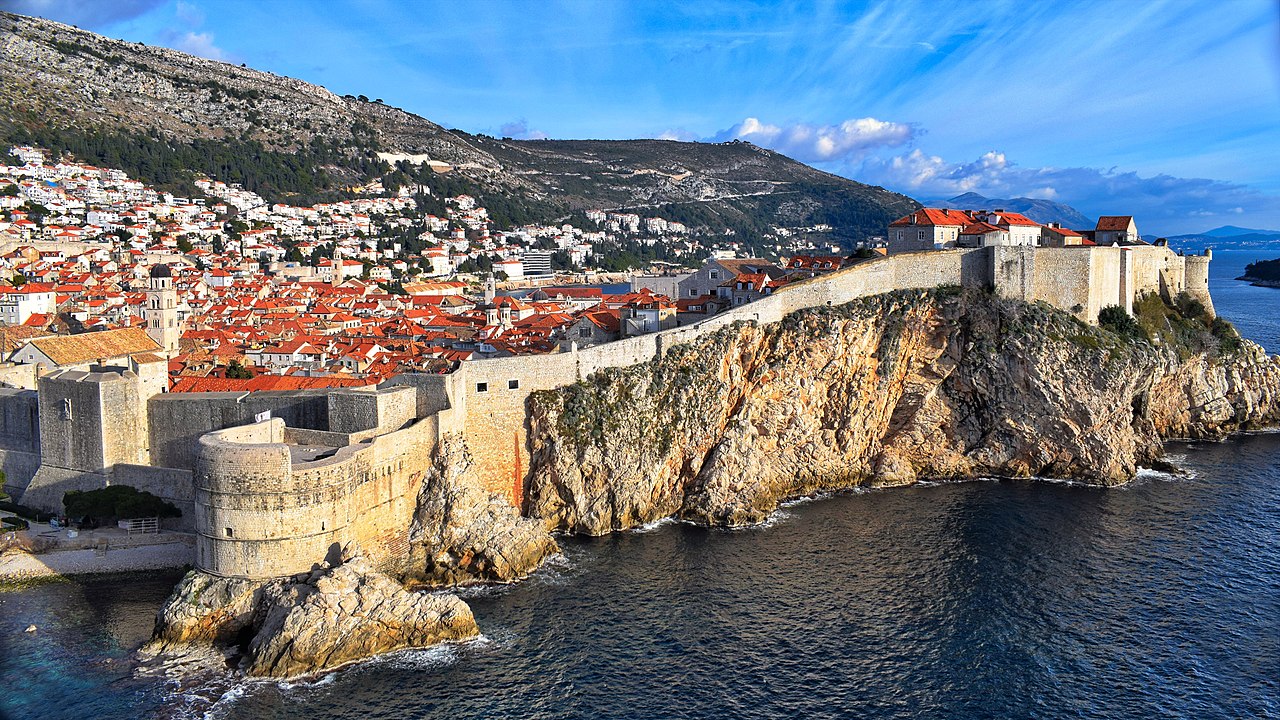
Dubrovnik, Croatia
- Wall Length: 1,940 meters
- Wall Height: Up to 25 meters
- Towers: 16 towers
- UNESCO Status: World Heritage Site since 1979
Dubrovnik's city walls are among the finest medieval fortifications in Europe, encircling the old town on a rocky peninsula jutting into the Adriatic Sea. The walls reach heights of 25 meters on the landward side and incorporate 16 towers, 5 bastions, and 2 corner fortifications, built and reinforced over centuries from the 8th to 17th century.
The walls' geography is their genius. Built on a limestone promontory with the sea on three sides, Dubrovnik only needed heavy landward defenses. The city maintained independence as the Republic of Ragusa for over 450 years, using its walls, diplomatic skill, and maritime wealth to resist Ottoman and Venetian pressure.
Xi'an, China
- Wall Length: 13.7 km (perimeter)
- Wall Height: 12 meters
- Wall Width: 15-18 meters at base
- Built: 1370-1378 CE (Ming Dynasty)
Xi'an's city walls are the best-preserved ancient city walls in China and among the most complete in the world. Built during the early Ming Dynasty (1370-1378), the rectangular wall stretches 13.7 kilometers around the old city, standing 12 meters high and 15-18 meters wide at the base — wide enough to drive vehicles along the top.
The wall features a 20-meter-wide moat, 98 ramparts, 5,984 crenellations, and 4 enormous gate towers. Xi'an (ancient Chang'an) was the eastern terminus of the Silk Road and capital of 13 Chinese dynasties. The walls reflect the city's strategic importance as one of the most significant urban centers in Asian history.
Carcassonne, France
- Wall Circuits: 2 concentric walls
- Towers: 52 towers
- Length: 3 km (outer circuit)
- Restoration: Eugène Viollet-le-Duc, 19th century
Carcassonne in southern France is one of the most complete examples of a medieval fortified city in Europe. Its double ring of walls, studded with 52 towers, crowns a hilltop overlooking the Aude River and the plains of Languedoc. The site has been fortified since the Gallo-Roman period, with the current walls dating primarily to the 12th and 13th centuries.
The city's strategic location controlling the route between the Mediterranean and the Atlantic made it a prize throughout the Middle Ages. After centuries of neglect, architect Eugène Viollet-le-Duc controversially restored the fortifications in the 19th century, adding pointed slate roofs to the towers that the originals may not have had.
Jerusalem Old City, Israel/Palestine
- Wall Length: 4.5 km
- Gates: 7 open gates (8 total)
- Current Walls: Built 1535-1542 by Suleiman the Magnificent
- Quarters: 4 (Christian, Muslim, Jewish, Armenian)
Jerusalem's Old City walls enclose one of the most historically significant square kilometers on Earth, sacred to Judaism, Christianity, and Islam. The current walls were built by Ottoman Sultan Suleiman the Magnificent between 1535 and 1542, though the city has been walled since at least the Bronze Age.
The walls define four distinct quarters — Christian, Muslim, Jewish, and Armenian — reflecting the city's layered religious and cultural geography. The Golden Gate (or Gate of Mercy) has been sealed since medieval times, reportedly by Suleiman to prevent the prophesied entry of the Messiah. The walls encompass just 0.9 square kilometers but contain sites sacred to billions of people.
York, England
- Wall Length: 3.4 km
- Period: Roman through medieval
- Gates (Bars): 4 main medieval gateways
- Notable: Longest medieval city walls in England
York's city walls are the longest and most complete medieval walls in England, stretching 3.4 kilometers around the historic center. The walls follow the line of earlier Roman fortifications built when York (Eboracum) was a legionary fortress, and they incorporate Roman, Norman, and medieval construction visible in different sections.
The four main gateways, called "bars," once served as the city's toll and defense points. Micklegate Bar, the royal entrance to the city, was historically used to display the severed heads of traitors and enemies. Today, the walls provide a popular walkway offering panoramic views of York Minster and the medieval streetscape below.
Key Facts
- Dubrovnik's walls are up to 25 meters high and protected the city's independence for 450 years.
- Xi'an's Ming Dynasty walls are 15-18 meters wide at the base, allowing vehicles to drive on top.
- Carcassonne has double concentric walls with 52 towers.
- Jerusalem's Old City walls enclose sacred sites for three major world religions in just 0.9 km².
- York has the longest continuous medieval city walls in England at 3.4 km.
Fun Facts
- Dubrovnik's walls served as a filming location for King's Landing in Game of Thrones.
- You can rent bicycles and ride the full circuit of Xi'an's city walls.
- Carcassonne's restoration was controversial because the architect may have added features the original never had.
- Jerusalem's Golden Gate has been sealed shut since medieval times.
Final Thoughts
Walled cities shaped urban geography for millennia. Walls determined where cities could grow, how social hierarchies formed, and who was protected and who was not. The surviving walled cities remind us that for most of human history, architecture was first and foremost about defense.
Test Your Knowledge!
Think you know your architecture and cities? Try our interactive quiz!
Play Geography Games →